Counting the waves…
Counting the waves…
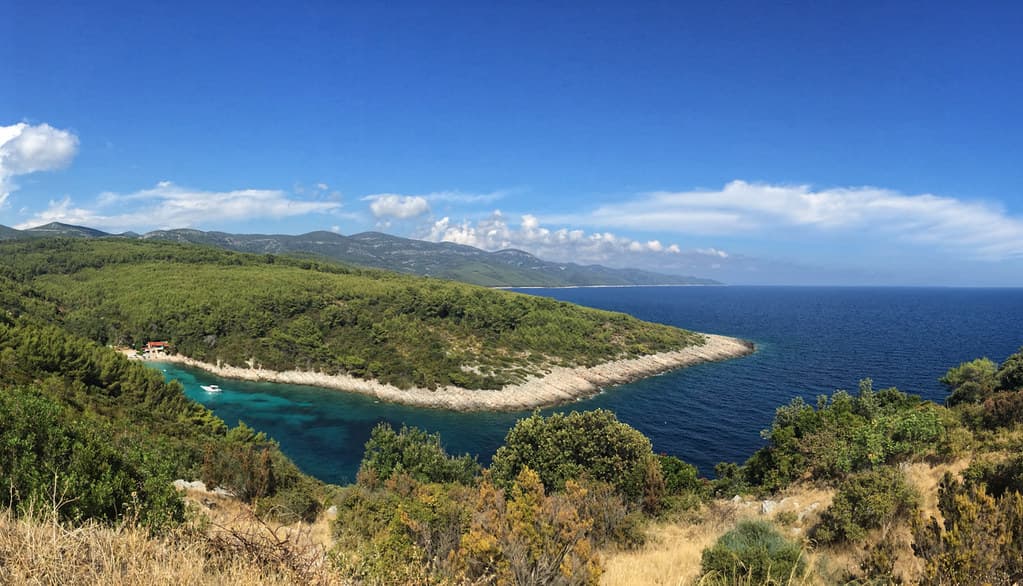
You reach Žitna by a footpath that winds down through low scrub and wild rosemary, the cove hidden until the last turn. When it opens before you, the color of the water is almost implausible—a luminous turquoise that seems to glow from within, framed by pale stone cliffs and dark green pines. The beach itself is a narrow crescent of smooth pebbles, barely twenty meters wide, intimate and sheltered. Wade in and the pebbles give way to clean sand and rock. The water is cool, gin-clear, and deep enough to swim within a few strokes. Snorkelers drift along the cove's edges where the bottom drops into shadow and fish hover in still clusters. The enclosure created by the headlands keeps the water calm even when wind stirs the open channel; you can float on your back and watch the cliffs frame a rectangle of sky. By afternoon, the light angles into the cove and the turquoise intensifies, turning almost neon where the sun penetrates the shallows. A few boats anchor offshore, their occupants diving straight into the deep. There's no shade, no facilities, no distractions—just pebbles, water, and the low hum of cicadas in the maquis above. It's the kind of place you stumble upon, photograph obsessively, and then guard the location of like a secret, even though it's marked on every local map.
Places, rentals, tours and events within walking and driving distance of Žitna Beach.
Photos
Swimming at Žitna Beach is generally safe, with clear turquoise waters ideal for swimming and snorkeling. The narrow cove offers some protection from winds and waves. Water depth increases relatively quickly from shore, so confident swimmers will enjoy it most. The rocky seabed means water shoes are recommended. Always check weather forecasts, as southerly winds can create choppy conditions. The intimate size means fewer people around in emergencies, so swim with a companion and stay aware of your limits and changing conditions.
Visit in June or September for pleasant weather with significantly fewer visitors than peak July-August. Even during high season, weekday mornings are quieter. The beach's somewhat remote location near Zavalatica naturally limits crowds compared to beaches near major towns. Early morning visits offer the calmest water and best light for photography. Late afternoon can be lovely but check sunset times as the cove may fall into shadow earlier. Avoid Croatian public holidays when domestic tourists increase throughout the islands.
Žitna Beach is located near the small village of Zavalatica on Korčula's southern coast. Access requires a car, scooter, or bicycle as public transport is very limited in this area. From Korčula town, drive approximately 30-40 minutes through the island's interior. Roads are generally good but narrow in places. Follow signs to Zavalatica, then local directions to the beach. Parking is informal and limited. The final approach may involve a short walk. A rental vehicle provides flexibility for exploring this quieter part of Korčula.
Žitna Beach has minimal facilities, reflecting its quiet, natural character. There are no beach bars, sunbed rentals, or restaurants directly on the beach. Bring all supplies including water, snacks, sun protection, and shade equipment. Zavalatica village has limited services; a small konoba may be available but hours can be irregular. Plan to be self-sufficient. The nearest full amenities are in larger villages or back toward Korčula town. This lack of development preserves the beach's intimate, unspoiled atmosphere that appeals to couples and nature lovers.
Žitna Beach's defining feature is its strikingly turquoise water within a narrow, intimate cove that feels almost private. The scenic setting and relative remoteness create a romantic, peaceful atmosphere perfect for couples. Unlike Korčula's busier sandy beaches, this cove attracts visitors seeking natural beauty over amenities. The clear waters are excellent for snorkeling. Its location near Zavalatica, away from tourist centers, means you'll experience a more authentic, untouched slice of island life, though this requires more planning and self-sufficiency.