Counting the waves…
Counting the waves…
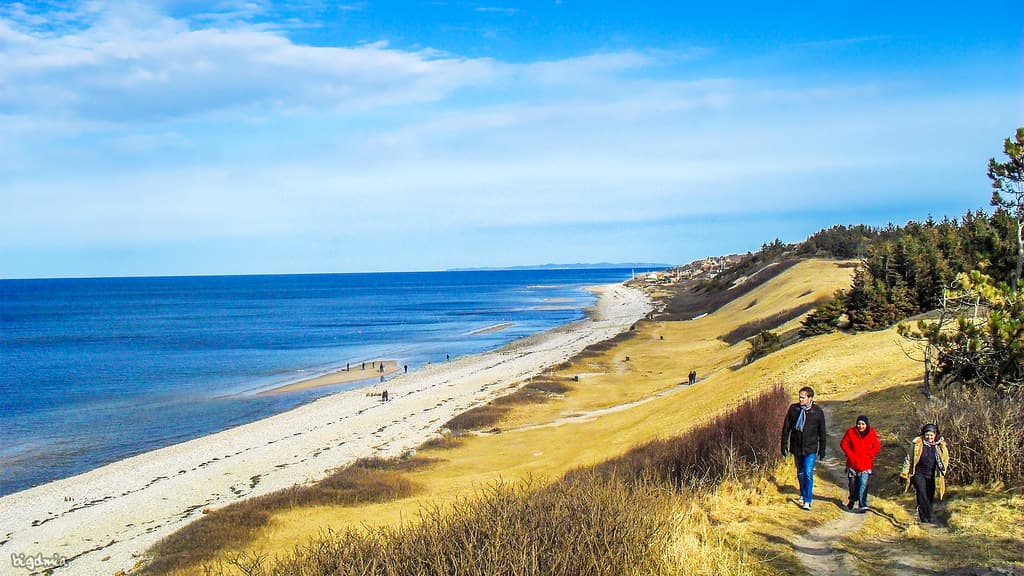
You park beside the nature reserve and follow the sandy track through Melby Overdrev's protected heathland, where sheep graze among purple heather and twisted junipers. The beach reveals itself gradually—first the sound of small waves, then glimpses of pale sand through the marram grass, finally the full sweep of coastline stretching toward Sejerø Bay. This isn't the dramatic cliff-backed drama of Møns Klint or the jetset buzz of Hornbæk; it's wilder, humbler, a place where the dunes do the talking. The sand here is fine and cool underfoot, punctuated by smooth stones the color of wet slate. Families claim sheltered hollows between the dunes, shielded from the north wind that combs the beach year-round. Children wade in the shallows where the water stays knee-deep for twenty meters, while their parents stretch out on wool blankets, thermoses of coffee within reach. The heathland behind you is crisscrossed with walking paths that disappear into thickets of rosa rugosa, their hips bright against the September sky. As afternoon tips toward evening, the western light turns everything amber—the dried beach grass, the weathered driftwood, the faces of couples walking the tideline. You've brought rye bread and leverpostej from the bakery in Hundested, and you eat sitting on a dune crest, watching the sun sink toward Sjælland's green farmland interior, the Baltic a sheet of hammered bronze.
Places, rentals, tours and events within walking and driving distance of Melby Overdrev Beach.
Photos
Melby Overdrev Beach is generally safe for swimming, though its wilder, more natural setting means no lifeguard services are present. The sandy beach has a gentle slope, making it reasonably family-friendly, but parents should supervise children carefully. The beach's remote character means fewer people are around if assistance is needed. Currents can develop along this open coastline during windy conditions. The protected heathland designation ensures the area remains undeveloped and pristine. Families who enjoy nature and don't require facilities will appreciate the unspoiled environment. Always check weather conditions before swimming.
For swimming and traditional beach activities, visit Melby Overdrev Beach between June and August when temperatures are warmest. However, this beach particularly shines during shoulder seasons—May and September—when the surrounding heathland blooms and wildlife is active with fewer visitors. The protected natural area makes it appealing year-round for nature walks and bird watching. For families seeking quiet beach time, weekdays in early summer offer the best combination of pleasant weather and solitude. Sunset visits are recommended throughout the warmer months. Spring and autumn provide excellent opportunities for exploring the dunes and heathland without crowds.
Melby Overdrev Beach is located on Zealand's north coast near the village of Melby, approximately 60 kilometers northwest of Copenhagen. By car, take Route 16 north through Hillerød, then Route 267 westward; follow signs to Melby and the Overdrev area with designated parking near the beach access points. Public transportation requires taking a train to Hillerød, then bus connections toward the coastal villages; services may be limited, so check schedules. The beach requires a short walk from parking areas through dunes and heathland. Cycling is an excellent option, with coastal bike routes connecting nearby towns.
Melby Overdrev Beach has minimal facilities, reflecting its protected natural status and quieter character. There are no restaurants, cafés, or shops directly at the beach, so visitors should bring food, water, and supplies. The nearby village of Melby has limited services; better provisioning options are found in larger towns like Tisvildeleje or Hundested. Public restrooms may not be available at beach access points. This beach is best suited for self-sufficient visitors who appreciate unspoiled nature over conveniences. Bring everything needed for a beach day, including shade, refreshments, and waste bags to maintain the pristine environment.
Melby Overdrev Beach stands out for its integration with protected heathland (overdrev), creating a rare coastal ecosystem where beach, dunes, and heath meet. This protected designation preserves traditional Danish landscape and biodiversity uncommon along developed coastlines. The wilder, more natural character appeals to visitors seeking authentic nature experiences over beach resort amenities. The area supports diverse wildlife and plant species, making it valuable for nature enthusiasts and photographers. Unlike busier beaches, Melby Overdrev offers genuine solitude and a sense of discovery. The combination of ecological significance and scenic beauty makes it ideal for contemplative, nature-focused visits.