
Bredsten Strand sits on the island of Kegnæs, a finger of land that juts into the Baltic between Als and the German border. You drive through farmland and past brick cottages before the road ends at a low dune system. The beach opens wide and flat, pale gold under skies that change by the hour—pewter one moment, milk-blue the next. Wind ripples the shallow water, and gulls wheel overhead in lazy arcs. There's no boardwalk, no vendor selling soft-serve, just sand that extends far enough to make other beachgoers feel optional.
“One of Denmark's least-visited Baltic beaches, where the island's remote geography filters out all but the most deliberate visitors.”
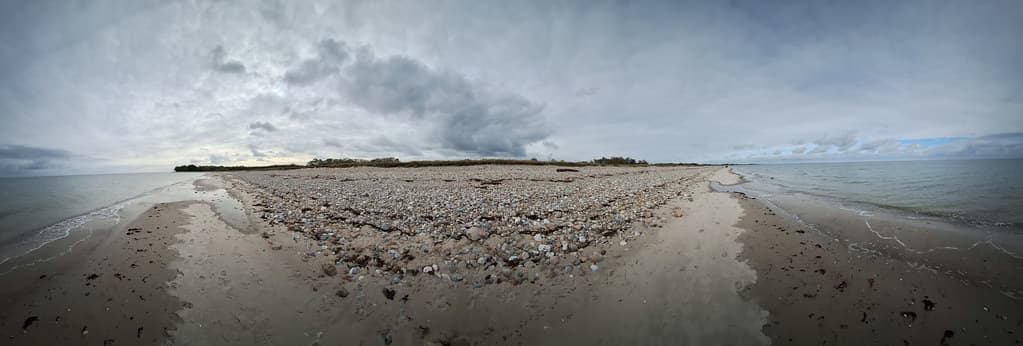 Credit: Flickr
Bredsten Strand — photo by Greyframe
The shoreline curves gently, edged by low grasses that hiss in the breeze. At low tide, sandbars emerge, and you can wade out until the water barely reaches your knees. Driftwood lies bleached along the wrack line, and in the distance, sailboats tack slowly across the strait. The silence here is profound—broken only by the soft crash of waves and the occasional cry of an oystercatcher.
This is not a beach for drama. It's for long walks with no destination, for sitting on a blanket with a thermos, for watching light play across water. The emptiness is the point. You come here to reset, to breathe salt air, to remember what it feels like when the world expands instead of closing in.


