Counting the waves…
Counting the waves…
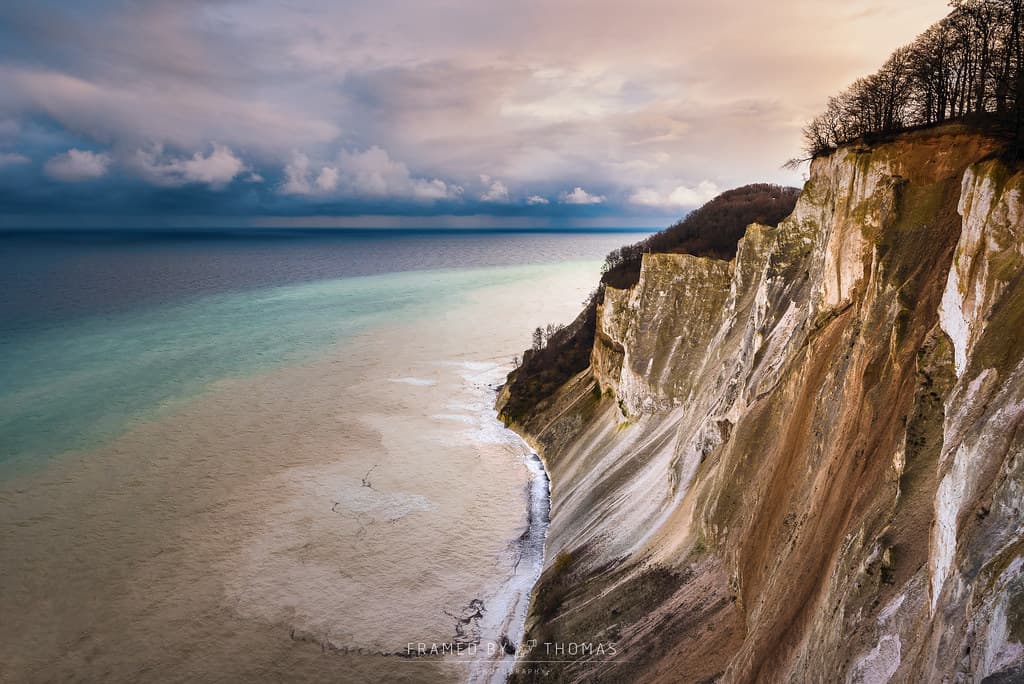
The stairs carve through forest canopy before revealing the full scale of Møns Klint: sheer chalk walls striped with bands of flint, their faces scarred by winter storms and spring thaws. You pick your way across a pebble beach that crunches and rattles with each wave, the stones ranging from milk-white chalk nodules to glassy black flint shaped by millennia of Baltic tides. Seabirds nest in the cliff's crevices, their cries echoing off the rock face. You crane your neck to take in the full height—these cliffs tower fifteen stories above you, their contours changing with every rockfall. Beachcombers crouch at the tideline, pocketing fossils: belemnites, sea urchins, the occasional ammonite freed from 70-million-year-old sediment. The water numbs your ankles even in summer, the Baltic's chill persistent. Early morning or late afternoon light rakes across the cliff face, amplifying every ridge and shadow. You walk east toward Store Klint, the beach narrowing beneath the tallest section, chalk dust coating your shoes. Behind you, boulders the size of automobiles rest where they fell, gradually softening into the sea. This is geology stripped bare, Denmark's ancient seabed lifted vertical and exposed to wind, salt, and the patient work of waves.
Places, rentals, tours and events within walking and driving distance of Møns Klint Beach.
Photos
Swimming at Møns Klint Beach requires caution. The primary safety concern is chalk cliff instability; falling rocks and cliff collapses occur, making it essential to stay well away from the cliff base both on the beach and in the water. The pebble beach drops off relatively steeply, and currents can be present. No lifeguards patrol this area. Swimming is possible during calm conditions for confident swimmers, but many visitors prefer paddling or simply enjoying the dramatic scenery. Always check warning signs and never climb on or sit beneath the cliffs.
Visit Møns Klint Beach from May through September for the best weather and accessibility. June through August offer warmest temperatures and longest daylight, ideal for photography of the brilliant white cliffs against blue sky and sea. However, these months bring the most tourists. May, early June, and September provide excellent lighting, comfortable temperatures, and fewer crowds. Early morning or late afternoon offers the best photographic light regardless of season. The cliff-top trails and beach are accessible year-round, though winter visits can be cold and windy but dramatically beautiful.
Møns Klint is approximately 140 kilometers from Copenhagen, requiring about two hours by car. Drive south via Route 22, cross to Møn island via the bridge at Kalvehave, then follow signs to Møns Klint. Parking is available at the GeoCenter Møns Klint visitor center, from which stairs (over 400 steps) descend to the beach. Public transport involves taking a train to Vordingborg, then bus 670 toward Stege and connecting buses to Møns Klint, though service is limited. Car rental offers the most practical access.
The GeoCenter Møns Klint visitor center at cliff-top features a café, restaurant, and gift shop, plus exhibitions about the area's geology. Basic facilities including restrooms are available here. The beach itself has no services, so bring water and snacks for time spent below. Nearby Borre and Liselund offer limited seasonal dining. The charming town of Stege (15 kilometers away) has supermarkets, restaurants, and cafés. Accommodation ranges from hotels and B&Bs near the cliffs to holiday rentals across Møn island. Book ahead during summer peak season.
Møns Klint Beach is Denmark's most dramatic coastal landscape, featuring towering white chalk cliffs rising up to 128 meters directly from the shore. These brilliant cliffs, among the highest in Denmark, create an iconic and internationally recognized scenery unlike typical Danish beaches. The beach offers fossil hunting opportunities in the chalk and flint. The combination of geological significance, Instagram-worthy white cliffs against blue Baltic waters, and the scenic clifftop forest walks makes it one of Denmark's most visited natural attractions, transcending typical beach experiences.