Counting the waves…
Counting the waves…
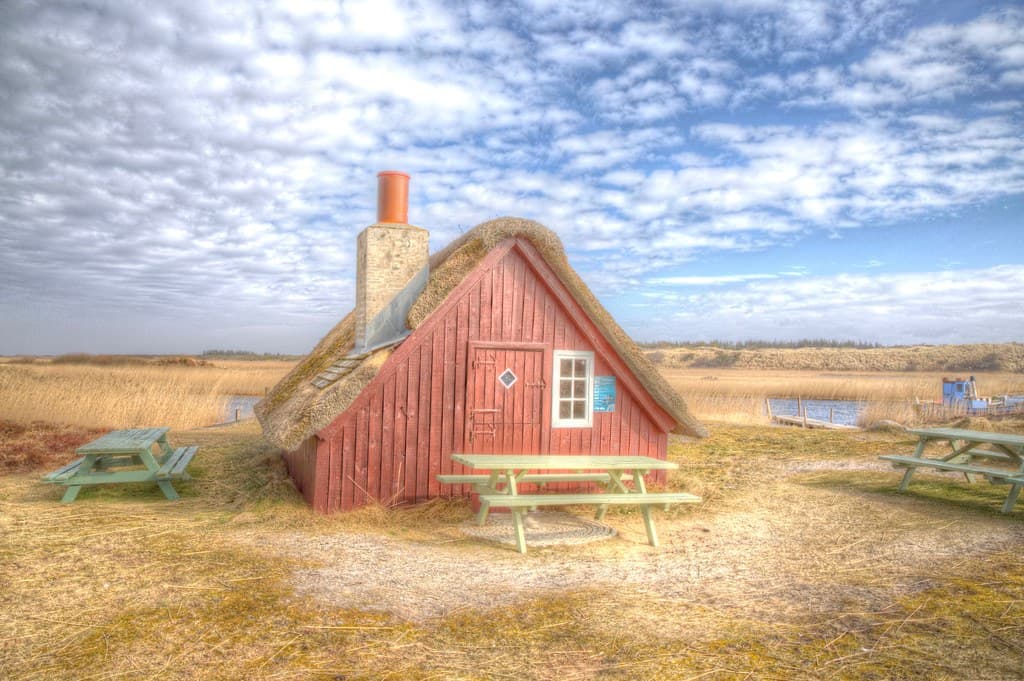
The parking area gives nothing away. You step onto wooden boardwalks that creak under your boots, threading through marram grass and wild roses, and then the land opens: a sweep of blonde sand backed by dunes that ripple like frozen swells. To your left, the calm slate waters of Ringkøbing Fjord; to your right, the muscular North Sea breaks in white lines that seem to march from the Arctic itself. This is a transition zone, ecologically and emotionally. Families cluster near the dune shelters where the wind eases, kids digging moats while parents pour thermoses of coffee. Walk south ten minutes and you'll have kilometers to yourself, just oystercatchers and the occasional seal bobbing in the surf. The beach hums with a specific Danish quality: unmanicured, unmediated, utterly genuine. Come at dusk between May and September. The sunset doesn't just color the sky—it ignites the entire western horizon, turning the wet sand into hammered copper and silhouetting the Nyminde Sluice where fjord meets ocean. You'll understand why Danes drive two hours from Aarhus for this light, this particular meeting of water and wind, this refusal to be anything but wild.
Places, rentals, tours and events within walking and driving distance of Nymindegab Strand.
Photos
Nymindegab Strand faces the North Sea with typical west coast conditions: strong currents, undertow, and changeable weather. The beach is unguarded, placing responsibility entirely on swimmers. Families should supervise children closely and limit activities to shallow paddling during calm conditions. The wild, transitional nature of this beach—where heath and dunes meet the sea—means natural forces are particularly pronounced. Strong winds and waves are common. The sandy bottom is generally consistent, but currents can be dangerous. This beach is better suited to experienced swimmers in good conditions. Sunbathing, walking, and nature observation are safer primary activities than extensive swimming.
Nymindegab Strand offers rewards year-round for different interests. Summer (June–August) provides the warmest weather and best conditions for family beach days, though the area remains relatively uncrowded even then. Shoulder seasons of late spring and early autumn offer excellent opportunities to experience the wild coastal landscape with fewer visitors. Sunset viewing is spectacular throughout the year. Autumn and winter attract photographers and nature lovers seeking dramatic scenery, powerful waves, and coastal heath colors. The transitional landscape where Ringkøbing Fjord, dunes, and North Sea converge is particularly beautiful in varied light. For solitude and raw natural beauty, visit outside peak summer weeks.
Nymindegab Strand is located south of Ringkøbing on Denmark's west coast. By car, follow Route 181 southward along the coast; Nymindegab is signposted with parking available near the beach. From Ringkøbing, the drive takes approximately 30 minutes; from Esbjerg, roughly 45 minutes north. Public transport options are very limited in this area—a private vehicle is strongly recommended. The beach sits at the southern end of Holmsland Klit where the landscape transitions to wilder heath and dune systems. Access is via paths through the dunes from parking areas. The remote character means planning ahead is essential for navigation and supplies.
Nymindegab is a small, relatively undeveloped area with limited commercial facilities. The village has minimal shops; visitors should bring supplies or plan to purchase them in larger towns. Holiday home rentals are the primary accommodation option, offering self-catering stays in the unique coastal landscape. Some camping facilities may be available nearby. For hotels, restaurants, and substantial shopping, Ringkøbing to the north or Hvide Sande offer more choices. The Museum Nymindegab provides cultural interest along with limited visitor facilities. The area's hidden, transitional character means self-sufficiency is important. Stock up on food, water, and supplies before arriving for extended beach visits.
Nymindegab Strand occupies a remarkable transitional zone where dunes, coastal heath, Ringkøbing Fjord, and the North Sea converge. This creates a wild, varied landscape quite different from typical beach resorts. The area's relative remoteness and lack of development preserve authentic coastal nature increasingly rare on accessible shores. The combination of ecosystems—marine, freshwater, dune, and heath—supports diverse wildlife and dramatic scenery. Historic significance includes WWII bunkers and traditional fishing culture preserved at the local museum. Unlike more developed stretches of Holmsland Klit, Nymindegab retains a hidden, rugged character appealing to nature lovers and those seeking Denmark's wild coastal beauty.