Counting the waves…
Counting the waves…
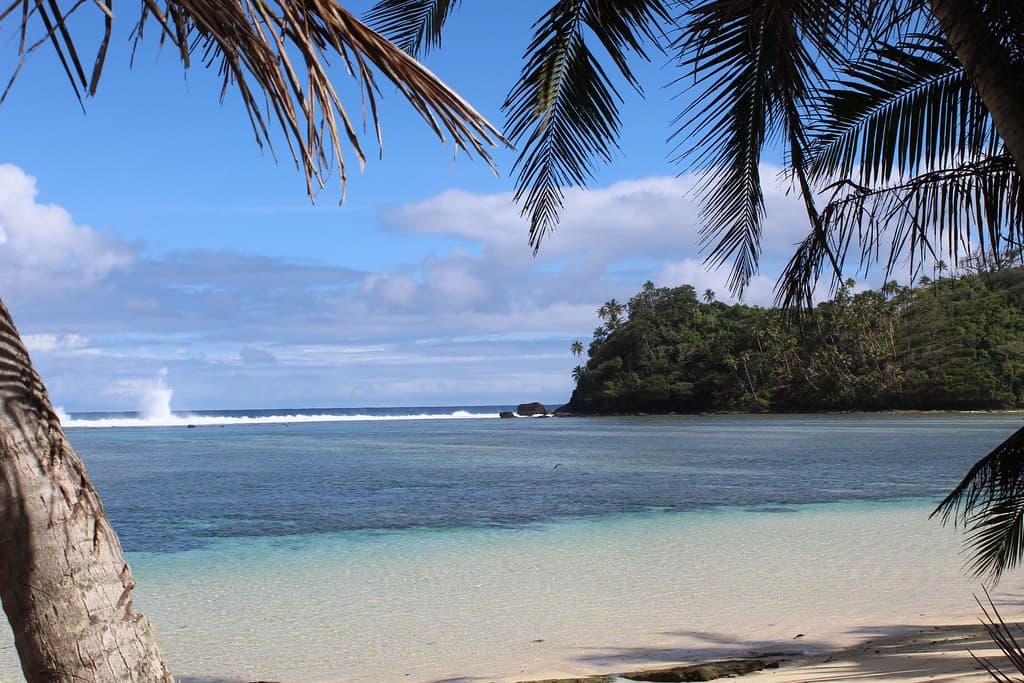
You'll know you've arrived when the village sounds fade and the forest presses close to the tide line. Juju Beach collects volcanic sand washed from inland slopes, giving the shore a charcoal tint that heats quickly under your bare feet. Coconut crabs leave hieroglyphic tracks across the upper beach, and the jungle exhales the scent of rotting frangipani and damp moss. The reef sits far enough offshore that the lagoon develops real depth, enough for serious swimming rather than wading. Water clarity shifts with the tide—gin-clear at the flood, slightly turbid at the ebb when runoff from forest streams clouds the shallows. You'll see local fishermen working hand lines from the rocks at the southern end, patient as the herons hunting beside them, rarely speaking above the noise of the surge. Sunset light filters through the coastal canopy rather than blazing directly, creating layered shadows across the sand. Fruit bats emerge from the forest to skim the waterline, and if you time it right, you'll watch flying foxes commute overhead in ragged formations. The village feels distant even though it's a fifteen-minute walk. That distance is the point—Juju Beach exists for those moments when even a small community feels too crowded.
Places, rentals, tours and events within walking and driving distance of Juju Beach.
Photos
Juju Beach offers generally safe swimming conditions typical of Rotuma's southwest coast, though conditions vary with weather and tides. The sandy shoreline makes it family-friendly for wading and play. Always check local conditions before entering the water, as remote beaches lack lifeguard services. Ask village residents about current conditions and any seasonal concerns. The beach's local-use character means you'll often share the space with Rotuman families, providing a reassuring presence and cultural learning opportunity.
Juju Beach is ideal during less crowded periods, particularly outside Fiji's peak tourist season from May to October. The dry season (May to October) typically offers clearer skies and calmer seas, though Rotuma's remote location means it never experiences mass tourism. Visit during weekdays for even greater solitude. Sunset viewing is particularly rewarding on the southwest-facing shore. Be aware that weather patterns in Rotuma can differ from mainland Fiji due to its northern location.
Reaching Juju Beach requires first traveling to Rotuma island, accessible by small aircraft from Suva (flights are infrequent, typically weekly) or occasional cargo vessels. Once on Rotuma, Juju village is accessible by the island's coastal road network. Arrange ground transportation through your accommodation or local contacts, as public transport is limited. The island is small enough that most locations are within a short drive. Rental vehicles are scarce, so pre-arrangement is essential.
Juju Beach has very limited tourist infrastructure. Accommodation on Rotuma is primarily through guesthouse stays or homestays arranged with local families, often in the main village areas rather than directly beachside. Meals are typically provided by your hosts, featuring local fish, taro, and tropical fruits. There are no restaurants or shops at the beach itself. Visitors should plan meals in advance with their accommodation hosts and bring any special supplies from Suva, as options on the island are basic.
Juju Beach's primary distinction is its authentic local-use character and extreme remoteness. Unlike resort-dominated Fijian beaches, this remains a community beach where you'll experience genuine Rotuman daily life. The southwest location offers excellent sunset views over the Pacific. Its hidden nature and distance from mainland Fiji (over 400km north) ensures an uncommercialised experience. The beach serves as a window into Rotuma's unique Polynesian culture, which differs notably from mainland Fijian traditions, making it culturally significant.