Counting the waves…
Counting the waves…
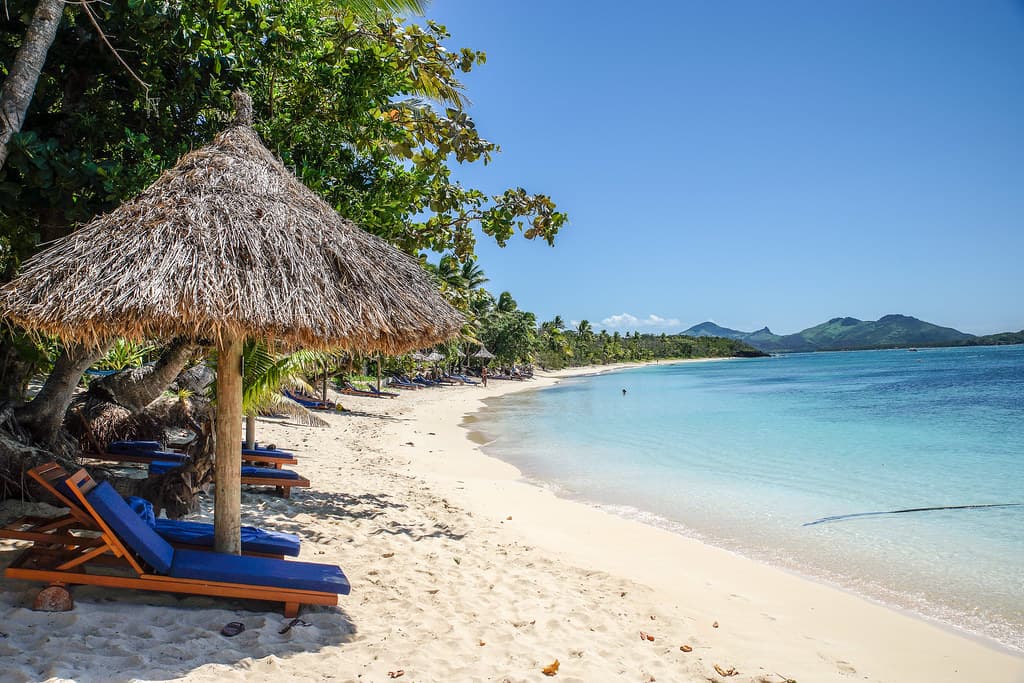
You'll step from the boat onto sand so fine it squeaks underfoot, the kind that clings to your ankles and refuses to shake loose until you've waded into the bathwater shallows. Matacawalevu's shoreline curves gently for half a kilometer, backed by coconut palms that lean seaward as if straining to touch the water. The beach faces west, so afternoons bring a warmth that radiates from the sand itself, turning your towel into a griddle by three o'clock. The coral garden begins where the sand shelf drops away—brain coral the size of beach balls, staghorn thickets where parrotfish graze audibly, their beaks scraping algae in rhythmic clicks you can hear underwater. You'll float above schools of fusiliers that move as one silver sheet, bending around coral heads in perfect synchrony. The visibility runs twenty meters on calm days, the water so still you can count the spines on a resting lionfish from the surface. By late afternoon, the sand takes on a pink cast as the sun drops toward Vanua Levu's silhouette on the horizon. The handful of guests from the island's small resort gather driftwood for a beach fire, and the smell of grilled mahi-mahi drifts across the beach. You'll hear the thunk of green coconuts being macheted open, the liquid inside still cool from the morning shade.
Places, rentals, tours and events within walking and driving distance of Matacawalevu Beach.
Photos
Matacawalevu Beach generally offers safe swimming conditions with calm, sheltered waters typical of the Yasawa Islands. The white sand slopes gently into turquoise waters, making it suitable for most swimmers. However, always check local conditions with your resort, as currents can vary seasonally. The snorkeling areas near coral formations require care to avoid touching or stepping on coral. There are no lifeguards on duty, so swim within your abilities and never swim alone in remote island locations.
The best time to visit Matacawalevu Beach is during Fiji's dry season from May to October, when you'll enjoy sunny skies, lower humidity, and calmer seas ideal for snorkeling. This period also sees fewer crowds compared to peak Australian and New Zealand holiday periods. Water visibility for snorkeling is typically best during these months. The wet season from November to April brings warmer temperatures and occasional tropical storms, though the beach remains beautiful with lush surroundings and fewer visitors.
Reaching Matacawalevu Beach requires multi-stage travel. First, fly into Nadi International Airport on Fiji's main island. From there, take the Yasawa Flyer catamaran ferry, which departs daily from Denarau Marina (approximately one hour from Nadi). The journey to Matacawalevu Island takes several hours, as the ferry stops at multiple islands along the Yasawa chain. Most visitors arrange transfers through their resort, which may include small boat transfers from the main ferry drop-off point to the beach itself.
Matacawalevu Beach is primarily serviced by small, intimate resorts and beachfront bungalow operations that provide on-site dining as part of their packages. Accommodation tends to be simple but charming, ranging from budget backpacker options to mid-range beach bungalows. Meals are typically included or available at resort restaurants serving fresh seafood and Fijian cuisine. There are no standalone restaurants or shops, so plan on meal packages. The remote setting means limited dining variety but authentic island experiences with locally sourced ingredients.
Matacawalevu Beach stands out for its hidden, uncrowded character and excellent snorkeling opportunities right off the shore. The beach offers pristine white sand and exceptionally clear turquoise waters with vibrant coral gardens accessible without boat trips. Its location in the northern Yasawas means fewer day-trippers compared to southern islands, creating a more peaceful atmosphere. The intimate scale of resorts here fosters genuine connections with local Fijian culture, and the beach's scenic beauty rivals more famous spots while maintaining an authentic, undiscovered feel.