Counting the waves…
Counting the waves…
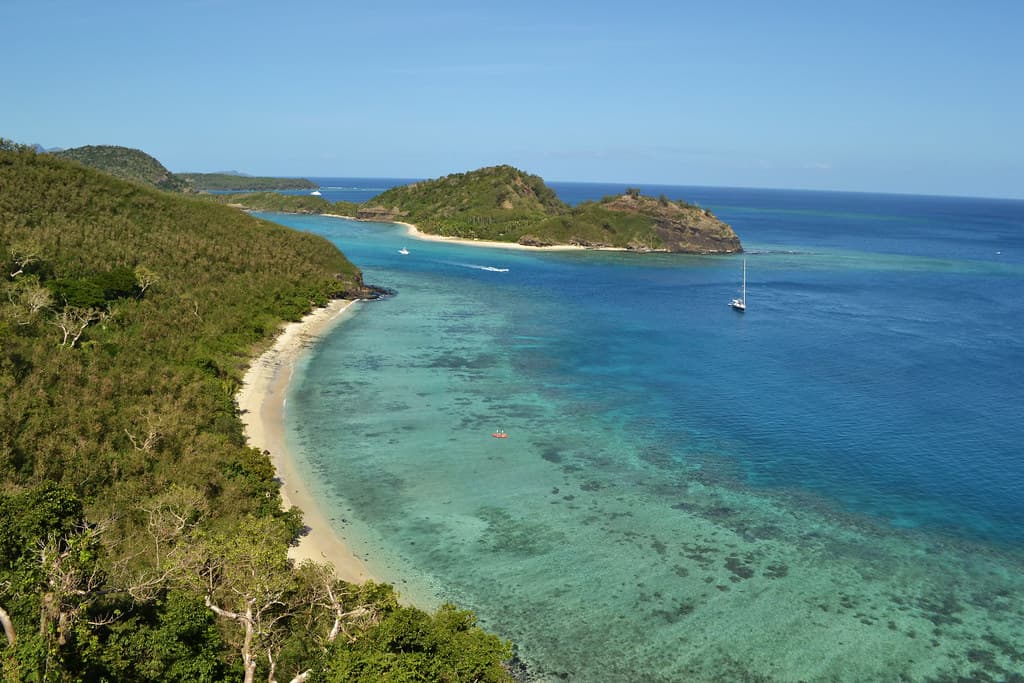
The bay curves in a tight embrace, protecting a wedge of sand no more than fifty meters long. At high tide, the beach shrinks to a ribbon barely wide enough for two towels; at low tide, sandbars emerge offshore where you can stand knee-deep and watch needlefish dart through the shallows. The reef encircles the bay, close enough that you hear waves grinding coral into the sand that collects here. Sailboats anchor in the deeper water, their crews rowing dinghies to shore for sundowners on the beach. You'll notice the quiet—no music, no engines, just the creak of rigging and the slap of water against hulls. The bay faces east, so mornings arrive bright and early, sunlight pouring over the ridge and setting the shallows aglow. By afternoon, the beach falls into shade, and the temperature drops just enough to make lying in the sand comfortable again. Getting here requires intent. Day charters sometimes add Narara to their route, but most visitors arrive on private boats or as part of multi-day sailing itineraries. There's no dock, no facilities, no vendors—just the bay, the beach, and whoever else decided this forgotten curve of sand was worth the detour. The isolation feels earned, the kind of place that rewards those who sought it rather than those who followed signs.
Places, rentals, tours and events within walking and driving distance of Narara Island Beach.
Photos
Narara Island Beach typically offers safe swimming conditions during calm weather, particularly in the dry season (May-October). However, as a tiny, remote island primarily visited by boat, conditions depend heavily on wind and tides. The hidden bay setting provides some shelter, but always assess water conditions upon arrival. There are no lifeguards or safety facilities, so swimming ability and caution are essential. Reef shoes protect against coral and rocks. Snorkeling can be excellent around the island's fringing reefs, but stay aware of boat traffic from passing yachts and tour vessels. Check weather forecasts and avoid visits during rough conditions.
The optimal time to visit Narara Island Beach is during Fiji's dry season from May to October, when seas are calmer for boat access and weather is most reliable. June through September offers peak conditions with minimal rainfall and excellent visibility, though this period sees more yacht traffic. For maximum solitude, consider May or October when conditions remain good but fewer boats cruise the area. The wet season (November-April) brings challenges including rougher seas that may prevent safe landing, higher humidity, and cyclone risk. Since access depends entirely on boat conditions, weather stability during the dry season is crucial for a successful visit.
Narara Island Beach is exclusively accessible by boat, as the tiny island has no airstrip or regular ferry service. Most visitors arrive via private yacht charters, sailing tours through the Yasawas, or organized boat excursions from nearby larger islands like Naviti or Waya. Some dive operators and snorkeling tour companies include Narara as a stop on multi-island itineraries. If staying on neighboring islands, ask your resort about arranging private boat transfers. The journey time varies depending on your starting point but typically ranges from 30 minutes to 2 hours from major Yasawa islands. Sea conditions determine accessibility, so flexible scheduling is important.
Narara Island has essentially no facilities, accommodation, or food services, making it a truly undeveloped destination. Visitors arrive by boat for brief beach stops, snorkeling, or picnics before continuing their journey. You must bring everything you need, including water, food, sun protection, and any equipment. There are no shops, toilets, or shelters on the island. Most people experience Narara as part of a day tour or yacht itinerary where meals and facilities are provided aboard the vessel. The island's tiny size and lack of development preserve its pristine character, offering a genuine deserted-island experience for those seeking untouched tropical beauty away from commercial tourism.
Narara Island Beach appeals to sailors and yacht crews because it represents an off-the-beaten-path anchorage away from the more trafficked Yasawa resort islands. The island's small size and protected bay offer good holding for anchoring in favorable conditions, while the pristine beach provides an idyllic setting for swimming and shore breaks. Yacht itineraries often include lesser-known spots like Narara to give guests exclusive experiences beyond the standard resort stops. The island's beauty combined with its remote location creates the quintessential South Pacific sailing experience: discovering an uninhabited island paradise accessible only by boat, offering tranquility and natural splendor that land-based tourists rarely encounter.