
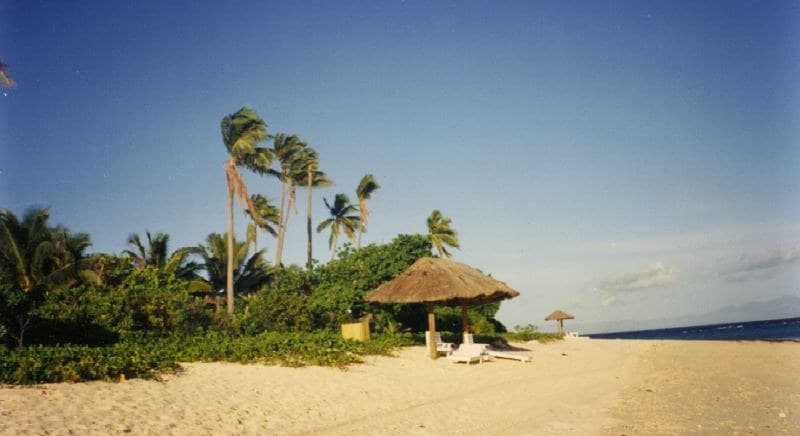
You'll smell the island before you see it—salt spray mingled with coconut oil and grilling mahi-mahi drifting over the lagoon as the catamaran cuts its engine. Treasure Island sits low and green in the Mamanucas, its beach barely two hundred meters end to end, fringed by pandanus and ironwood trees that rattle in the trade winds. The sand compresses underfoot with a soft squeak, fine as confectioner's sugar, warm enough at midday to make you quickstep toward the waterline.
“The reef begins so close to shore that non-swimmers can observe tropical fish without leaving the shallows, making it Fiji's gentlest introduction to snorkeling.”
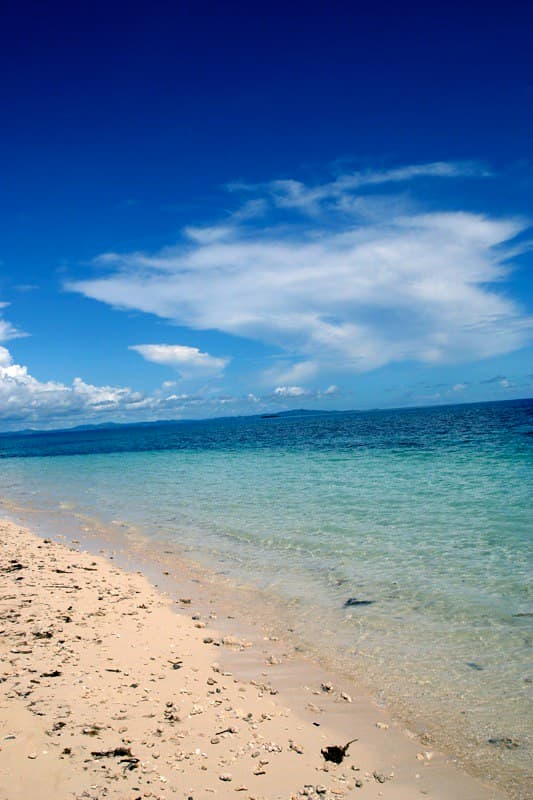 Credit: Flickr
Fiji Island Beach.JPG
What this beach lacks in size it returns in accessibility. The house reef begins fifteen meters from shore, marked by a sudden shift from pale sand to darker coral heads. You wade out in borrowed fins, and within three strokes you're hovering over staghorn formations where damselfish defend their territories and giant clams yawn open in the current. Families cluster in the shallows, children shrieking each time a sergeant major nibbles at their toes, while parents float belly-down with rented snorkel sets, tracking schools of fusiliers that move like silver ribbons through the blue.
By late afternoon the beach empties as guests retreat to hammocks strung between palms. The sun angles low, turning the water from teal to honey-gold, and the only sounds are the rhythmic wash of small waves and the distant thunk of a machete opening coconuts at the beach bar. This is Fiji distilled to its essence—uncomplicated, generous, close enough to touch.


