

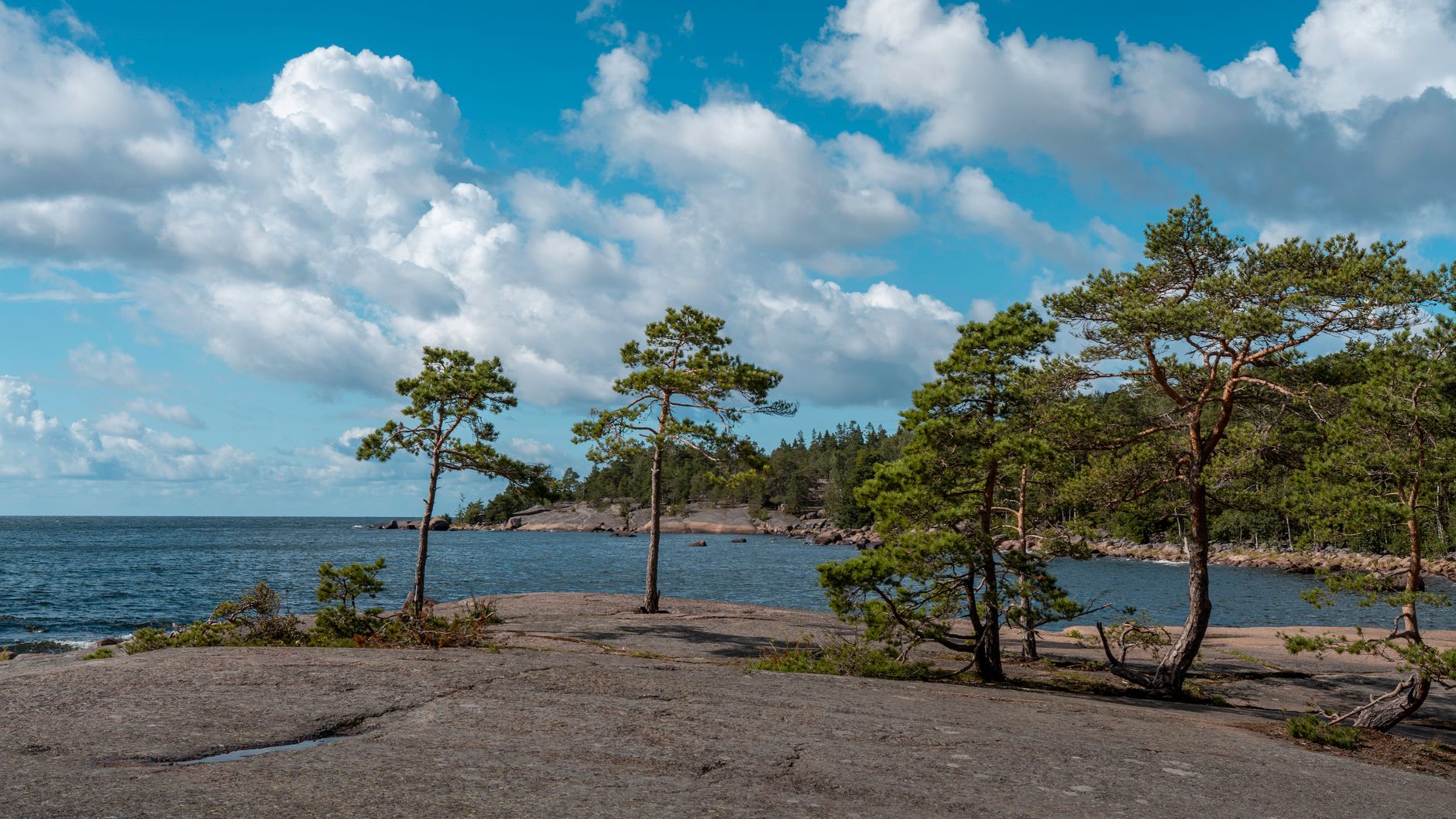
Norrskata's western shore is all about aspect and exposure—the granite dips gently seaward, creating terraced platforms that funnel your gaze toward the point where sky bleeds into Baltic. By late afternoon, the rock radiates accumulated heat; you spread a towel on stone that feels hand-warmed and watch the water shift from steel to honey to copper as the sun tracks lower. Small waves refract around the offshore skerries, arriving as gentle swells that slosh rhythmically against the ledges.
“This is one of the few Baltic shores where the sunset vista includes only open water—no islands interrupt the sightline to the horizon.”
 Credit: Pexels
Tranquil coastal scene with pine trees and rocky shore under a blue sky and clouds.
The water entry is methodical: you lower yourself from ledge to ledge, testing footholds worn smooth by decades of bathers, until the depth allows swimming. The bottom drops to four meters within twenty strokes, the granite continuing its orderly descent into murk stained bronze by coastal humus. When you surface, the late sun sits directly ahead, turning the wavelets into a field of moving mirrors.
Sunset here isn't performative—no crowds, no commentary, just geology and light conducting their nightly transaction. The rock mass beneath you releases the day's heat slowly; you stay warm long after the sun drops, wrapped in a towel while the afterglow fades through pink to violet. By the time you motor back toward the main island, the first stars prick through overhead and the lighthouse at Bengtskär begins its sweep to the south.


