
Counting the waves…
Counting the waves…

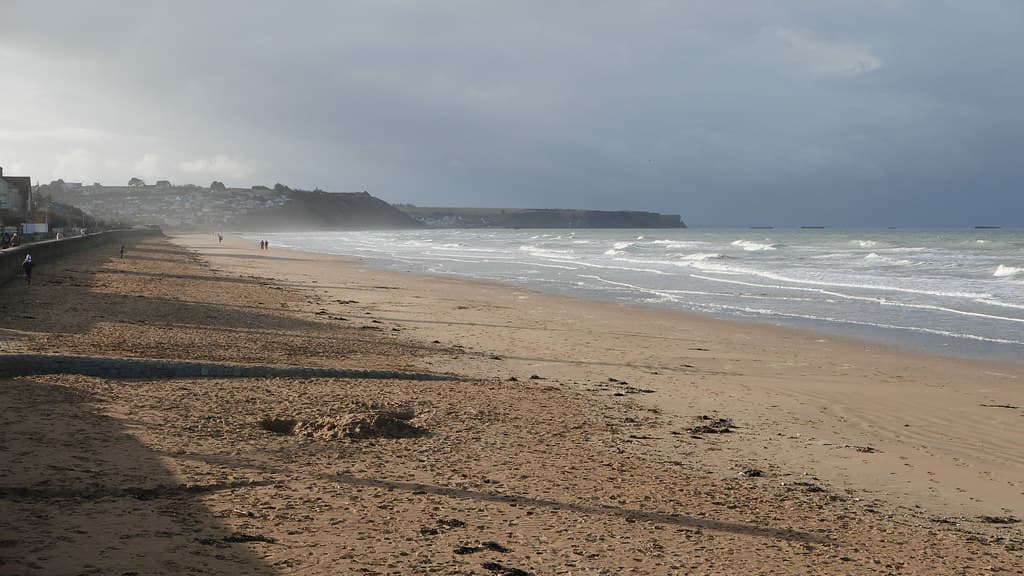
You arrive along the D514 and park beside low dunes stitched with marram grass, the Channel spreading wide and pewter-gray before you. Asnelles is quieter than its famous neighbors—Arromanches lies just to the west—but its beach carries the same gravity. Offshore, rusted pontoons jut like broken teeth, fragments of the Mulberry artificial harbor that once funneled troops and tanks toward liberation. The sand here is fine and pale, sloping gently into shallow water that draws families with small children and metal-detectorists hoping for relics. You can walk for kilometers in either direction at low tide, when the sea retreats to reveal acres of ribbed sand and tidal pools dotted with mussels. The promenade is lined with modest villas and a handful of cafés serving moules-frites and cider; in summer, beach clubs rent striped cabanas, but the atmosphere remains refreshingly low-key. Sunsets are spectacular—molten gold pouring over the water, silhouetting the Mulberry ruins in stark relief. This is a beach that asks you to hold two things at once: the simple pleasure of a paddle in cool Norman water and the knowledge that young men once waded ashore here under fire. You come for the beauty, the accessibility, the uncrowded calm—but you leave changed, carrying the weight of what this sand has witnessed.
Places, rentals, tours and events within walking and driving distance of Plage d'Asnelles.
Photos
Plage d'Asnelles is generally safe for swimming during calm weather, with lifeguards present in summer months (typically July-August). The beach has gentle slopes suitable for families with children. However, as with all Normandy beaches, be mindful of tides and currents, which can be strong. Check tide times before visiting, as the beach transforms significantly between high and low tide. Supervision of children is essential. The beach is also quieter than neighboring resorts, making it ideal for families seeking a more relaxed atmosphere away from crowds.
Summer (June-September) offers the warmest weather and best swimming conditions, with temperatures reaching 18-20°C. However, Plage d'Asnelles is beautiful year-round. Spring and autumn provide milder crowds and pleasant walking weather, while winter offers dramatic coastal scenery and solitude. The beach faces northwest, making it exceptional for sunset viewing throughout the year. For D-Day history enthusiasts, June holds special significance. Be prepared for variable Normandy weather regardless of season—bring layers and waterproof clothing. Low season visits reward you with peaceful beach walks and authentic local atmosphere.
Plage d'Asnelles is located about 20km northwest of Bayeux in Calvados. By car, take the D514 coastal road from Bayeux or Arromanches-les-Bains. Free public parking is available near the beach along Rue de la Mer and surrounding streets, though spaces fill quickly in summer. The nearest train station is Bayeux, approximately 25 minutes away by car. Local bus service (Bus Verts du Calvados line 74) connects Bayeux to Asnelles seasonally, though service is limited. Biking the coastal route is popular, with relatively flat terrain along the D-Day beaches.
Asnelles village offers several restaurants, crêperies, and cafés within walking distance of the beach, serving fresh seafood and traditional Norman cuisine. Nearby Arromanches-les-Bains (3km east) provides more dining options and shops. Accommodation includes small hotels, vacation rentals, and chambres d'hôtes (B&Bs) in Asnelles and surrounding villages. For wider selection, Bayeux offers numerous hotels and restaurants. Basic amenities like public toilets are available near the beach. The area maintains a quiet, residential character, so don't expect extensive commercial development—this is part of its charm for visitors seeking authentic coastal France.
Yes, Plage d'Asnelles was part of Gold Beach during the D-Day landings, and wartime remnants remain visible. At low tide, you can see sections of the Mulberry harbour concrete caissons offshore, particularly impressive portions compared to neighboring Arromanches. German bunkers and coastal defenses dot the area, some accessible for exploration. The beach offers a quieter, more contemplative D-Day experience than busier sites. Informational panels provide historical context. For deeper understanding, visit the nearby Arromanches 360 cinema and D-Day Museum. The juxtaposition of peaceful modern beach life against this profound history makes visits particularly moving.