Counting the waves…
Counting the waves…
A refined fusion of water purity, environmental stability, and communal vibrancy for Cala di Palu.
View MethodologyAnalyzed via live sensors and environmental data.
Wave height, wind, and atmospheric stability.
Live footfall and crowd balance metrics.
Community reviews and curated sentiment.
“You descend a steep, rocky path that switchbacks through maquis and scree, losing three hundred meters of elevation in twenty minutes. Then the cove opens below: a thumbnail of pebble beach, water so clear it looks…”
Limited recent visitor reports — live OBI telemetry is your best guide for current conditions.
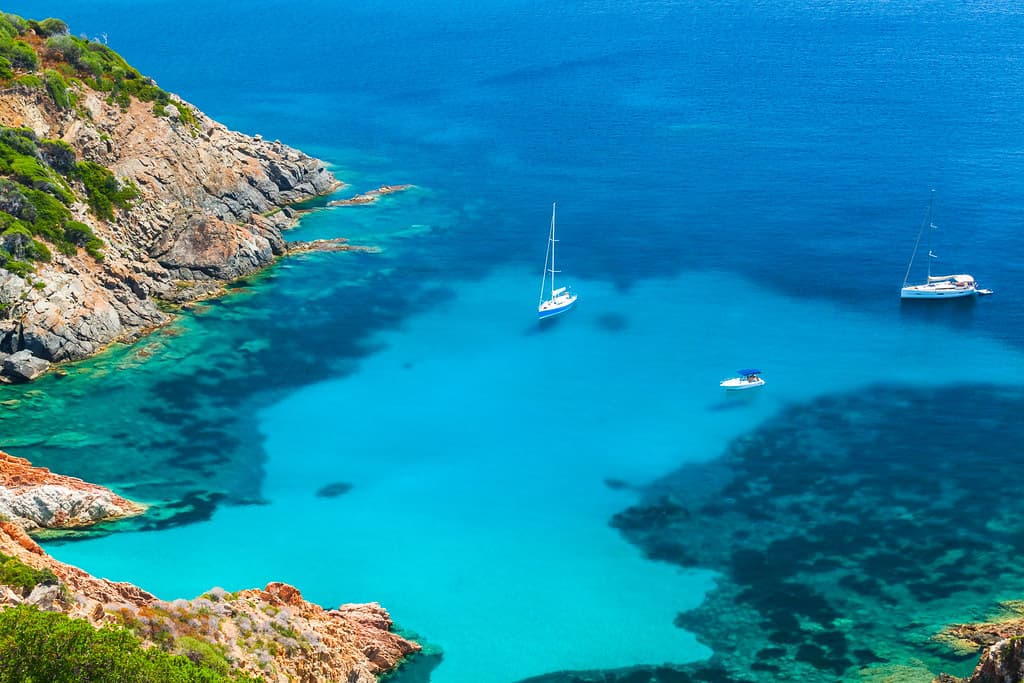
Cala di Palu rewards the hike-in with water clarity that borders on hallucinatory. You wade across pebbles into shallows where every stone on the seabed is visible in perfect detail, the light refracting through the water in shifting geometries of turquoise and sapphire. Snorkeling here means drifting over a landscape of white sand, dark boulders draped in kelp, and darting schools of salema porgy that pivot in unison when you swim too close.
The beach itself is tiny—room for perhaps a dozen people if everyone's friendly about spacing—and hemmed in by cliffs that glow coral and amber in afternoon light. There's no shade except the brief shadow cast by the rock wall, so midday can be punishing. But arrive early or linger late, and you'll have the cove nearly to yourself, the silence broken only by wavelets lapping stone and the occasional splash of a jumping fish.
 Credit: Unsplash
a view of a beach from a hill overlooking the ocean
 Credit: Unsplash
A view of a beach and ocean from a hill
Kelp gardens, porgy schools, sandbars
Bathtub warmth, perfect visibility
Rust and honey tones, dramatic light
Prime Visitation
Best Weather|Less Crowds
Where it is
Cala di Palu
Piana, Corse-du-Sud, France
42.222500°, 8.616400°
Weather
Loading…
Swell
—
Temp
Warm · Restorative
UV Index
Moderate
Wind
—
Tidal State
Last known
Max Sunlight
—
Ideal Shade
—
May - Sep (Peak)
Jan - Dec (Off-season)
Best Weather|Less Crowds
Select a category to load nearby places.
Unlock restaurants, luxury stays and curated maritime experiences within 2km
Cala di Palu generally offers safe swimming conditions due to its sheltered cove configuration, which provides natural protection from strong currents and waves. The clear turquoise waters make it appealing for snorkeling, allowing good visibility of marine life and underwater rocks. However, access can be challenging, and the beach lacks lifeguards or facilities. Check weather conditions before visiting, as wind and swell can affect even protected coves. Wear appropriate footwear for rocky areas and snorkel with a buddy for safety.
The best time to visit Cala di Palu is from May to September when weather is warmest and seas are calmest along Corsica's west coast. For fewer crowds, visit in May, June, or September when tourist numbers are lower than peak July-August. Arrive early morning for the best light and fewer visitors, as this hidden cove attracts those seeking tranquility. Calm sea conditions are essential for safe access and snorkeling, so check marine forecasts. Midday offers the clearest water visibility for snorkeling activities.
Reaching Cala di Palu typically requires a combination of driving and hiking or boat access. From Piana village, the cove is located along the dramatic coastline toward Porto. Access may involve parking along the coastal road and hiking down steep trails, which can be challenging and require good physical condition. Alternatively, boat tours from Porto or Cargèse often visit this and similar coves, offering easier access. Due to its hidden nature, research current access routes or consider hiring local guides familiar with the terrain.
Cala di Palu is a wild, undeveloped cove with no facilities, restaurants, or services. Visitors must bring all supplies including water, food, sun protection, and snorkeling gear. The nearest amenities are in Piana village, approximately several kilometers away, where you'll find restaurants, cafes, and small shops. Pack out all trash to preserve this pristine environment. The lack of development is part of the cove's appeal, offering an unspoiled natural experience typical of Corsica's more remote coastal spots.
Cala di Palu stands out for its remarkably clear turquoise waters and hidden location along Corsica's spectacular west coast near Piana. Unlike more accessible beaches, it rewards adventurous visitors with a sense of discovery and relative solitude. The cove sits within the dramatic landscape of red granite cliffs and crystal-clear Mediterranean waters characteristic of this UNESCO-listed coastline. Its excellent snorkeling conditions and pristine environment offer an authentic wild Corsican beach experience, appealing to those seeking natural beauty over developed tourist facilities.
Photos