Counting the waves…
Counting the waves…

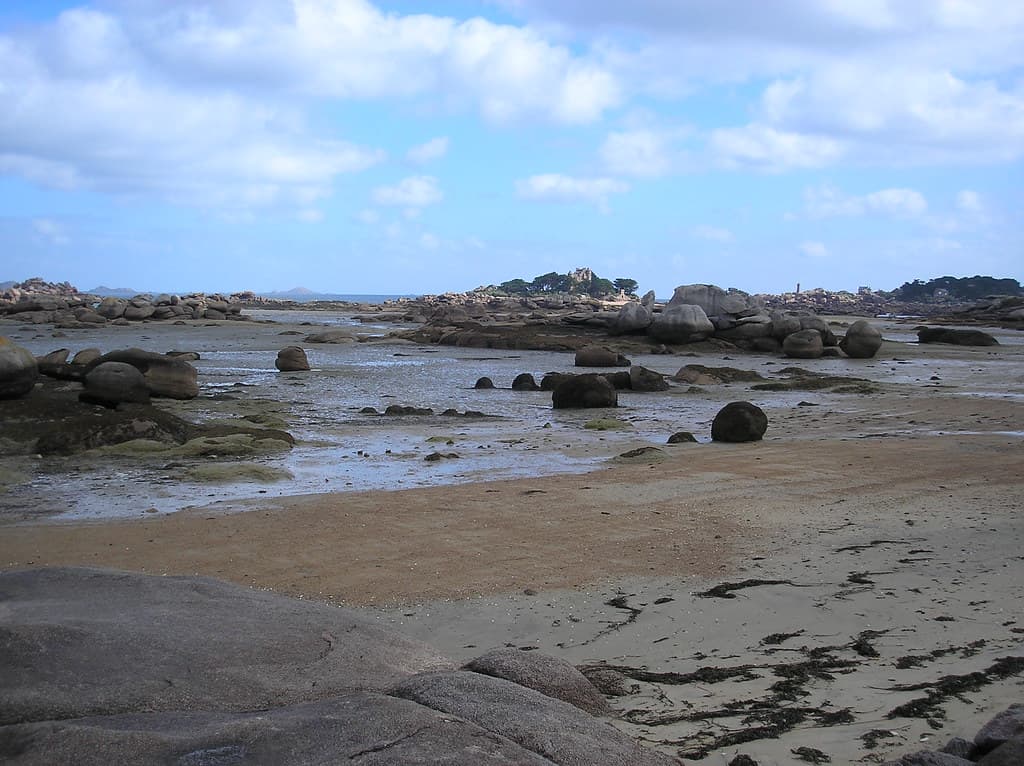
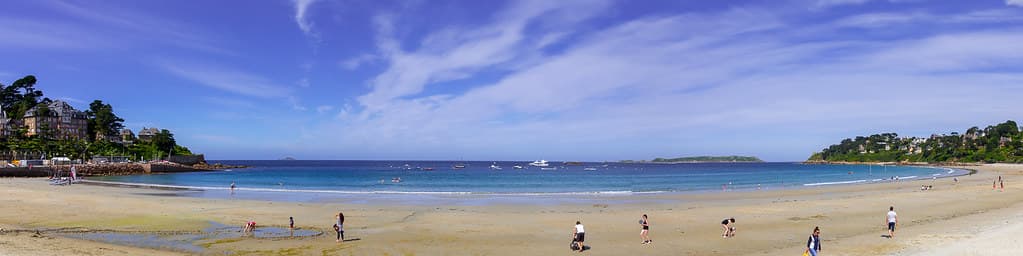
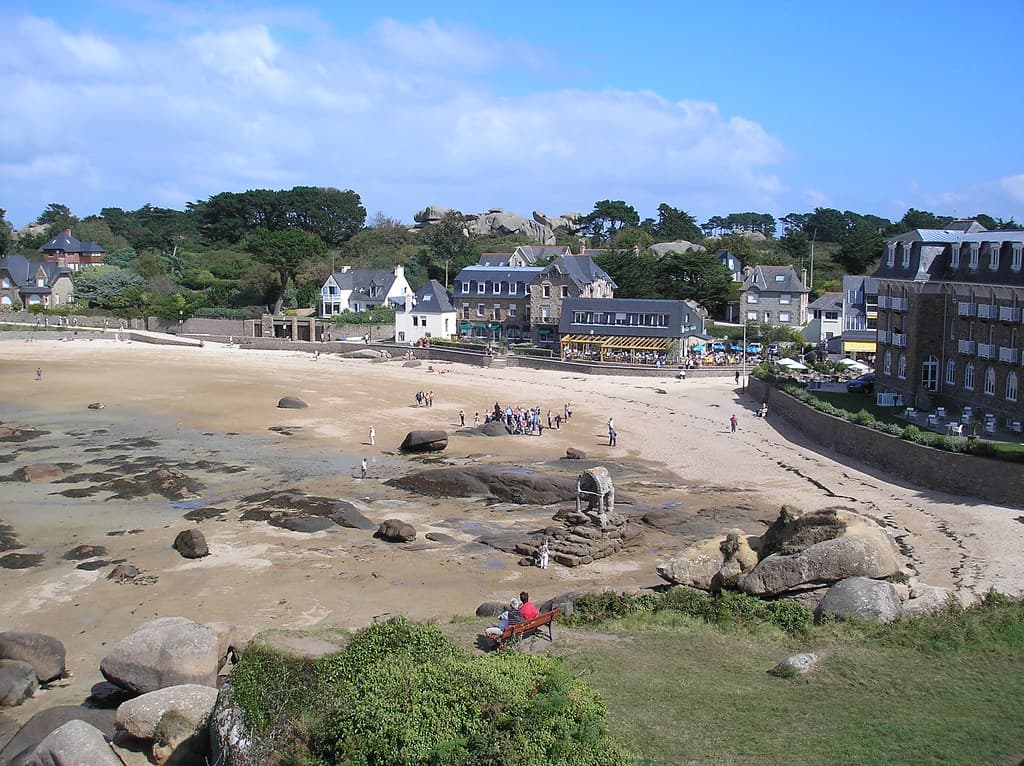
The pink granite announces itself long before you reach the sand. Rose-tinted boulders, some the size of garden sheds, others big as cottages, crowd the headland and tumble down to the tide line. Iron oxide stains the feldspar and quartz, leaving striations that run from pale peach to deep terracotta depending on the slant of afternoon light. You walk barefoot across firm sand, dodging tide pools trapped between rocks, each one a miniature aquarium of emerald weed and darting shrimp. The 11th-century oratory of Saint-Guirec perches on a granite outcrop at the southern end—a tiny stone chapel that pilgrims have visited for a millennium. At low tide you can walk out to it, threading between boulders smoothed by centuries of Atlantic swells. Families claim patches of sand near the sailing club, where dinghies bob on mooring lines and the water stays shallow for fifty meters out. The beach faces northeast, sheltered from the prevailing westerlies, so even on blustery days the cove stays calm. When the tide retreats, the rocks reveal their full architecture: arches, overhangs, caves worn smooth by salt and storm. Locals know to arrive at sunset in autumn, when the low sun ignites the granite and the tourists have thinned. You'll share the beach with dog-walkers and a few dedicated swimmers braving the 15-degree water, the kind of Bretons who wouldn't dream of wetsuits even in November.
Places, rentals, tours and events within walking and driving distance of Plage de Saint-Guirec.
Photos
Plage de Saint-Guirec is generally safe for swimming during calm weather, with lifeguard supervision in summer months (typically July-August). The beach features gentle slopes ideal for families with children. However, tides along the Pink Granite Coast are significant, and rocky areas are exposed at low tide. Always check tide times before visiting, as swimming conditions vary considerably. The distinctive pink granite boulders create sheltered zones but can be slippery when wet. Heed posted warning flags and lifeguard instructions, especially during Atlantic storms when waves and currents strengthen considerably.
While Plage de Saint-Guirec offers year-round beauty, late spring through early autumn (May-September) provides the warmest weather and best swimming conditions. July and August see peak crowds but also full amenities and lifeguard coverage. For a quieter experience with pleasant weather, visit in June or September. The beach shines during sunset year-round, when the pink granite rocks glow dramatically. Winter visits offer solitude and dramatic coastal scenery, though swimming is cold and facilities are limited. Consult tide schedules regardless of season to experience the beach at its photogenic best.
Plage de Saint-Guirec is located in the Ploumanac'h district of Perros-Guirec, approximately 6km from the town centre. By car, follow D788 and signs to Ploumanac'h. Several parking areas exist nearby, including Parking de la Bastille and Parking de Saint-Guirec, which fill quickly in summer (arrive early or late afternoon). Parking fees typically apply May-September. Alternatively, local buses serve Ploumanac'h from Perros-Guirec centre during summer. The beach is accessible on foot via the famous GR34 coastal path, offering spectacular Pink Granite Coast views along the way.
The Ploumanac'h area surrounding Plage de Saint-Guirec offers various dining and lodging options. Several crêperies and seafood restaurants are within walking distance, serving fresh Breton specialties. Beach facilities in summer include seasonal snack bars and ice cream vendors. For accommodations, options range from nearby hotels and vacation rentals to camping sites within 1-2km. The chapel of Saint-Guirec sits directly on the beach, adding historical charm. Perros-Guirec town centre (6km away) provides broader restaurant and shopping choices. Book accommodations well in advance for July-August visits, as this popular coastal area attracts many visitors.
Plage de Saint-Guirec showcases the Pink Granite Coast's signature rose-coloured rock formations, created from 300-million-year-old granite rich in feldspar minerals that produce the distinctive pink hue. These enormous, weathered boulders form surreal sculptures along the shoreline, appearing to glow during golden hour. The beach serves as the starting point for the Sentier des Douaniers coastal path, offering exceptional views of these geological wonders. Saint-Guirec also features a small oratory dedicated to the Welsh saint, built directly on the rocks. This combination of natural beauty and cultural heritage makes the beach truly unique along the Brittany coast.