Counting the waves…
Counting the waves…
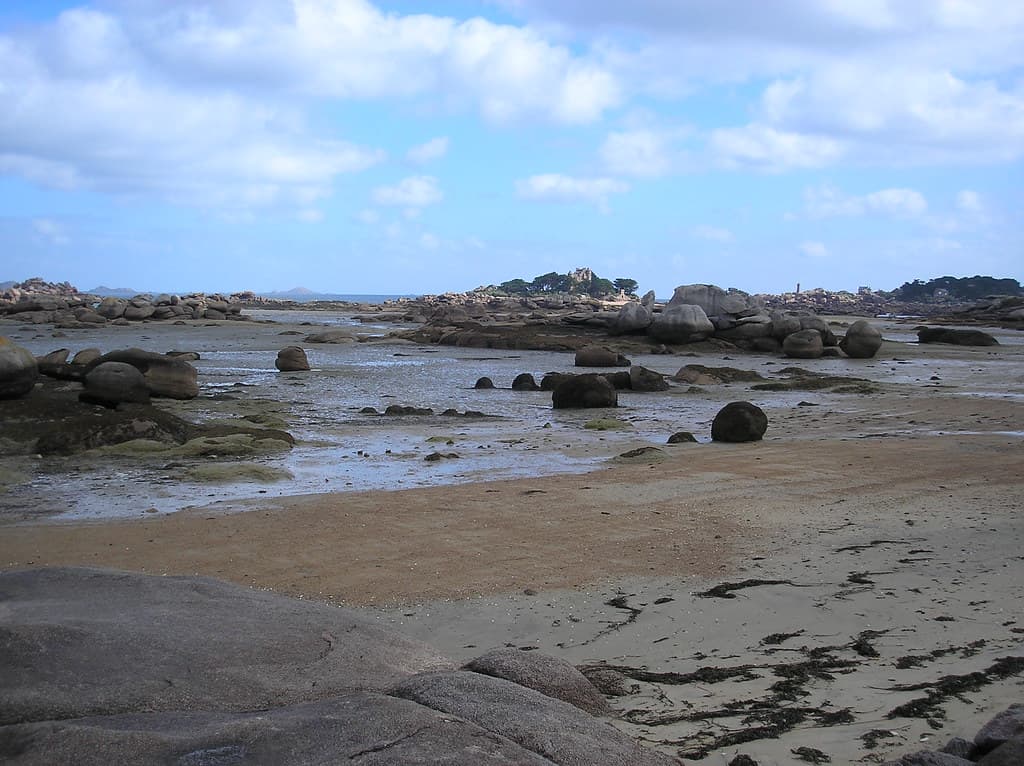
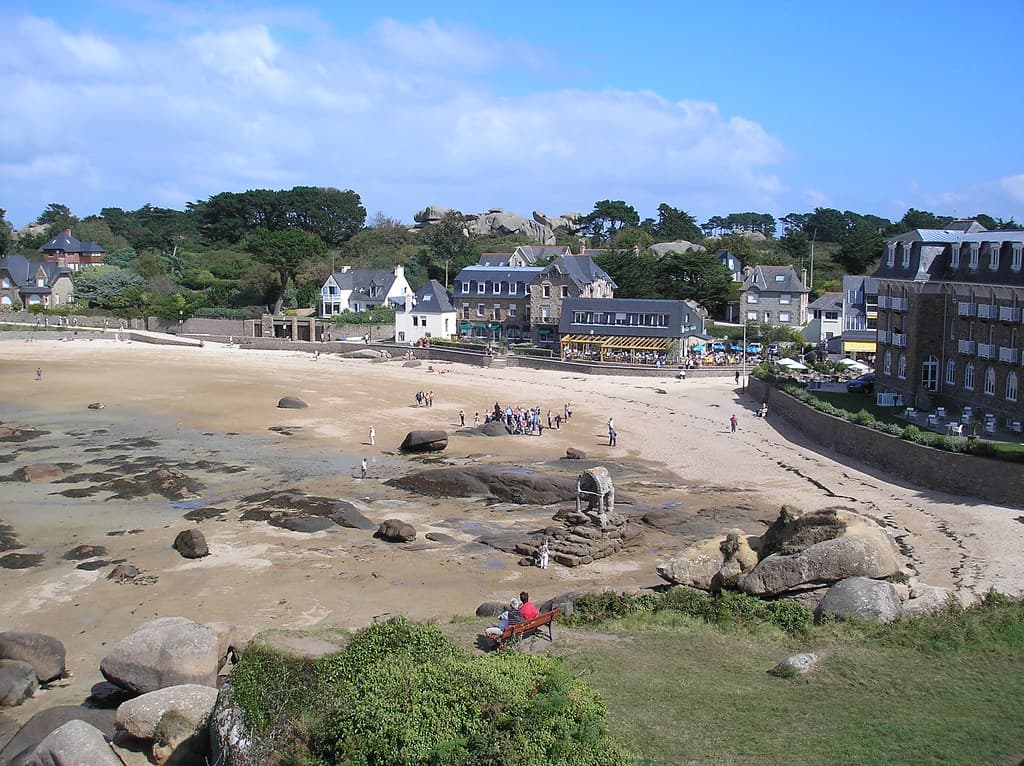
The pink granite begins to reveal itself as you round the coastal path—not a delicate blush but a deep, russet-tinged rose that deepens to coral when seawater darkens the stone. These aren't mere rocks; they're geological sculptures three hundred million years in the making, stacked and balanced in gravity-defying compositions that frame every view of Coz-Pors. You navigate between them to reach the crescent of blonde sand, your hands grazing lichen-spotted surfaces warm from the sun. At low tide, the beach doubles in size and the granite reveals its true artistry. Tidal pools collect in hollowed depressions, miniature aquariums where you can crouch and watch shore crabs scuttle beneath bladderwrack. Children claim boulders as kingdoms, scrambling up sloped faces to survey their domain. The water stays shallow far out into the bay, protected by offshore reefs that tame the Atlantic's usual aggression. Come evening, the setting sun performs its alchemy on the granite, igniting the feldspar crystals within until the entire coastline seems to glow from within. Families spread picnics on flat-topped boulders. You perch on sun-warmed stone, feet dangling, watching the light shift from gold to rose to violet, understanding why this stretch of Brittany's coast carries its colorful name.
Places, rentals, tours and events within walking and driving distance of Plage de Coz-Pors.
Photos
Plage de Coz-Pors is generally safe for families and swimming, with calm, shallow waters protected by the surrounding granite rock formations. The beach is sheltered, making it ideal for children to paddle and play. However, always check tide times as water depth varies significantly. There are no lifeguards on duty, so supervise children closely. The smooth pink granite boulders can be slippery when wet. During summer months, water quality is regularly monitored. The beach's compact size and natural rock pools make it particularly suitable for younger children.
Plage de Coz-Pors is stunning year-round, with each season offering unique appeal. Summer (June-August) provides warmest weather and swimming conditions, though it's busier. Spring and autumn offer mild temperatures, fewer crowds, and excellent light for photography. Winter visits reward you with dramatic seascapes and solitude. The beach is famous for spectacular sunsets, so late afternoon visits are recommended any season. Low tide is ideal for exploring rock pools and granite formations. For photography of the iconic pink granite rocks, overcast days actually enhance the stone's natural colors beautifully.
Plage de Coz-Pors is located in Trégastel, easily accessible by car via the D788 coastal road. From the town center, follow signs toward "Coz-Pors" or "Plage de Coz-Pors." There's a small free parking area directly adjacent to the beach, but spaces are limited, especially in summer—arrive early or visit during off-peak hours. Alternatively, park in central Trégastel and enjoy a scenic 15-20 minute coastal walk. The beach is also accessible by regional bus services connecting Lannion and Perros-Guirec. Bicycle access is excellent along dedicated coastal paths.
Plage de Coz-Pors has minimal on-site facilities, maintaining its natural charm. There are no permanent restaurants or shops directly at the beach, so bring supplies. Within a 5-10 minute walk, Trégastel town center offers bakeries, cafés, creperies, and seafood restaurants. Public toilets are available nearby during summer. For accommodations, Trégastel provides hotels, vacation rentals, and campsites within walking distance. Several properties offer stunning granite coast views. The larger resort town of Perros-Guirec, 10 minutes away, has extensive dining and lodging options if you prefer more amenities.
Plage de Coz-Pors showcases the famous Côte de Granit Rose (Pink Granite Coast), one of only three locations worldwide with this geological phenomenon. The rocks are approximately 300 million years old, containing high feldspar content that creates distinctive pink, orange, and amber hues. Erosion has sculpted the granite into dramatic rounded boulders and unique formations. The colors intensify during sunrise, sunset, and after rain. This beach offers intimate access to these formations compared to busier nearby beaches, perfect for close-up photography and exploration of natural rock pools formed between the ancient stones.