Counting the waves…
Counting the waves…

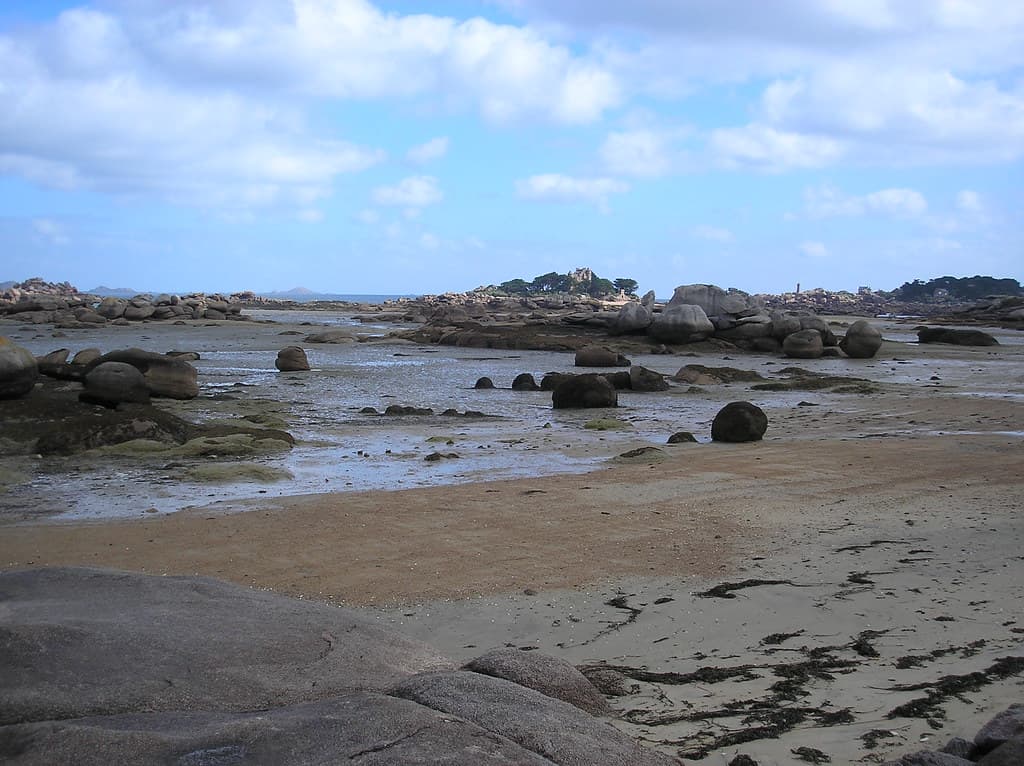
The name promises white sand, and Grève Blanche delivers: a fine-grained strand that glows bone-pale against the ochre and salmon streaks running through its guardian boulders. You reach it via a narrow lane threading between hedgerows of gorse, then down wooden steps that creak underfoot. Families spread picnic blankets in the lee of car-sized granite formations, their surfaces smoothed by millennia of Atlantic weather into shapes that suggest sleeping animals or abstract sculptures. Low tide unveils a second beach entirely. The waterline retreats a hundred meters, leaving behind shallow lagoons that trap the afternoon sun and warm to bathing-pool temperatures by mid-afternoon. Children net translucent shrimp while their parents pick mussels from rocks slick with bladderwrack. The receding sea exposes a sandbar linking Grève Blanche to the neighboring Île Renote, a temporary causeway that exists only during the lowest spring tides. Evening light performs its daily transformation, turning the pink granite into something closer to rose gold, then deep coral as the sun drops toward the horizon beyond Ploumanac'h. You'll likely share the sunset with a handful of locals walking their dogs and a few visitors who've learned that this beach, eclipsed in guidebooks by its more famous neighbor, offers the same geological drama with space enough to hear your own thoughts above the surf.
Places, rentals, tours and events within walking and driving distance of Plage du Greve Blanche.
Photos
Plage du Greve Blanche is generally considered family-friendly with calmer waters than some of Brittany's more exposed beaches. The sheltered position typically creates gentler swimming conditions suitable for children. However, always check local tide times and weather conditions before swimming, as Atlantic beaches can experience sudden changes. The sandy shore and shallow areas make it accessible for families. No lifeguard services are typically present at this smaller beach, so supervise children closely and exercise caution during high tide or rough weather periods.
Plage du Greve Blanche can be enjoyed year-round, though July and August offer warmest swimming temperatures and longest daylight hours. Late spring (May-June) and early autumn (September) provide pleasant weather with fewer crowds, ideal for peaceful beach walks and sunset viewing. The beach faces west, making it particularly stunning during golden hour throughout the year. Winter visits appeal to those seeking dramatic coastal scenery and solitude. Brittany's maritime climate means weather can be unpredictable, so pack layers regardless of season.
Plage du Greve Blanche is located in Trégastel along the Pink Granite Coast in northern Brittany. By car, follow signs toward Trégastel beaches from the D788 coastal road. Limited roadside parking is available near the beach access points, though spaces fill quickly during summer months. Arriving early morning or late afternoon increases parking availability. The beach is also accessible by foot or bicycle from Trégastel town center. Public transportation options to Trégastel include regional buses, with the nearest train station in Lannion, approximately 10 kilometers away.
As a quieter, secondary beach in Trégastel, Plage du Greve Blanche has limited on-site amenities. The main Trégastel town center, within walking distance, offers restaurants, cafés, bakeries, and small shops for provisions. Several hotels, vacation rentals, and campsites are available throughout Trégastel for overnight stays. For immediate beachside facilities, the more developed Coz-Pors beach nearby has additional services. Visitors should bring their own food, water, and beach supplies, as there are no permanent facilities or vendors directly at Greve Blanche itself.
Plage du Greve Blanche offers a more secluded alternative to Trégastel's busier Coz-Pors beach. Its quieter atmosphere attracts visitors seeking a peaceful coastal experience away from crowds. The beach features the region's characteristic pink granite rock formations, though on a more intimate scale. Its westward orientation provides excellent sunset viewing opportunities. The name "Greve Blanche" (White Shore) references its light-colored sand. Being less developed and promoted than neighboring beaches, it maintains a hidden-gem quality that appeals to those who prefer natural, uncommercialized coastal settings.