Counting the waves…
Counting the waves…

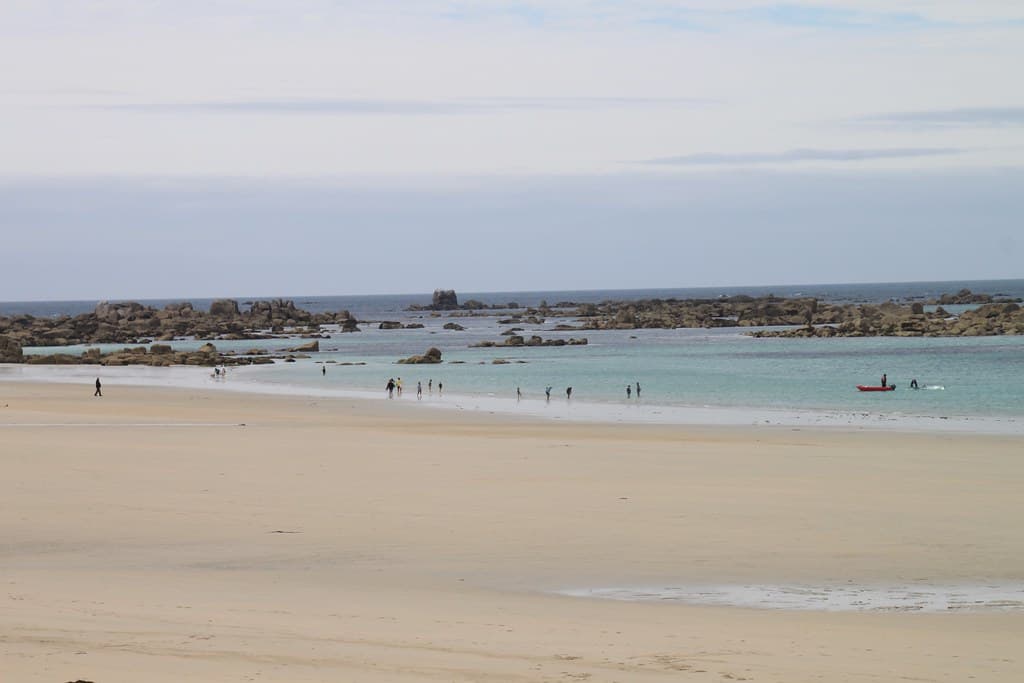
The sand at Plage des Amiets doesn't behave like ordinary beach sediment. It compresses beneath your toes with a dry whisper, then releases in clouds when the onshore wind picks up. At low tide, the waterline retreats hundreds of meters, exposing ridged flats where children crouch over temporary lagoons, nets in hand, hunting for crabs that scuttle between black schist outcrops. The clarity here isn't metaphorical—you'll see individual grains of shell and mica glinting in the shallows, and when the sun drops toward the Léon horizon, the wet sand becomes a mirror reflecting apricot and violet. This stretch of North Finistère coastline has earned its flagship status not through marketing but through simple geology: millennia of wave action grinding Breton granite into luminous grit. Lifeguards patrol the central zone in summer, and a small parking area empties directly onto the sand, making it accessible for strollers and beach wagons. Yet walk twenty minutes north or south and you'll find solitude among the dune hollows, where marram grass hisses and gulls wheel overhead. The beach works in every season. January gales send spume flying across the flats; August brings warm shallow pools perfect for tentative swimmers. Pack a windbreak year-round—the Atlantic doesn't pause—and time your visit with the tide tables posted at the access path. The difference between high and low water here reshapes the entire landscape.
Places, rentals, tours and events within walking and driving distance of Plage des Amiets.
Photos
Plage des Amiets is generally suitable for families with its white sand and shallow waters at low tide. However, the Finistère coast experiences Atlantic tides and currents, so always check local conditions before swimming. Supervised swimming areas may be available during summer months. The beach is exposed to westerly winds, which can create waves suitable for surfing but less ideal for young children. Always supervise children near the water, respect warning flags if present, and be aware that facilities and lifeguards are typically seasonal in this region.
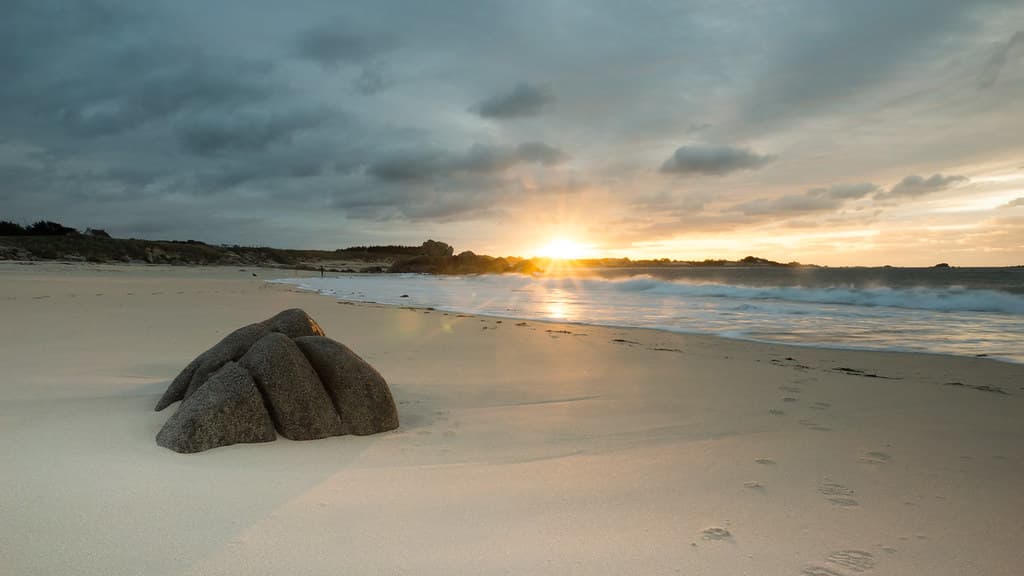
Plage des Amiets is accessible year-round, with each season offering different experiences. Summer (June-August) provides warmest weather and calmer seas, ideal for swimming and sunbathing. Spring and autumn offer milder temperatures, fewer crowds, and beautiful coastal walks with dramatic skies. Winter showcases the beach's wild Atlantic character with spectacular sunsets and storm-watching opportunities. The beach faces west, making it renowned for sunset views throughout the year. For swimming, visit July-August when water temperatures peak. For photography and peaceful walks, shoulder seasons are excellent choices.
Plage des Amiets is located near Cléder in northern Finistère. By car, take the D10 coastal road from Cléder following signs to Plage des Amiets. Free parking is typically available near the beach access points, though spaces can fill quickly during summer weekends. The nearest major town is Roscoff (15km away), accessible by train and ferry from Plymouth, UK. From Roscoff, you'll need a car or taxi as public transport to smaller beaches is limited. The beach is roughly 40km from Morlaix and 70km from Brest.
Plage des Amiets is a natural beach with limited on-site facilities. The nearby village of Cléder (3-4km inland) offers basic shops, bakeries, and a few restaurants serving traditional Breton cuisine. For more dining and accommodation options, head to Roscoff or Santec, both within 20 minutes' drive, where you'll find hotels, vacation rentals, seafood restaurants, and supermarkets. During peak summer season, a beach snack bar or crêperie may operate near the parking area, but it's wise to bring supplies. Several campsites and gîtes are scattered throughout the surrounding countryside.
Plage des Amiets is renowned for its exceptionally fine, white sand—uncommon along the Finistère coast, which typically features rockier shores. The sand's whiteness comes from crushed shells and marine sediments, creating Caribbean-like clarity in the water on calm days. This composition contrasts sharply with the region's typically golden or grey beaches. The combination of white sand, clear turquoise waters, and dramatic Atlantic backdrop creates a striking visual effect, particularly at sunset. This unique character has made it one of northern Brittany's most photographed and celebrated beaches despite its relatively remote location.