Counting the waves…
Counting the waves…

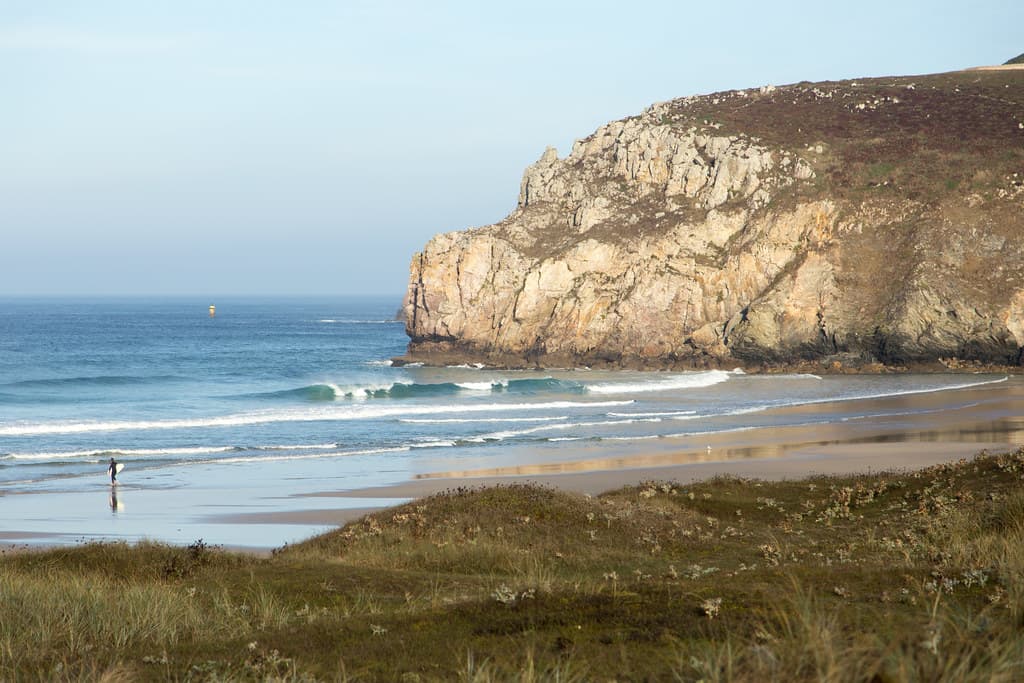
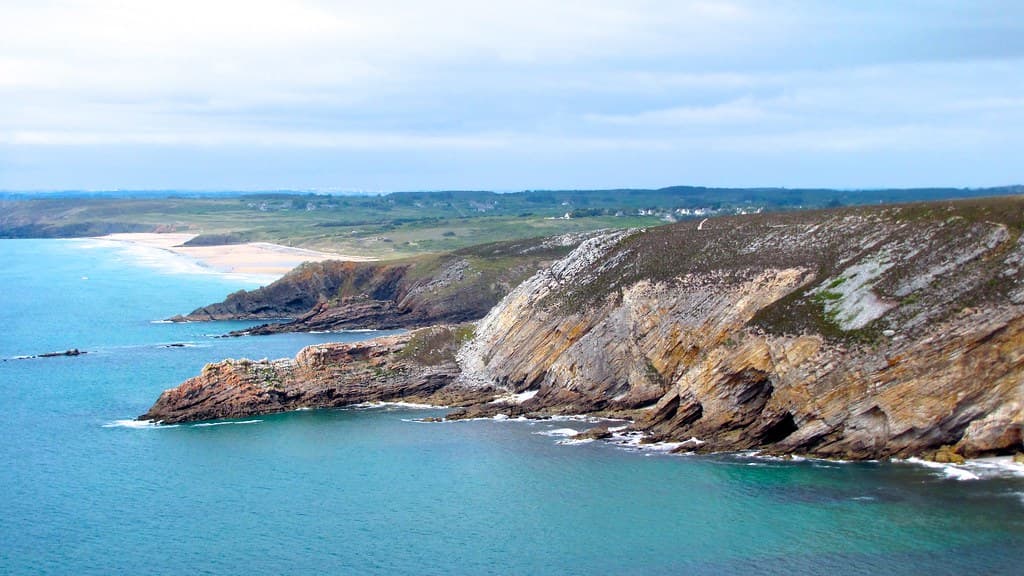
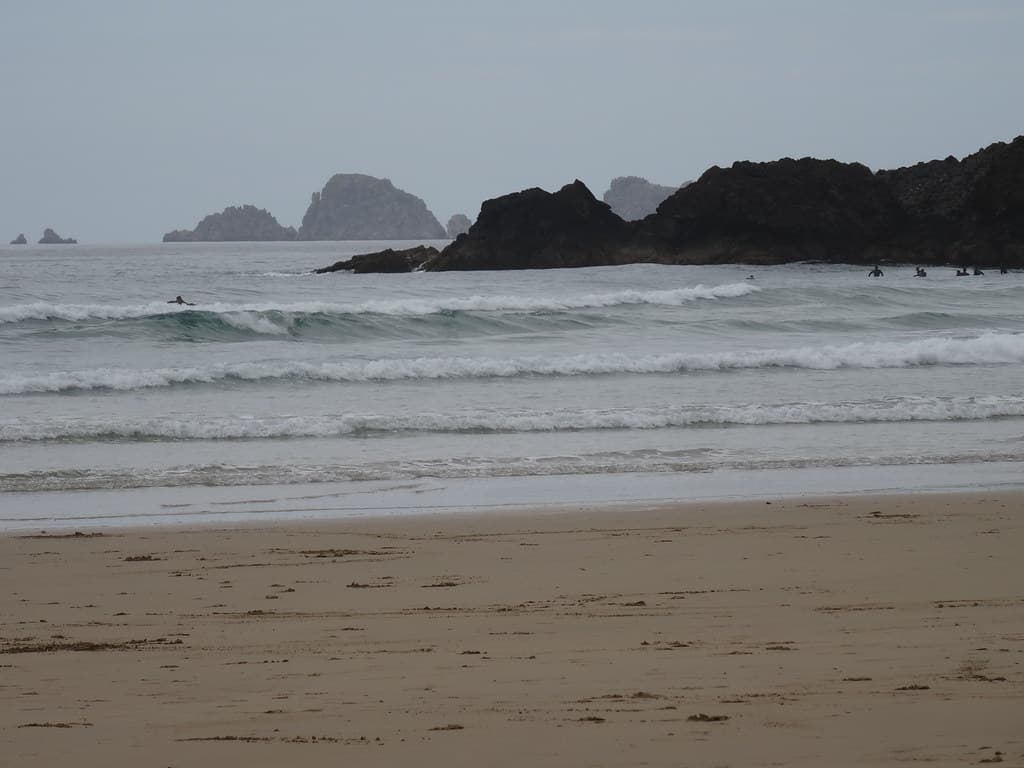
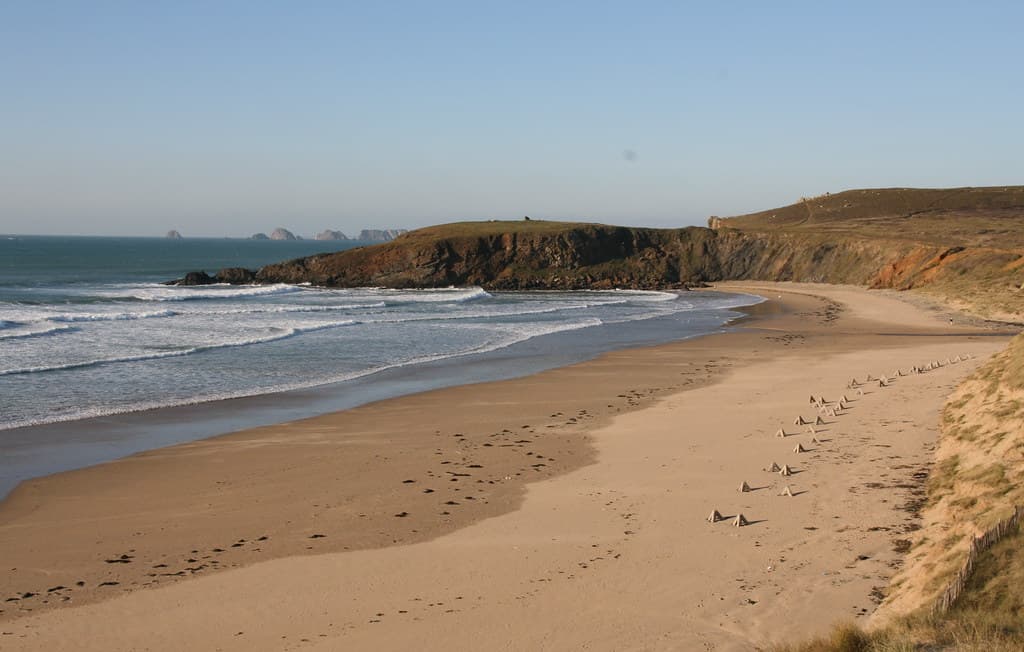
You smell the iodine before you see the water—that sharp, mineral tang carried on wind that never quite stops. The trail drops steeply from the clifftop car park, zigzagging past blackthorn and wild roses until the beach opens below: a half-mile arc of coarse sand pressed between jagged headlands. At low tide, rock pools pock the foreshore; at high, the Atlantic charges straight in, building walls of green water that shatter against the shore break. Most visitors to the Crozon Peninsula stop at Pen-Hat, where the views are prettier and the access gentler. That oversight leaves Lostmarc'h to the locals and the committed—surfers who know the reef breaks off the southern point, walkers who time their arrival for the hour before sunset when the cliffs glow rust-orange, families who claim the sheltered eastern corner when the westerlies howl. The beach faces due west, so evening light floods the entire bay, turning the wet sand into a mirror and silhouetting the offshore stacks. You won't find snack bars or rental umbrellas. What you will find: kelp ribbons drying on granite boulders, the print of your boots in sand no one else has walked, the Atlantic exactly as it has always been—indifferent, powerful, worth the climb down.
Places, rentals, tours and events within walking and driving distance of Plage de Lostmarc'h.
Photos
Plage de Lostmarc'h is a wild Atlantic beach with strong currents, powerful waves, and no lifeguard supervision. Swimming can be dangerous, especially during high tide or rough weather. The beach is primarily popular with experienced surfers rather than casual swimmers. If you do enter the water, stay close to shore, never swim alone, and check tide times beforehand. Families with children should exercise extreme caution. The dramatic coastal setting is beautiful but demands respect for ocean conditions typical of Brittany's exposed western coastline.
Plage de Lostmarc'h can be visited year-round, with each season offering different experiences. Summer (June-September) brings warmer weather and calmer seas, ideal for beach walks and sunsets. Autumn and winter attract surfers seeking bigger swells, though weather can be harsh with strong winds. Spring offers a pleasant middle ground with fewer crowds. For sunset views, late spring and summer provide the longest daylight hours. The beach's wild character means it rarely feels overcrowded, even in peak season, making it rewarding whenever you visit.
Plage de Lostmarc'h is located on the Crozon Peninsula, accessible by car from Crozon village (approximately 8km west). Follow signs toward Lostmarc'h; the final approach involves a narrow country road. A small free parking area exists near the beach, but spaces are limited, especially during summer weekends and good surf conditions. The walk from the car park to the beach is short but involves uneven terrain. Public transport options are limited, so a car is recommended. The relative remoteness helps maintain the beach's unspoiled, hidden character.
Plage de Lostmarc'h has no facilities directly on-site—no restaurants, cafés, toilets, or showers. This is a completely wild beach, so bring everything you need, including food, water, and sun protection. The nearest amenities are in Crozon village, about 8km away, where you'll find supermarkets, restaurants, and bakeries. For accommodation, Crozon and nearby Morgat offer hotels, vacation rentals, and campsites. The hamlet of Lostmarc'h itself is tiny with minimal services, so plan ahead and pack supplies before heading to the beach.
While Plage de Pen-Hat receives more visitors due to better accessibility and facilities, Plage de Lostmarc'h offers a wilder, more secluded experience. Both are excellent surf spots on Crozon's dramatic coastline, but Lostmarc'h tends to be quieter with a more remote feel. The beach faces southwest, providing stunning sunset views and consistent surf. Its relative obscurity means fewer crowds, appealing to those seeking solitude and raw natural beauty. Surfers often prefer Lostmarc'h for its uncrowded peaks, though conditions can be equally challenging at both locations.