Counting the waves…
Counting the waves…

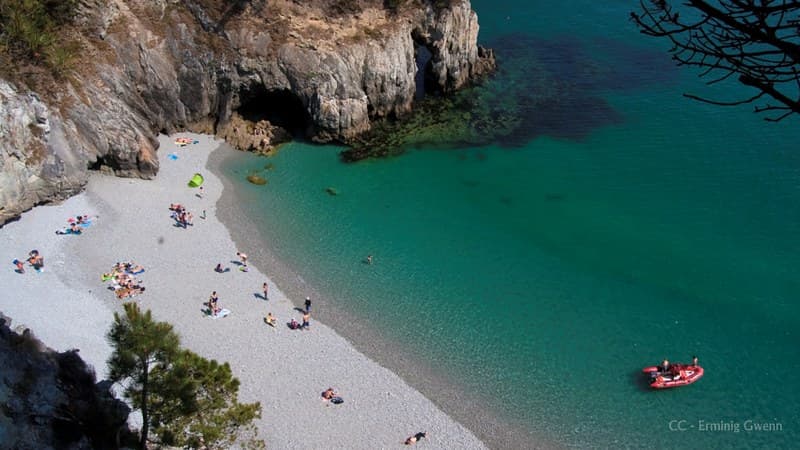
The beach unfolds in two distinct moods. To your left, a working harbor where trawlers unload their morning catch onto wet stone quays; to your right, a sweep of fine sand that curves toward the Pointe de Morgat, its Belle Époque casino now a sailing school. Between them, you'll find deck chairs angled toward the Tas de Pois sea stacks rising like broken teeth from the water two hundred meters offshore. Morgat earned its reputation as the peninsula's essential strand not through isolation but through accessibility married to drama. The same geological forces that carved Brittany's famous sea grottoes—Grotte de l'Autel, Grotte Sainte-Marine—also shaped this protected bay, where the Atlantic loses its fury against granite headlands. You can wade out fifty meters and still touch bottom, then turn around to see the Crozon hills rising green and wild behind the town's modest waterfront. Low tide reveals tide pools stippled with periwinkles and hermit crabs, while evening light turns the cliffs the color of apricots. The promenade fills with couples sharing galettes from the crêperie, children chasing gulls, locals walking terriers. It's Brittany distilled: pragmatic, beautiful, utterly unpretentious.
Places, rentals, tours and events within walking and driving distance of Plage de Morgat.
Photos
Plage de Morgat is generally safe for swimming, with a sandy bottom and gradual depth that makes it particularly suitable for families with children. The beach is sheltered within Morgat Bay, which provides protection from strong Atlantic swells. Lifeguards patrol during summer months (typically July-August). Water quality is regularly monitored and usually excellent. However, always check local flags and warnings before entering the water, as conditions can change with tides and weather. The calm waters also make it ideal for paddleboarding and kayaking.
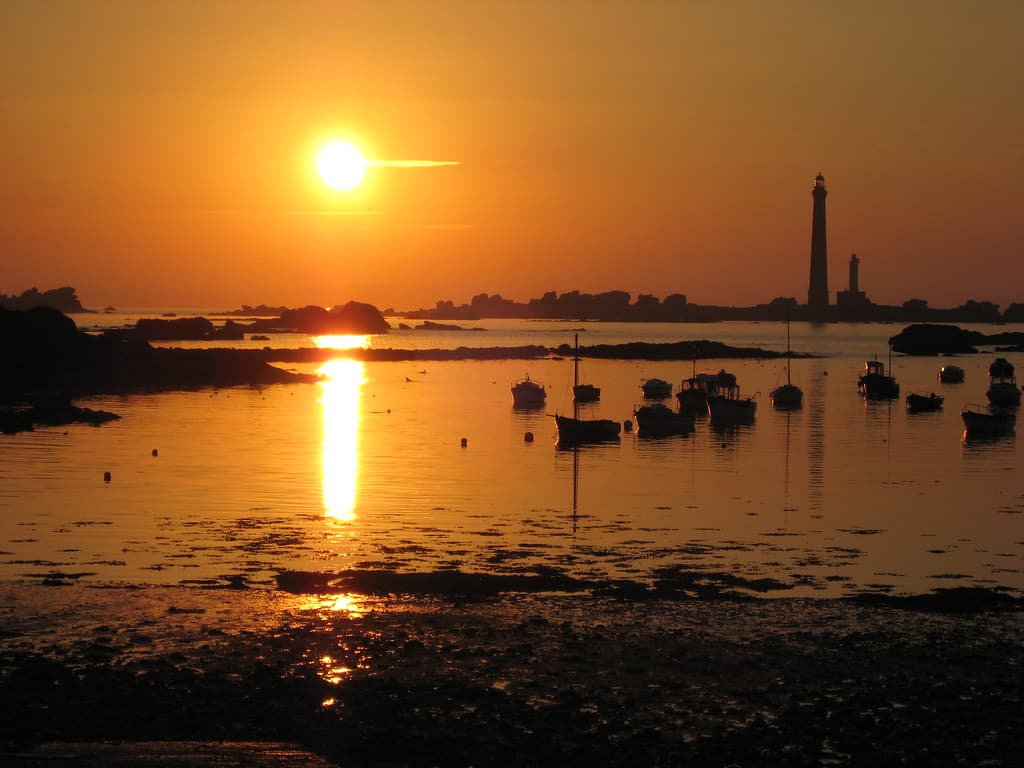
While Plage de Morgat can be visited year-round, July and August offer the warmest weather and water temperatures (around 17-19°C), along with full amenities and lifeguard supervision. June and September provide pleasant conditions with fewer crowds. The beach faces west, making it exceptional for sunset viewing throughout the year. Spring and autumn attract walkers who enjoy the dramatic Brittany coastline in peaceful settings. Winter visits offer wild, atmospheric scenery, though swimming is only for the hardy. For the best balance of good weather and manageable crowds, late June or early September are ideal.
Plage de Morgat is located in the village of Morgat, about 3km south of Crozon town centre. By car, follow the D887 from Crozon. Several parking areas are available near the beach, including Boulevard de la Plage and surrounding streets. Parking is free in off-season but may require payment during summer months. Spaces fill quickly in July-August, so arrive early. The beach is easily accessible on foot from Morgat village centre. Regional buses connect Crozon to Brest, though having a car is most convenient for exploring the wider peninsula.
Morgat village offers numerous restaurants, crêperies, and cafés within walking distance of the beach, serving fresh seafood and traditional Breton cuisine. The beachfront has seasonal facilities including toilets, showers, and beach equipment rentals. Several hotels, holiday apartments, and campsites are available in Morgat and nearby Crozon for various budgets. You'll find bakeries, supermarkets, and shops in the village for picnic supplies. During summer, beach clubs operate on the sand. The tourist office on Boulevard de la Plage provides local information and booking assistance.
Yes, Plage de Morgat is the main departure point for boat tours to the spectacular Grottes de Morgat, a series of impressive sea caves carved into the cliffs south of the beach. These caves, including the famous Grotte de l'Autel, feature striking rock formations and can reach depths of 80 metres. Several operators offer guided boat excursions from Morgat harbour during the tourist season (typically April-September), with trips lasting about 45 minutes. Some caves can also be explored by kayak for a more intimate experience. This is one of the Crozon Peninsula's most popular attractions.