Counting the waves…
Counting the waves…

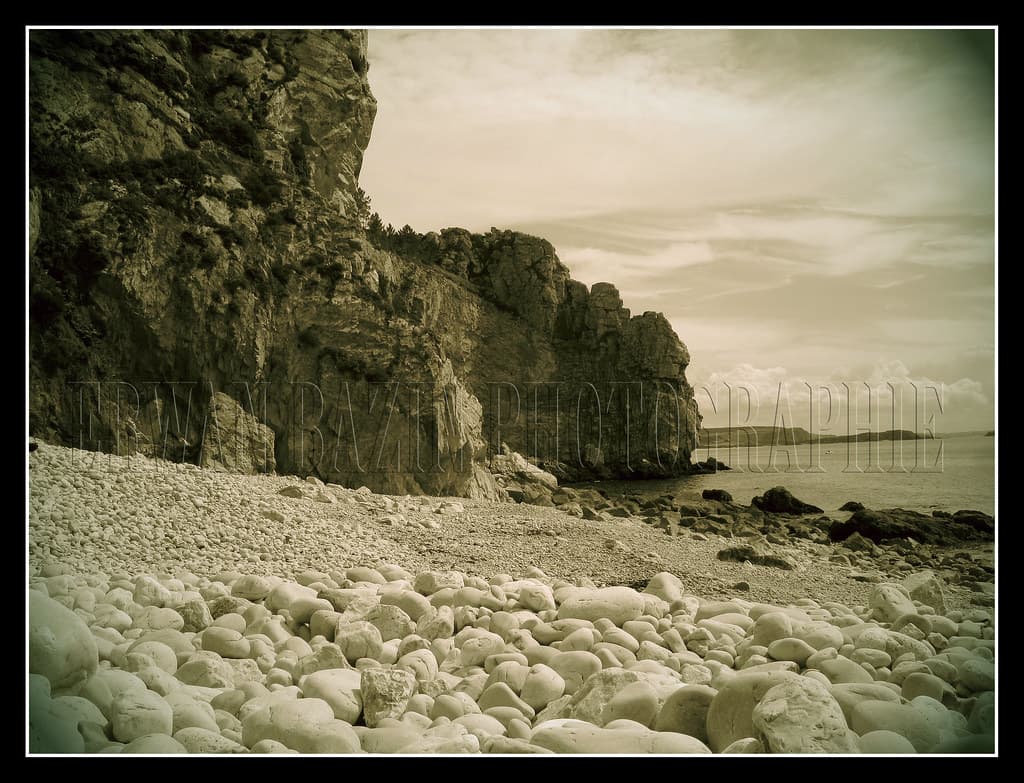
The path down to Plage de l'Île Vierge winds through wind-stunted blackthorn before delivering you to a crescent of coarse sand hemmed in by lichen-covered granite. At low tide, the beach stretches wide enough for two blankets side by side; at high, the Atlantic claims all but a narrow ribbon. Offshore, the small island that lends its name rises like a broken tooth, accessible on foot when the tide retreats and the causeway of barnacle-crusted rock emerges from the surf. The water here runs cold even in August—twelve degrees Celsius will snap you awake faster than espresso—but the clarity rivals anything you'll find along France's northern coast. Rockpools collect in the fissures, harboring blennies and hermit crabs that dart between fronds of kelp. Gulls wheel overhead, their cries sharp against the constant percussion of waves meeting stone. Come in late afternoon when the sun angles west across the Rade de Brest. The light turns amber on the cliffs, then rose, then violet as the sky deepens. You'll likely share the moment with no more than a handful of others—locals who know the tides by heart, a couple spreading a checked blanket on the still-warm sand. The solitude isn't accidental; it's the reward for those willing to trade convenience for the kind of coastal beauty that refuses to perform on demand.
Places, rentals, tours and events within walking and driving distance of Plage de l'Île Vierge.
Photos
Plage de l'Île Vierge is generally safe for swimming during calm weather, with clear waters and a sandy bottom. However, this beach is exposed to Atlantic currents and can experience strong waves and undertows, particularly during high tide or windy conditions. There are no lifeguards on duty, so swimmers should be cautious and assess conditions carefully. The remote nature means help is not immediately available. Check tide times before visiting, as the beach changes dramatically between high and low tide. Families with young children should supervise closely and consider visiting during calm summer days.
While accessible year-round, late spring through early autumn (May to September) offers the most reliable weather for beach activities, with warmer temperatures and calmer seas. Summer months provide the best swimming conditions, though the beach rarely gets crowded due to its hidden location. For dramatic scenery and stunning sunsets, visit during shoulder seasons when light is particularly beautiful. Winter visits are possible but expect rougher seas, strong winds, and cooler temperatures. Sunset visits are highly recommended any time of year, as this beach offers spectacular views over the Atlantic, especially during clear evenings.
Plage de l'Île Vierge requires a scenic walk to reach, adding to its hidden-gem appeal. From Crozon, follow signs toward Morgat, then look for small directional signs to the beach. Parking is limited to a small, informal area along the roadside near the trailhead. From the parking area, expect a 15-20 minute walk along coastal paths with some uneven terrain and steps. Wear sturdy footwear as paths can be rocky and steep in sections. The hike is part of the experience, offering beautiful coastal views. Arrive early during summer to secure parking.
Plage de l'Île Vierge has no facilities directly on the beach—no toilets, showers, or food vendors—so come prepared with everything you need. The nearest amenities are in Morgat, approximately 3 kilometers away, which offers restaurants, cafés, shops, and public facilities. Crozon town, slightly further, has a wider selection of restaurants and supermarkets for supplies. For accommodation, both Morgat and Crozon provide hotels, vacation rentals, and campsites. Pack water, snacks, and sun protection, and plan to carry out all trash as this pristine beach has no bins to maintain its unspoiled character.
Plage de l'Île Vierge earns its hidden-gem status through its combination of relative seclusion, stunning natural beauty, and remarkably clear waters uncommon for Brittany beaches. Unlike more accessible Crozon beaches, the walking approach keeps crowds minimal even in summer. The beach sits in a protected cove with dramatic rock formations and views across the Atlantic. Its name references the nearby island visible offshore. The exceptional water clarity makes it popular with snorkelers and those seeking tranquil swimming. Spectacular sunsets and unspoiled surroundings create an intimate atmosphere perfect for couples and photographers seeking authentic Breton coastal beauty away from tourist crowds.