Counting the waves…
Counting the waves…

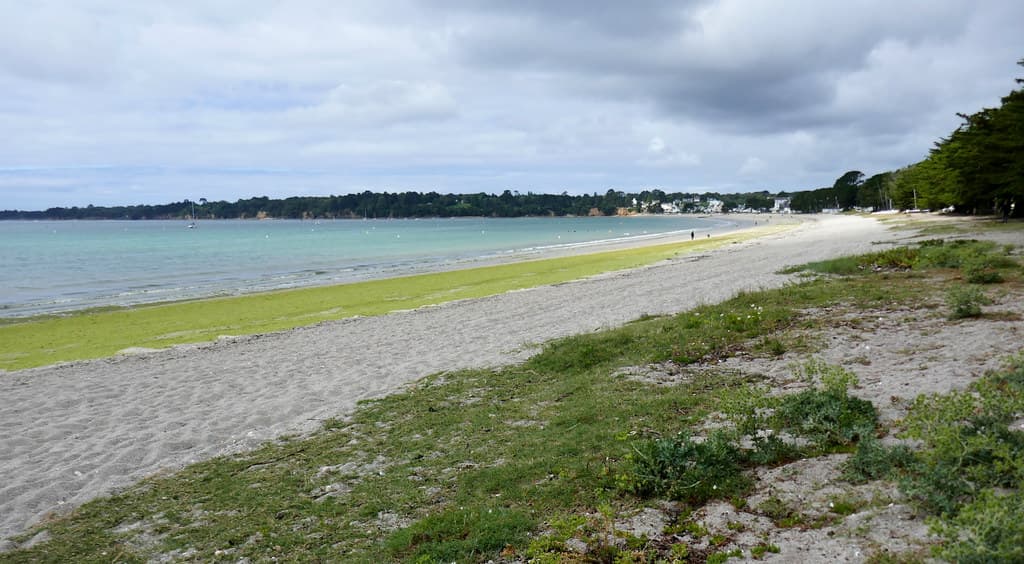
You reach Plage de Beg Meil along a coastal road that threads between villas and maritime pines, emerging where the land curves protectively around a pale sand cove. The beach stretches in a gentle crescent, its shallow gradient making it a magnet for children who wade knee-deep fifty meters from shore. Low tide reveals barnacle-studded rocks and tidal pools where green crabs scuttle beneath ribbons of kelp. The water here lacks the drama of Brittany's ocean-facing strands—instead, the bay's sheltered position offers glassy conditions on most days, with just enough ripple to keep inflatable paddleboards bobbing. Behind the beach, a handful of creperies and seafood shacks serve galettes stuffed with Emmental and jambon blanc, their terraces shaded by white canvas umbrellas. You'll notice locals arriving with folding chairs in the late afternoon, claiming their favored spots for the evening ritual. As the sun descends toward the Pointe de Mousterlin, the western sky ignites in shades of peach and violet, the light reflecting off wet sand in ribbons of gold. Sailboats return to the small harbor adjacent to the beach, their halyards chiming against aluminum masts. This is Beg Meil's gift: not wild grandeur, but a cultivated ease, a beach that asks nothing more than that you settle in and let the hours pass at Breton speed.
Places, rentals, tours and events within walking and driving distance of Plage de Beg Meil.
Photos
Plage de Beg Meil is generally considered safe for swimming and well-suited for families. The beach features calm, sheltered waters thanks to its position in a protected cove, making it ideal for children. The sandy bottom slopes gently into the sea, allowing for comfortable wading. During summer months, lifeguards typically supervise the beach. However, always check local conditions and posted flags before entering the water, as tides and currents can vary. The beach's family-friendly reputation makes it a popular choice for visitors with young children.
Plage de Beg Meil can be enjoyed year-round, though each season offers different experiences. July and August bring warmest water temperatures (17-19°C) and full amenities, but also crowds. June and September offer pleasant weather with fewer visitors. The beach is stunning in spring for coastal walks and birdwatching. Winter provides dramatic scenery and peaceful strolls, though facilities may be limited. For sunset views, late spring through summer offers the longest daylight hours. The Brittany coast can be windy and rainy any time of year, so pack layers regardless of season.
Plage de Beg Meil is located approximately 5 kilometres south of Fouesnant town centre. By car, follow the D145 road toward Beg-Meil; the journey from Fouesnant takes about 10 minutes. Free parking is available near the beach, though spaces fill quickly during summer peak season. Arriving early morning is advisable in July and August. The beach is also accessible by bicycle via quiet coastal roads, with bike racks available. Public transport options are limited; check with Fouesnant tourism office for seasonal bus services connecting the town to Beg-Meil area.
The Beg-Meil area offers several dining options within walking distance of the beach. You'll find creperies, seafood restaurants, and casual cafés serving local Breton specialties, particularly fresh oysters and fish. During summer, a beach snack bar typically operates near the sand. Basic amenities include public toilets and outdoor showers. Several hotels and vacation rentals are available in Beg-Meil village, ranging from small family-run establishments to larger properties. For more extensive shopping and services, Fouesnant town centre is just 5 kilometres away with supermarkets, bakeries, and additional restaurants.
Yes, Plage de Beg Meil is connected to other local beaches via scenic coastal footpaths. A pleasant walking trail links it to neighbouring Plage de Kerler and extends along the rugged Finistère coastline. These paths offer stunning views of the Atlantic, rocky outcrops, and opportunities to discover smaller, secluded coves at low tide. The walks vary in difficulty, with some sections featuring uneven terrain and steps. Proper footwear is recommended. At low tide, you can sometimes walk directly on the sand between adjacent beaches, though always check tide times to avoid being cut off.