
Counting the waves…
Counting the waves…

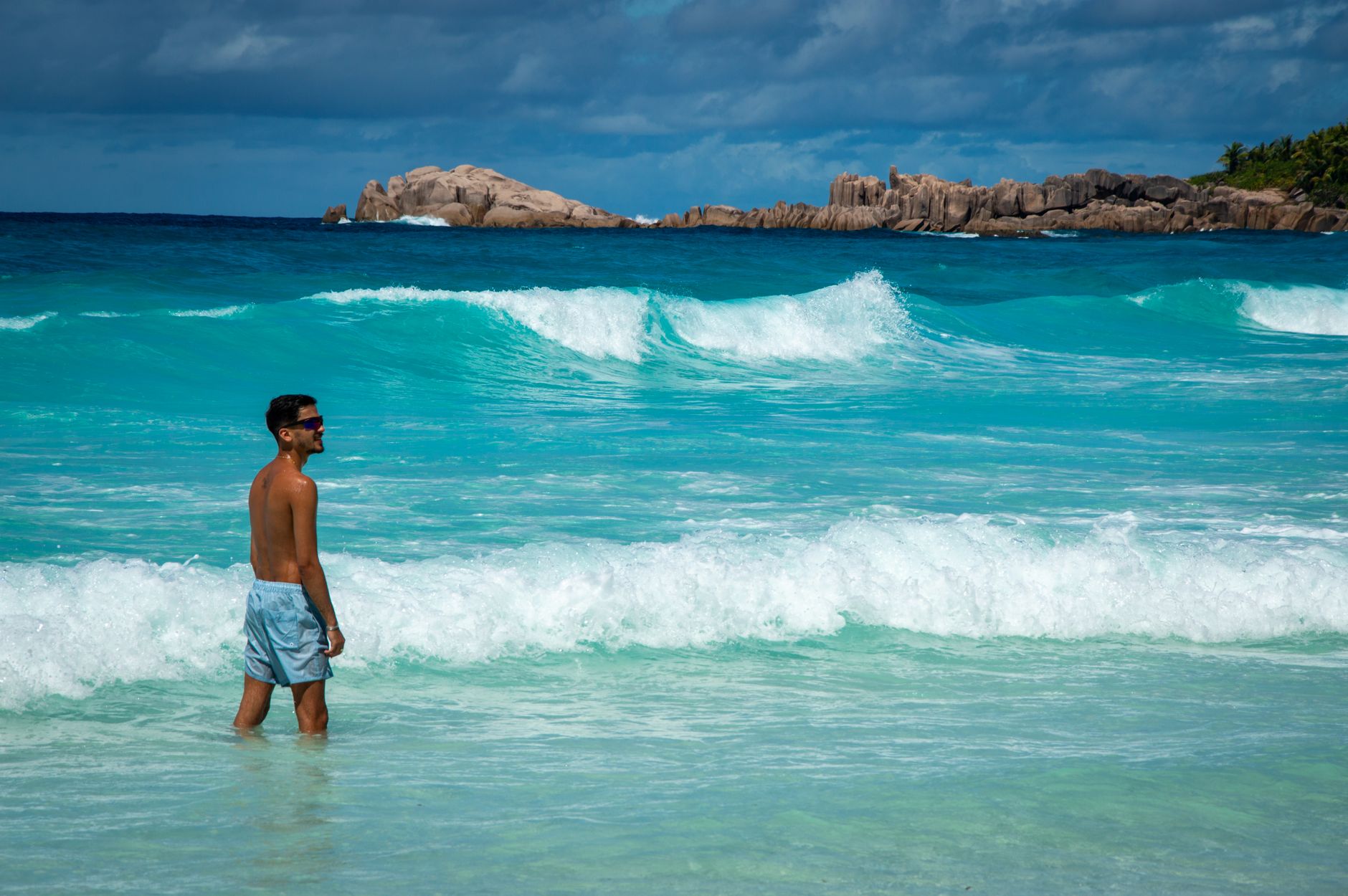
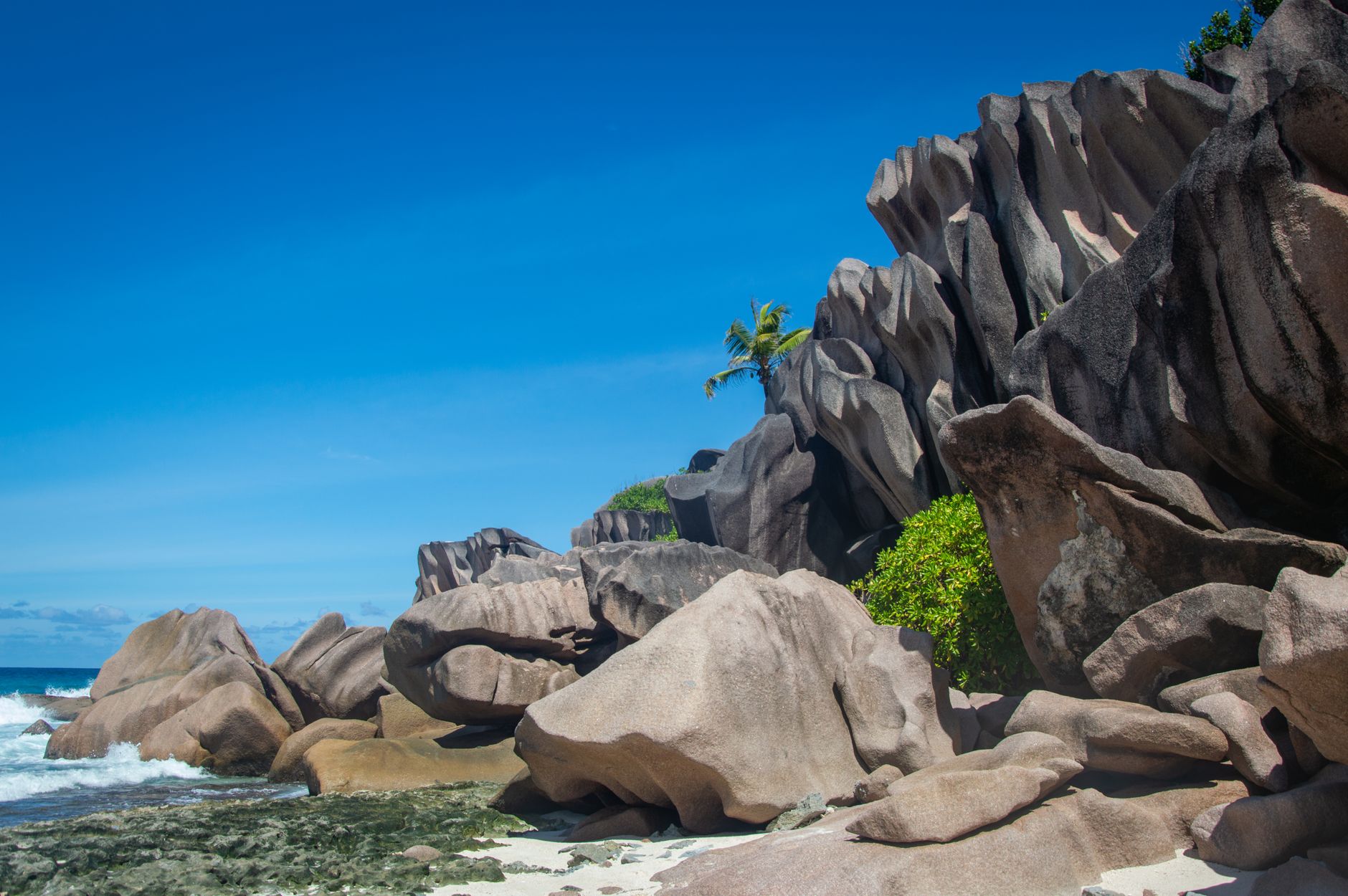
Anse Turlet feels like a secret even though a dozen locals could draw you a map to reach it. The approach trail descends through dense vegetation—bamboo groves giving way to sea grape and manchineel—before spilling you onto a crescent of coarse sand barely thirty meters wide. Three massive boulders sit in the shallows like pieces of a broken planet, their surfaces pocked with erosion and draped with algae below the tide line. The water between the boulders creates natural swimming pools of varying depth and character. The western pool stays shallow and bathtub-warm, popular with families whose children hunt minnows in the sandy margins. The central pool plunges to fifteen feet where the boulders' bases meet, its floor carpeted with turtle grass where peacock flounders bury themselves leaving only their eyes exposed. The eastern pool opens to the bay, allowing small reef fish to drift in with the tide—wrasses and parrotfish that nibble your ankles if you stand still. Above the high-tide line, someone has arranged driftwood into rough benches beneath a leaning palm. The shade here provides relief from the cove's amphitheater heat, though by early afternoon even the shadows feel warm. A rope swing hangs from the palm's crown, frayed and sun-bleached but still functional, arcing over the deepest part of the central pool.
Places, rentals, tours and events within walking and driving distance of Anse Turlet.
Photos
Anse Turlet is generally safe for swimming when seas are calm, as it's a sheltered cove. However, like most beaches on Guadeloupe's west coast, conditions can vary with weather and swell. Always check water conditions before entering and be cautious of rocks near the shoreline. The cove's protected nature makes it suitable for snorkeling when visibility is good, allowing you to explore the underwater rocks and marine life. Avoid swimming during rough weather or strong currents, and there are no lifeguards on duty.
The best time to visit Anse Turlet is during Guadeloupe's dry season from December to May, when you'll enjoy calmer seas, better visibility for snorkeling, and more sunshine. Visiting during weekdays or early mornings helps you avoid local weekend crowds, though this beach rarely gets overcrowded due to its hidden nature. The shoulder months of November and June can also offer good conditions with fewer tourists. Avoid the wettest months of August through October when rough seas and rain are more frequent.
Anse Turlet is located near Gourbeyre on Basse-Terre's southern coast. You'll need a car to reach this beach, as it's not served by regular public transport. From the main coastal road, look for local signs or ask residents for directions to the cove, as it's not a major tourist beach. The access may involve a small path or minor road. Parking is typically informal and limited. A GPS device or smartphone map app will help, though signal can be patchy in some coastal areas of Guadeloupe.
Anse Turlet itself has no facilities, restaurants, or hotels directly on the beach. You'll find limited services in nearby Gourbeyre, a small town primarily residential in nature. For dining and accommodation, your best options are in larger nearby towns such as Basse-Terre (the capital) or Trois-Rivières, both within a short drive. Pack your own food, water, and beach supplies when visiting. The nearby town may have small local shops for basics, but plan ahead to ensure you have everything needed for your beach day.
Anse Turlet stands out as an authentic local swimming spot that most tourists never discover. Unlike the popular beaches of Grande-Terre, this small cove offers a quiet, unspoiled experience where you're likely to encounter only Guadeloupean families rather than crowds. Its intimate size and location near Gourbeyre give it a neighbourhood beach character. The surrounding scenery showcases Basse-Terre's lush, volcanic landscape meeting the Caribbean Sea. It's ideal for travellers seeking to experience Guadeloupe beyond the typical tourist circuit and enjoy nature in relative solitude.