
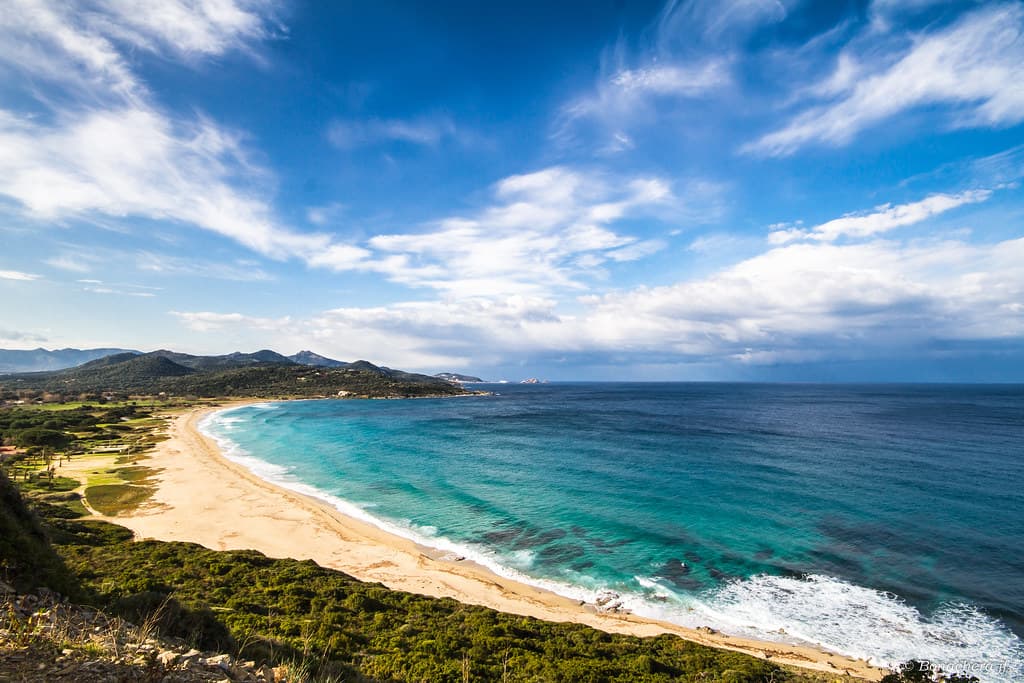
Counting the waves…
Counting the waves…

The descent from the parking area takes you through shoulder-high maquis—juniper, myrtle, and rockrose releasing their oils under the Corsican sun. The boardwalk crosses the Ostriconi's sluggish mouth, where herons stand motionless in the shallows. Then the sand opens up: a kilometer-long crescent backed by dunes and the occasional wind-sculpted pine. The northern end collects driftwood against dark volcanic rocks; families cluster near the river where the water runs shallow and tepid. Farther south, the beach empties out. The sand here is coarse, golden-grey, tracked by gulls and the occasional fox. Waves arrive in sets, their rhythm unbroken by jetties or seawalls. Behind you, the mountains of the Agriates rise in hazy tiers. You won't find umbrellas for rent or a beach bar. What you will find: space, the smell of salt and wild fennel, and the sense that this corner of the Balagne hasn't been tidied up for tourists. By late afternoon, the light turns amber, and the few remaining visitors pack up their towels, leaving the beach to the wind.
Places, rentals, tours and events within walking and driving distance of Plage de l'Ostriconi.
Photos
The beach offers generally safe swimming during calm conditions with a gently sloping sandy bottom suitable for families. However, there are no lifeguards, facilities, or immediate emergency services due to its wild, undeveloped nature. Currents and waves can develop, particularly during windy conditions or when the Ostriconi river flows strongly. Supervise children closely at all times. The beach's remote character means visitors must be self-reliant and cautious. Check weather forecasts beforehand and avoid swimming during rough seas or strong winds.
Visit May through June or September for beautiful weather with fewer crowds than July-August peak season. Early morning or late afternoon provides the best light and cooler temperatures, plus better wildlife viewing in the surrounding maquis. Weekdays are quieter than weekends year-round. Spring brings wildflowers to the dunes and hills, while September offers warm water temperatures with diminishing tourist numbers. The beach is exposed to wind, so check forecasts and choose calm days for the most pleasant experience.
The beach is accessed from the D81 coastal road between Île-Rousse and Saint-Florent, with a signposted turn-off. A dirt parking area accommodates vehicles, though it fills quickly during summer—arrive before 10am for best availability. From parking, a footpath leads approximately 10-15 minutes through scenic maquis and dunes to the beach. The walk is manageable but involves sandy, uneven terrain. Bring everything you need as there are no facilities. The remote location makes public transport impractical; a car is essentially necessary.
Plage de l'Ostriconi is completely wild and undeveloped with no restaurants, toilets, showers, sunbed rentals, or any facilities. Visitors must bring all supplies including food, water, sun protection, and shade. The nearest services are in villages along the coast several kilometres away—either toward Île-Rousse or Saint-Florent. Pack out all rubbish as there are no bins. This complete absence of development preserves the beach's wild character but requires preparation and self-sufficiency from visitors.
The beach sits at the eastern edge of the Désert des Agriates, a vast wild coastal region of maquis and remote beaches stretching westward. It represents the transition zone where the Balagne coast ends and the wilder, more rugged Agriates wilderness begins. The dramatic landscape of rolling hills covered in Mediterranean scrub, the undeveloped character, and the river meeting the sea embody the Agriates' untamed nature. For many visitors, l'Ostriconi provides their first or last accessible taste of this protected wilderness area.