
Counting the waves…
Counting the waves…
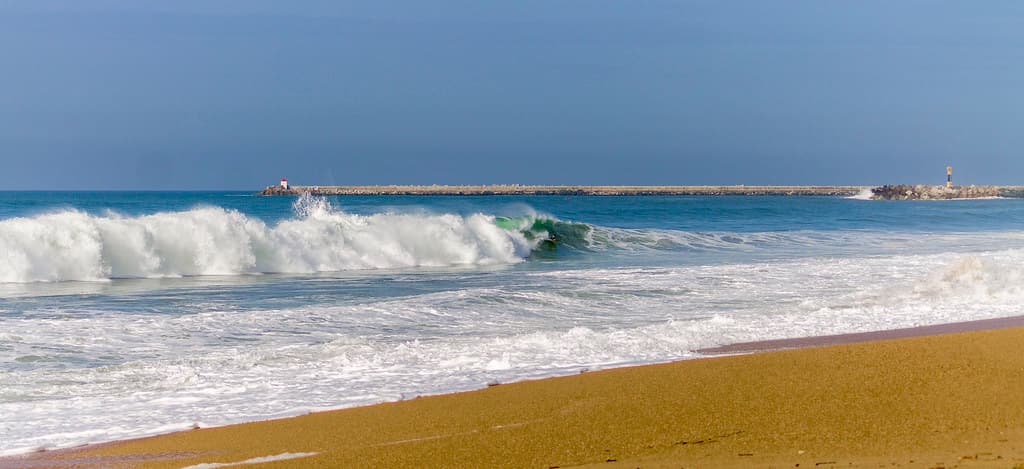
Stand at the southern terminus of France's legendary Landes coast and you'll notice how the landscape shifts. The endless pine forests thin just enough to reveal the port of Bayonne's silhouette across the Adour estuary, industrial cranes punctuating the horizon like exclamation marks. Plage du Métro earns its name from the old railway that once ferried beachgoers here, though today you'll arrive by car or bike, parking among the tamarisk shrubs that bend permanently eastward from decades of ocean wind. The beach itself unfolds in a generous sweep of blonde sand, wide enough to accommodate multigenerational picnics near the dune grass and the dedicated surfers who paddle out where sandbars shift with each tide. Winter storms reshape this coastline constantly, carving new channels and depositing driftwood in sculptural tangles. Spring brings calmer faces to the waves, though the Atlantic never truly rests here. As afternoon bleeds into evening, you'll understand why regulars time their visits to the golden hour. The sun descends behind the pines, casting amber light across the wet sand while dog walkers and barefoot joggers trace the waterline. The juxtaposition feels distinctly French: untamed nature pressing against human infrastructure, both coexisting without pretense. This is where the Landes doesn't fade but rather transforms, one final flourish before yielding to the Basque coast.
Places, rentals, tours and events within walking and driving distance of Plage du Métro.
Photos
Plage du Métro faces the Atlantic Ocean and typically experiences moderate to strong surf conditions. Lifeguards patrol during summer months (June-September), and swimmers should stay within flagged areas. The beach can have powerful currents and shore breaks, making it more suitable for confident swimmers. Check daily flag warnings: green for safe, orange for moderate risk, red for dangerous conditions. Surfing is popular here, so be aware of board traffic near the shore.
The ideal time to visit is late afternoon for combining a surf session with sunset views, as the beach faces west toward the Atlantic. Summer months (July-August) offer warmest weather and full facilities, though crowds increase. May-June and September provide pleasant conditions with fewer visitors. Surfers find consistent waves year-round, with autumn and winter bringing larger swells. Early mornings offer quieter beach experiences and good surf before winds pick up.
Plage du Métro is located in southern Tarnos, accessible by car via D652 coastal road. Parking areas are available near the beach access points. From Bayonne (approximately 10km north), take the D810 then follow signs to Tarnos beaches. The beach marks the southern end of the Landes coast, making it easily accessible from the Basque Country. Public transport options may be limited, so driving or cycling are recommended for reaching this beach.
Tarnos offers various accommodation options including campgrounds, vacation rentals, and small hotels near the beach. Beach clubs and seasonal snack bars operate during summer months. For more diverse dining and lodging choices, nearby Capbreton (5km south) and Bayonne provide extensive restaurants, hotels, and shopping. Local markets in Tarnos sell fresh regional produce. Many visitors choose accommodations along the Landes coast and visit multiple beaches, with Plage du Métro as the southern endpoint.
Plage du Métro serves as the major southern endpoint of the famous Landes coast, marking the transition between the Landes département and the Basque coastline. This geographical position gives it a distinctive character, combining the wide sandy expanses typical of Landes beaches with proximity to Basque culture and landscape. The beach name references the former tramway that once connected coastal communities. Its position makes it less crowded than central Hossegor or Capbreton beaches while maintaining good surf conditions.