Counting the waves…
Counting the waves…

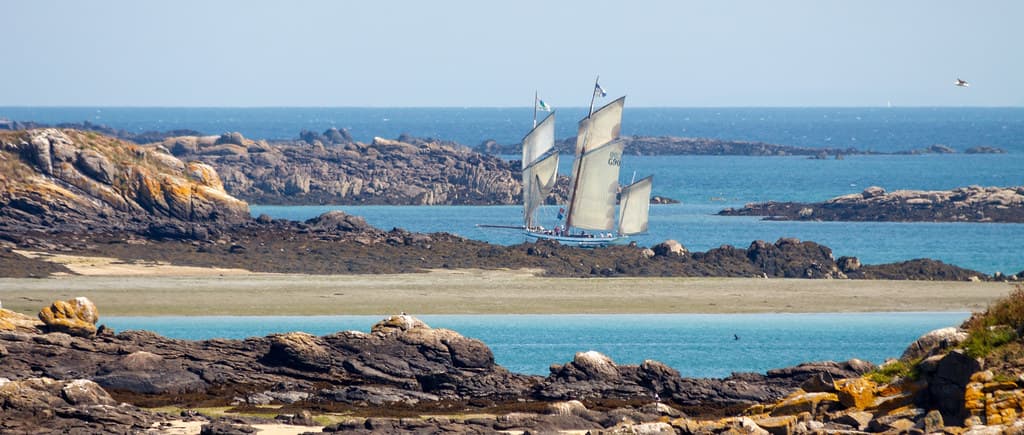
The footpath from Port-Marie winds through gorse and sea-pink, dipping toward a narrow strand hemmed by lichen-stained granite. Plage du Château Renard takes its name from the ruined fortifications that crown the headland above—stones mortared centuries ago now crumbling into thrift and samphire. At high water the beach nearly vanishes; by low tide it unfurls in rippled sand etched by rivulets, the retreating sea leaving behind dark tangles of kelp and the occasional razor-clam shell. You'll share the cove with oystercatchers and the odd pair of walkers who've traced the island's eastern shore. The water stays bracing even in August, numbing your calves as you wade past submerged boulders furred with mussels. Across the sound, the scatter of smaller islets—some no larger than a dining table—catches the afternoon light, their granite flanks glowing ochre and rose. Sunset transforms the beach into a theatre of color. The sky bleeds coral and violet, silhouetting the rocky pinnacles offshore while tide pools mirror the fading warmth. Bring a windbreaker; the breeze off the Channel sharpens as the sun drops, and the last ferry to Granville won't wait. But in that brief, luminous hour before departure, Château Renard belongs entirely to those who sought it out.
Places, rentals, tours and events within walking and driving distance of Plage du Château Renard.
Photos
Plage du Château Renard experiences strong tidal variations typical of Granville's coastline, with some of Europe's highest tides. Swimming conditions vary significantly with the tide schedule—check local tide tables before entering the water. The beach is more sheltered than Granville's ocean-facing beaches, but currents can still be present. There's no lifeguard service at this quieter beach, so swimmers should be confident and cautious. Supervise children closely, and avoid swimming during high winds or rough seas. The rocky areas can be slippery when wet.
Plage du Château Renard can be enjoyed year-round, with each season offering different appeal. Summer (June-August) provides warmest weather for swimming, though crowds are larger. Spring and autumn offer pleasant temperatures for beach walks with fewer visitors. The beach faces west, making it excellent for sunset viewing throughout the year. Winter visits appeal to storm watchers and photographers. For the fullest beach experience, visit during low tide when more sand is exposed. Early mornings and weekday visits ensure greater solitude compared to Granville's more popular beaches.
Plage du Château Renard is located on Granville's Grande Île (the historic old town promontory). Access requires walking, as the old town has limited vehicle access. Park in designated lots near Granville's lower town or port area, then walk up to the walled city. From the old town, follow coastal paths toward the western side of the promontory. The beach is reached via steps or paths descending from the ramparts. Wear comfortable walking shoes, as terrain includes cobblestones and stairs. The walk offers scenic views but may be challenging for those with mobility issues.
Plage du Château Renard itself has minimal on-site facilities—no beach clubs or permanent refreshment stands. However, Granville's old town above offers numerous restaurants, crêperies, and cafés within a short walk. The main commercial areas near Port-Marie and Grande Grève have more dining options and public toilets. For accommodations, several hotels and vacation rentals are available throughout Granville, with some charming options in the historic upper town. Pack essentials like water, snacks, and sunscreen, as you won't find vendors directly at this quieter beach.
Plage du Château Renard remains relatively undiscovered because it's overshadowed by Granville's main beaches—Plage du Plat Gousset and Grande Grève—which have easier access and more facilities. This secondary beach requires navigating the old town and descending from the ramparts, deterring casual beachgoers. Its smaller size and rockier composition at high tide make it less suitable for traditional sunbathing compared to the expansive sandy beaches nearby. However, these same qualities attract couples and photographers seeking scenic, peaceful spots, especially for sunset views over the bay.