Counting the waves…
Counting the waves…

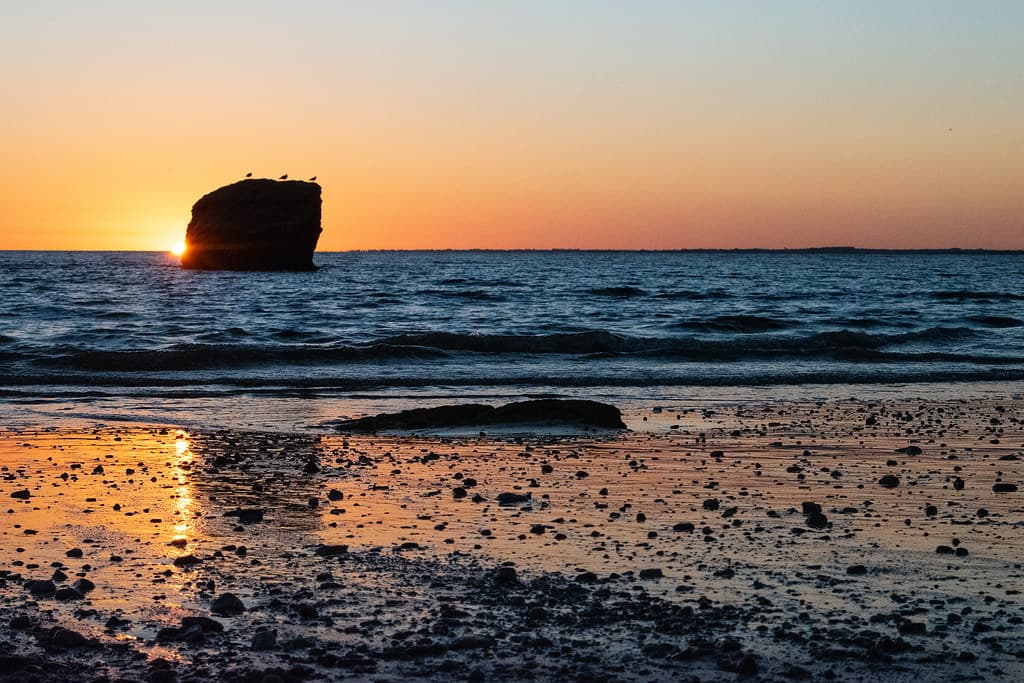
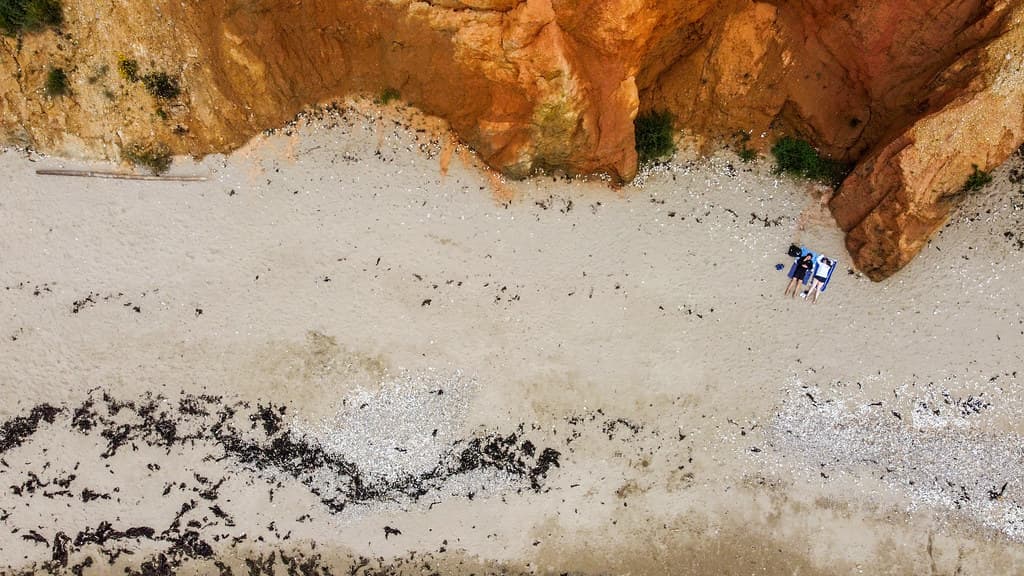
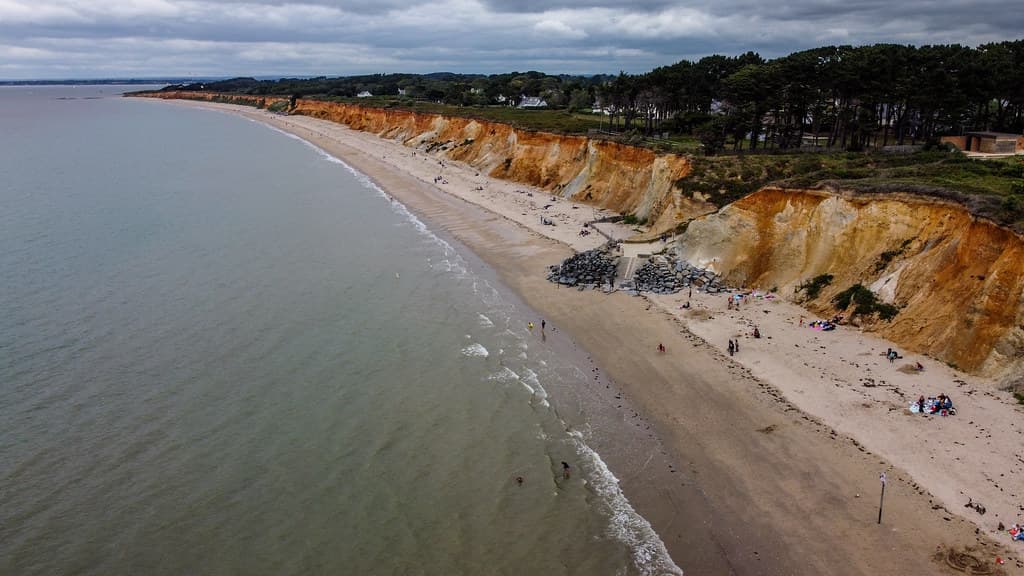
The beach takes its name from the copper and gold hues that streak through its sedimentary cliffs—mineral deposits laid bare by millennia of Atlantic storms. You walk onto sand the color of burnt sienna, hemmed by rocks that shift from terracotta to honey depending on the slant of light. Low tide exposes a rippled expanse dotted with mussel-covered boulders and shallow basins where children crouch to net translucent shrimp. Families stake out spots near the dunes, spreading blankets on sand still cool from the morning fog. Surfers paddle out where the swell wraps around the Pointe du Bile, their silhouettes dark against the silvering horizon. By late afternoon, the cliffs glow as if lit from within, and photographers cluster along the high path to catch the sun dropping into the gulf. You linger as the tide climbs, seawater filling the channels between stone outcrops and erasing footprints. The beach empties slowly, locals folding chairs and shaking sand from towels. Gulls settle onto the exposed reefs. What remains is the rhythmic crash of breakers and the scent of kelp drying on warm rock—elemental, unhurried, utterly Breton.
Places, rentals, tours and events within walking and driving distance of Plage de la Mine d'Or.
Photos
Swimming conditions at Plage de la Mine d'Or vary significantly with tides and weather. The beach faces the Atlantic and can experience strong currents, particularly during high tide and rough seas. The dramatic cliffs and rocky outcrops create beautiful scenery but require caution when swimming. There's no lifeguard supervision at this beach, so swimmers should exercise extra care. Check tide times before visiting, as the beach becomes very narrow at high tide. Families with young children should supervise closely and consider swimming at low tide when conditions are generally calmer.
Plage de la Mine d'Or is stunning year-round, but each season offers different experiences. Summer (June-September) provides warmest swimming temperatures and longest days, though it's busiest. Late spring and early autumn offer pleasant weather with fewer crowds. The beach is famous for spectacular sunsets, best viewed during summer months when the sun sets over the ocean. Winter visits reward you with dramatic Atlantic storms and golden cliff colours in low-angled light. For photography and fewer visitors, consider shoulder seasons. Always check tide schedules to maximise beach access time.
Plage de la Mine d'Or is located near Pénestin village in southern Brittany. By car from Vannes, take the D34 towards Pénestin (approximately 45 minutes). From La Baule or Saint-Nazaire, drive north via the D774. There's a dedicated car park near the beach access point, which is free but can fill quickly during summer months and weekends. The beach requires a short walk down from the parking area through a pathway leading to the sand. Public transport options to Pénestin are limited, making a car the most practical choice for visitors.
Plage de la Mine d'Or itself has no facilities directly on the beach, so come prepared with food and water. The nearby village of Pénestin, just a few kilometres away, offers restaurants, crêperies, and cafés serving fresh seafood and Breton specialities. You'll find bakeries and small shops for picnic supplies. Accommodation options in Pénestin include hotels, vacation rentals, campsites, and gîtes. For more extensive dining and lodging choices, the larger towns of La Roche-Bernard and Muzillac are within 15-20 minutes' drive. Book ahead during July and August.
The beach's name, meaning 'Gold Mine Beach,' comes from its distinctive ochre and golden-coloured cliffs, which create a striking contrast against the blue Atlantic waters. These dramatic cliffs are composed of schist rock rich in iron oxide, giving them their characteristic warm, golden hue that intensifies in certain lighting conditions, particularly at sunset. The cliffs' layered, angular formations have been sculpted by centuries of wind and wave erosion, creating the beach's signature dramatic landscape. This unique geology makes Plage de la Mine d'Or one of Brittany's most photographed and visually distinctive coastal locations.