Counting the waves…
Counting the waves…

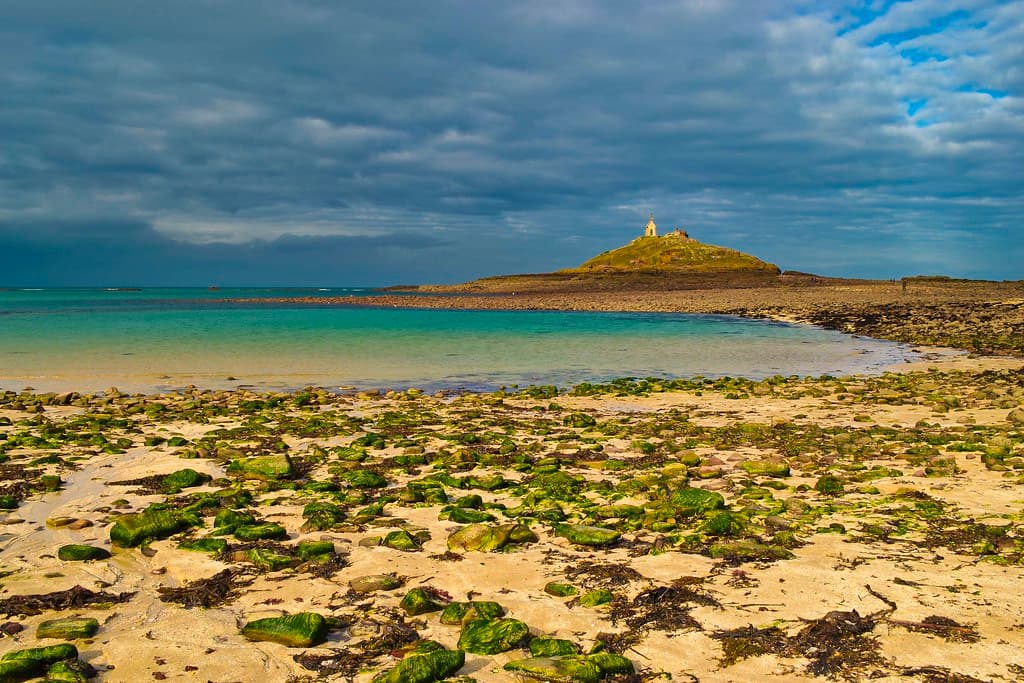
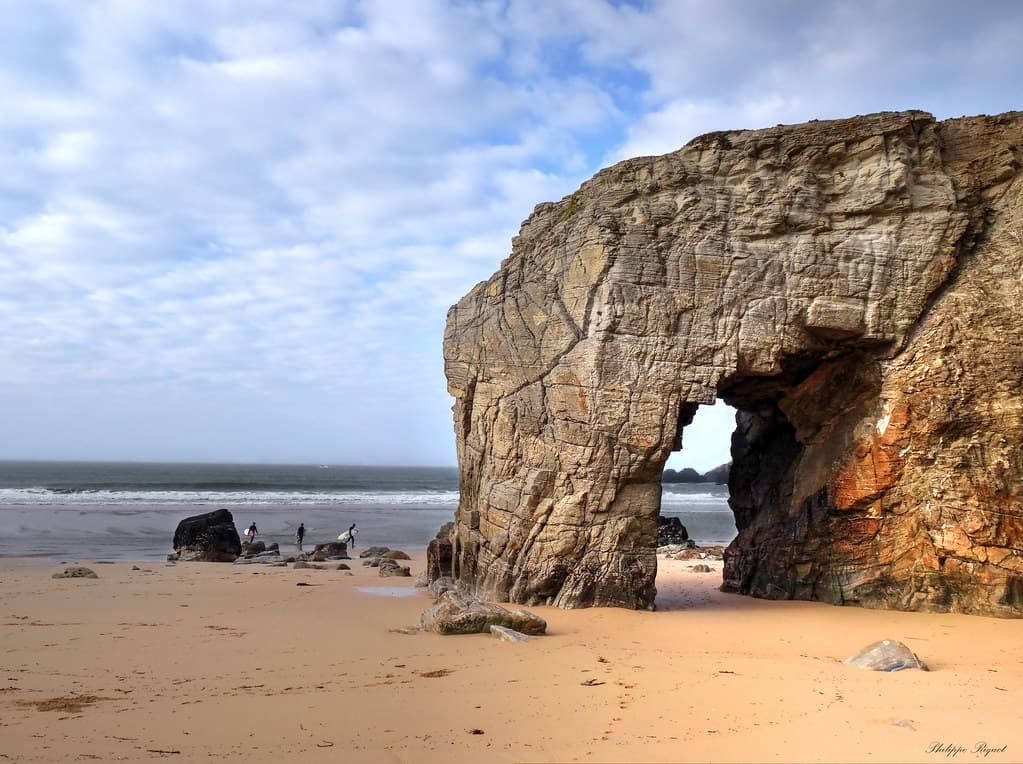
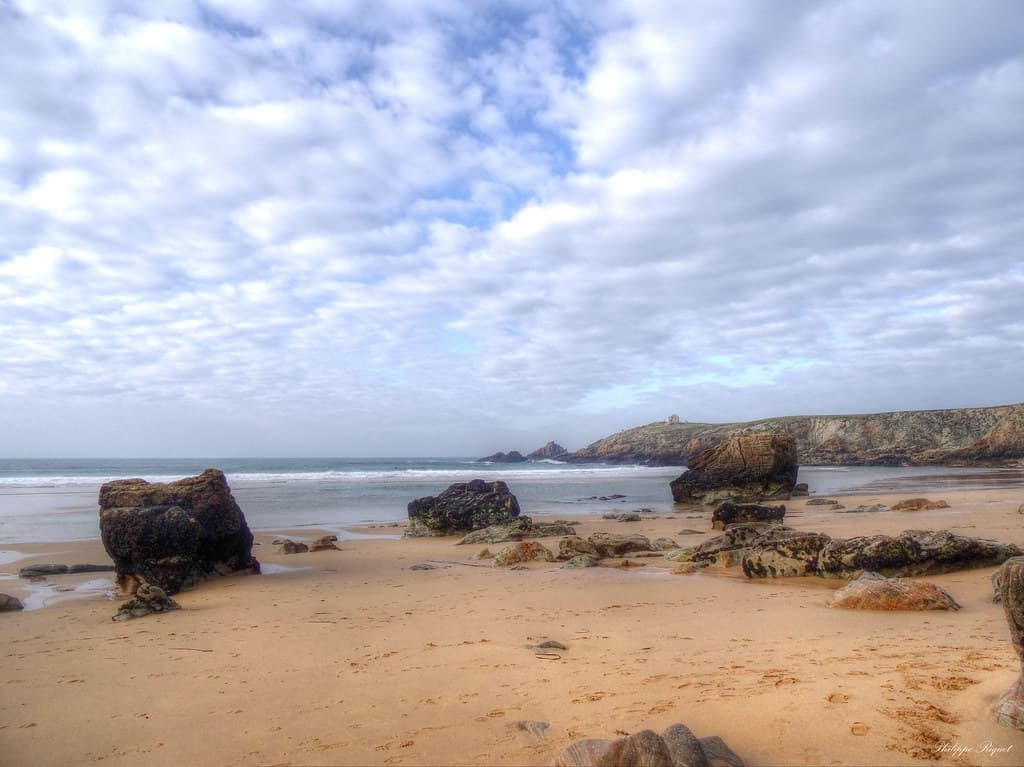
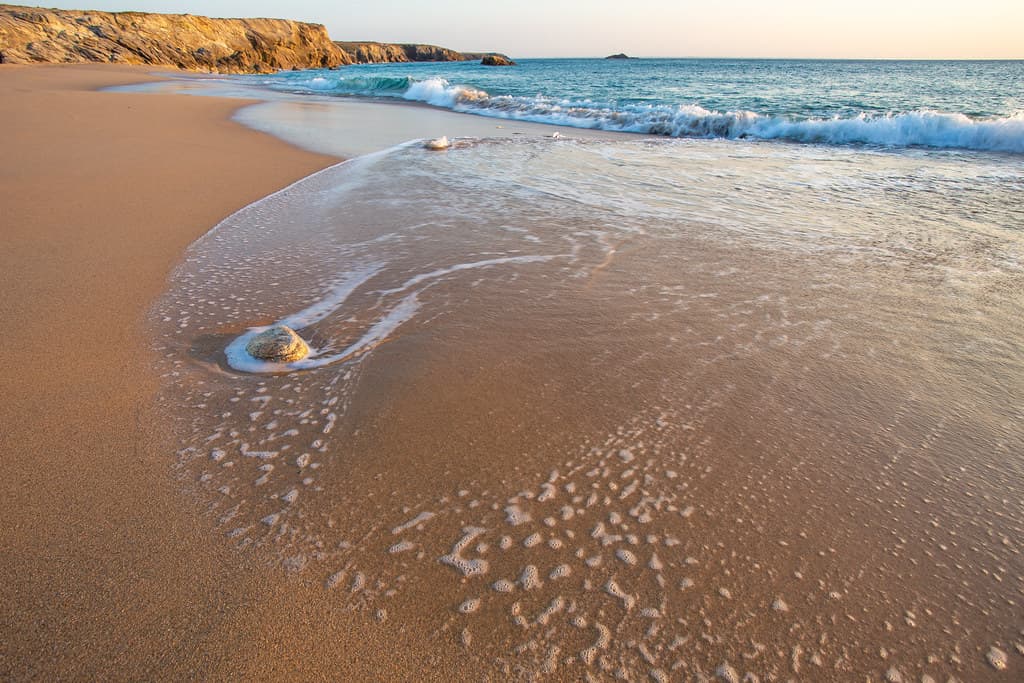
Port Blanc occupies a cleft in the Côte Sauvage, the wild western shore that runs the spine of the Quiberon Peninsula like a scar. Where the east coast coddles yachts and gelato stands, this side bares itself to ocean gales and rolling groundswell. The sand here is coarse, blonde, littered with kelp ribbons and shell fragments ground smooth by centuries of tide. Granite boulders the color of smoked salmon frame the beach—hence the name—and at low tide, tidal pools brim with mussels clinging to stone. You'll share the break with a handful of year-round surfers who know the sandbars shift after every storm. Families stake out the sheltered southern corner when the wind swings east, but most afternoons the beach belongs to anyone willing to brave the chill and the chop. A footpath traces the coastline north toward Pointe de Percho, threading through gorse and sea thrift, and the views—endless, bruised, magnificent—reward every stumble over exposed root. Come for sunset and you'll understand why locals guard this place quietly. The light turns molten, spilling across the bay toward Belle-Île, and the roar of surf softens to a lullaby. There's a small parking area, a weathered sign, and nothing else—no kiosk, no concession, no crowd. Just you, the Atlantic, and the kind of beauty that doesn't need a filter.
Places, rentals, tours and events within walking and driving distance of Plage de Port Blanc.
Photos
Plage de Port Blanc is exposed to Atlantic swells and can experience strong currents, particularly during high tide and windy conditions. The beach is popular with surfers precisely because of these waves, which makes swimming more challenging than at sheltered beaches. There are no lifeguards stationed here, so swimmers should exercise caution and assess conditions carefully. Families with young children may prefer calmer days or the more protected beaches on Quiberon's eastern coast. Always check weather forecasts and tide times before entering the water.
Plage de Port Blanc can be visited year-round, with each season offering distinct appeal. Summer (June-August) provides warmest weather but brings more visitors. Spring and autumn offer milder temperatures, fewer crowds, and excellent conditions for coastal walks and photography. The beach is particularly stunning at sunset throughout the year. Surfers favour autumn and winter when Atlantic swells are strongest. Even in cooler months, the dramatic coastal scenery and wild character make visits worthwhile. Check tide schedules, as the beach's appearance and accessibility change significantly between high and low tide.
Plage de Port Blanc is located on the western Côte Sauvage of the Saint-Pierre-Quiberon peninsula. By car from Quiberon town, follow signs toward the Côte Sauvage and Port Blanc. Free parking is available near the beach, though spaces can fill quickly during summer weekends. The beach is accessible via a short walk from the car park. If staying in Quiberon or Saint-Pierre-Quiberon, cycling is popular along the coastal paths. Public buses serve the peninsula during summer months, though service is limited outside peak season.
Plage de Port Blanc itself has minimal on-site facilities, reflecting its wild, unspoiled character. The nearest restaurants, shops, and services are in Saint-Pierre-Quiberon village, approximately 2-3 kilometres away, where you'll find cafés, crêperies, and grocery stores. For broader dining and accommodation options, Quiberon town offers numerous hotels, vacation rentals, and restaurants within a short drive. Many visitors bring picnics to enjoy on the beach. During summer, mobile vendors occasionally appear near the parking area, but it's wise to bring water and snacks.
Plage de Port Blanc remains quieter than central Quiberon beaches because it's located on the rugged Côte Sauvage rather than the sheltered eastern bay. Its exposure to Atlantic waves makes it less suitable for casual swimmers and families seeking calm waters, naturally limiting crowds. The beach attracts those seeking dramatic coastal scenery, surfing conditions, and sunset views rather than traditional sunbathing. Its slightly more remote position on the peninsula and limited facilities also mean fewer visitors compared to the easily accessible, amenity-rich beaches near Quiberon's town centre and Port Maria.