Counting the waves…
Counting the waves…
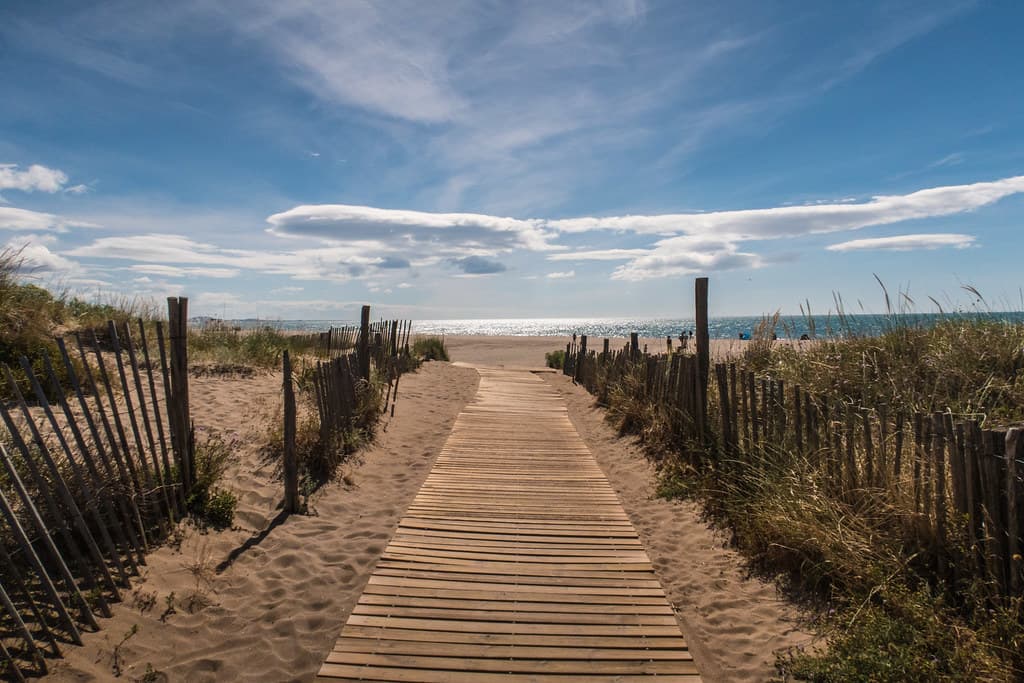
The Hérault coast doesn't shout. Between the party beaches of Cap d'Agde and the boutique sands of Sète, Portiragnes unfurls like a secret kept by people who prefer their Mediterranean without the selfie sticks. The beach runs wide and flat, backed by a fragile ecosystem of dunes that the local conservancy has spent decades protecting. Wooden walkways thread through sea holly and immortelle, their weathered planks warm under bare feet by mid-morning. You'll spread your towel on sand the color of raw honey, fine enough to shake off easily but substantial enough to build the kind of sandcastles that survive the afternoon tide. The water comes in shallow and calm, striped in bands of turquoise and deeper blue where sandbars create natural pools perfect for children who aren't strong swimmers yet. By noon, the scent of Ambre Solaire mixes with salt air and the faint herbal notes drifting from the dunes. The eastern stretches near the old canal mouth see fewer umbrellas, just the occasional kiteboarder waiting for the Tramontane wind and couples who've packed wine and socca from the village. When the day-trippers leave around five, the beach exhales. The light goes golden, the sand cools, and you remember why the French have always understood that the best beaches are the ones nobody bothers to promote.
Places, rentals, tours and events within walking and driving distance of Plage de Portiragnes.
Photos
Plage de Portiragnes offers safe swimming conditions with lifeguard supervision during summer season, typically from June through September. The beach features gently sloping sand and calm Mediterranean waters suitable for families. Supervised swimming zones are clearly marked with flags indicating daily conditions. The natural setting means fewer crowds than urban beaches, though standard precautions apply regarding sun exposure and checking flag warnings. The protected dune system creates a sheltered environment, generally maintaining calmer waters.
June and September offer the best balance of pleasant weather and peaceful atmosphere at Plage de Portiragnes. These shoulder months provide warm Mediterranean temperatures with significantly fewer visitors than July-August peak season. The natural beach environment is particularly beautiful in early autumn when dune vegetation flourishes. Summer mornings before 11am offer tranquility even in high season. Spring visits suit nature lovers and walkers, though swimming may be cool and services limited outside main summer months.
Plage de Portiragnes is located about 30 kilometers southwest of Béziers and 60 kilometers from Montpellier. By car, take the A9 motorway to Béziers exit, then follow D37 toward Portiragnes-Plage; parking areas are available near the beach. Public transport options are limited; seasonal bus services may operate from Béziers or nearby towns during summer. The nearest train station is in Vias or Béziers, requiring taxi or car rental to reach the beach. Cycling is possible via coastal paths.
Portiragnes-Plage offers seasonal beachfront restaurants and cafés serving Mediterranean cuisine, seafood, and casual fare, mainly operating from May through September. The area features several campgrounds, holiday rental apartments, and small hotels catering to families seeking peaceful stays. Nearby Portiragnes village has local shops and dining options. Larger supermarkets are found in Vias or Béziers for self-catering needs. The relaxed atmosphere means fewer dining choices than busier resort towns, encouraging simple, nature-focused visits.
Plage de Portiragnes distinguishes itself through protected dune ecosystems that create a more natural, unspoiled coastal landscape. The beach remains relatively undeveloped compared to nearby resort areas, appealing to visitors seeking authentic Mediterranean nature. Wide sandy stretches backed by dunes provide scenic beauty and ecological interest, with native vegetation and occasional wildlife. The peaceful atmosphere attracts families and nature enthusiasts preferring quieter environments over commercial beach resorts. This combination of natural preservation and accessibility makes it unique along the developed Hérault coast.