Counting the waves…
Counting the waves…
A refined fusion of water purity, environmental stability, and communal vibrancy for Plage de Sérignan.
View MethodologyAnalyzed via live sensors and environmental data.
Wave height, wind, and atmospheric stability.
Live footfall and crowd balance metrics.
Community reviews and curated sentiment.
“You'll smell the pine resin before you see the sea—Plage de Sérignan hides behind a fringe of parasol trees and blonde dunes that muffle the sound of the coastal road. Families spread picnic blankets where wild grasses…”
Limited recent visitor reports — live OBI telemetry is your best guide for current conditions.
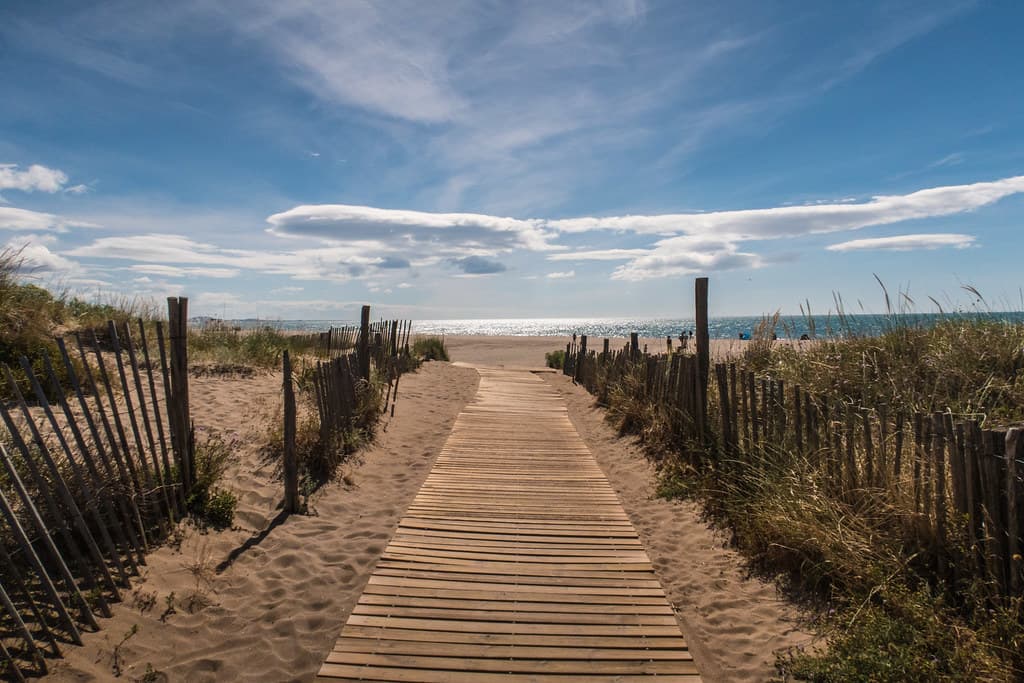
The walk from the car park threads through a nature reserve where marram grass bends in the tramontane wind and lizards dart across sandy footpaths. When you crest the final dune, the beach unfolds in both directions—a broad ribbon of honey-toned sand that refuses to crowd, even in July. The water here stays shallow for twenty paces, warm enough by June that toddlers wade without protest while their parents sink beach chairs into the soft upper strand.
This is the Hérault coast at its least manicured. No palm-lined promenades, no thumping beach clubs—just the occasional kite twisting overhead and the low hum of French families debating whether it's too early for rosé. The dunes behind you are a protected UNESCO site, part of the Grand Site de France Camargue Gardoise, which means developers can't touch them and you get uninterrupted views of sea oats swaying against blue sky.
 Credit: Unsplash
a sandy beach next to the ocean with buildings in the background
 Credit: Unsplash
a sandy beach with a fence and buildings on the side
Shade pockets between sea oats
Gentle slope, warm by June
Boardwalks through protected grasses
Prime Visitation
quiet escape
Where it is
Plage de Sérignan
Sérignan, Occitanie, France
43.258000°, 3.280000°
Weather
Loading…
Swell
—
Temp
Warm · Restorative
UV Index
Moderate
Wind
—
Tidal State
Last known
Max Sunlight
—
Ideal Shade
—
May - Sep (Peak)
Jan - Dec (Off-season)
Historical data suggests peak visibility and stable sea temperatures occur during the prime visitation window.
Select a category to load nearby places.
Unlock restaurants, luxury stays and curated maritime experiences within 2km
Plage de Sérignan is generally safe for family swimming, with gently sloping sandy shores typical of the Hérault Coast. The beach is less crowded than nearby resorts, offering good visibility of children. However, Mediterranean conditions can vary, so always check local flag warnings. Lifeguards are usually present during summer months (July-August). The natural dune environment means fewer facilities than urban beaches, so bring your own shade and water. Stay within designated swimming areas and supervise children closely, as currents can occasionally develop along this stretch of coast.
For a quiet escape, visit Plage de Sérignan during May-June or September-early October when weather remains pleasant but French school holidays have ended. Weekday mornings, even in July-August, tend to be calmer than weekends. The beach's natural setting and less-developed surroundings mean it stays quieter than Cap d'Agde or Valras-Plage throughout summer. Early mornings before 10am and late afternoons after 4pm offer the most peaceful experience. Spring and autumn provide comfortable temperatures for walking the beach and exploring the protected dune landscape without peak-season crowds.
Plage de Sérignan is accessible from Béziers, approximately 15km away. By car, follow the D37 toward Sérignan-Plage; parking is available near the beach. The nearest train station is Béziers, with connections to major cities like Montpellier and Toulouse. From Béziers station, take a local bus or taxi to Sérignan-Plage (limited public transport options). During summer, regional bus services may operate to coastal towns. If staying in Sérignan village, the beach is a short drive or bike ride away. Renting a car offers the most flexibility for exploring this quieter section of the Hérault Coast.
Sérignan-Plage offers seasonal beach cafés and snack bars during summer months, though options are more limited than busier resorts. The main village of Sérignan, a few kilometres inland, has restaurants, bakeries, and supermarkets for self-catering. Accommodation includes campgrounds, holiday rentals, and small hotels in Sérignan-Plage and the surrounding area. Nearby Valras-Plage (5km south) and Béziers provide more extensive dining and lodging choices. Many visitors stay in vacation homes or campgrounds to enjoy the natural, family-friendly atmosphere. Book summer accommodation well in advance, especially for July-August.
Plage de Sérignan features protected coastal dunes that form part of the Languedoc-Roussillon's natural heritage. These fragile ecosystems support unique Mediterranean vegetation and wildlife, offering scenic beauty beyond typical beach resorts. Wooden walkways help preserve the dune environment while allowing visitors to explore. The less-developed coastline provides a more authentic, peaceful beach experience compared to heavily urbanized areas. Photography enthusiasts appreciate the natural landscapes, especially during golden hour. The dunes create a buffer between beach and hinterland, contributing to the tranquil atmosphere. Respect preservation efforts by staying on marked paths and avoiding disturbing vegetation.
Photos