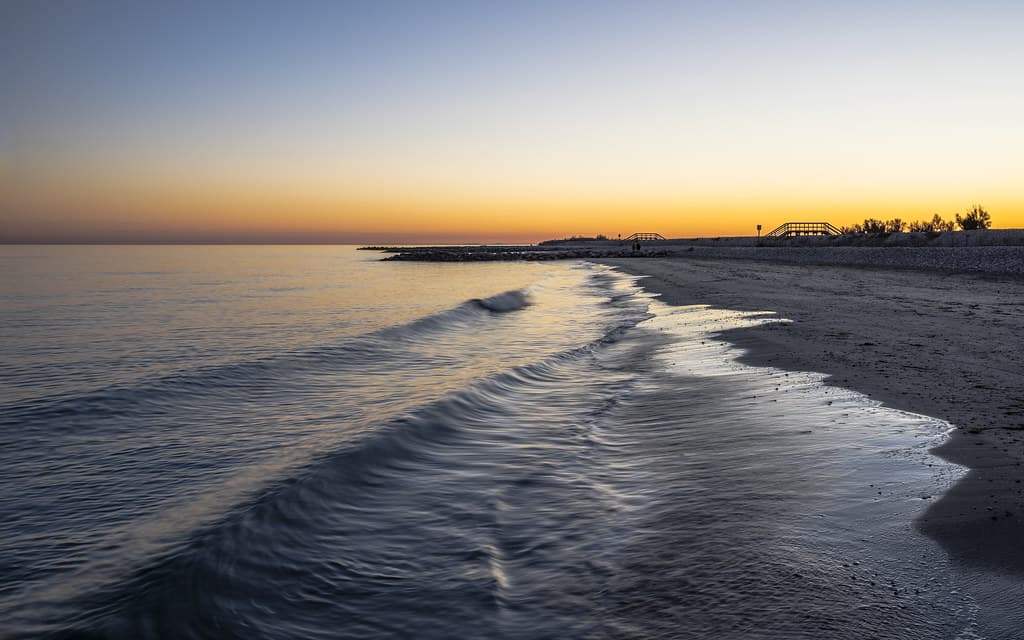
Counting the waves…
Counting the waves…
The Plage du Lido unrolls like a golden thread between two worlds. On your left, the Mediterranean crashes in foamy lines against the shore, carving ripples into wet sand that refill with each retreating wave. On your right, separated by low dunes bristling with sea grass, the Étang de Thau sits flat as hammered pewter, its surface broken only by the dark posts of oyster beds marching into the haze. You can walk this beach for an hour and still see the striped lighthouse of Sète's breakwater behind you, the sand so fine it squeaks beneath your sandals. Families colonize the sections nearest the road access points, planting rental parasols in orderly rows, while farther stretches remain empty except for the occasional jogger and the tire tracks of lifeguard quads. The beach slopes gently into water warm enough by June to wade waist-deep for fifty meters. In summer the tramontane wind funnels down from the north, flattening beach towels and sending chip packets tumbling toward the lagoon. By late afternoon the crowds thin and the light turns amber. You watch windsurfers rig their sails near the boat launch, their boards skittering across the lagoon's calmer water. The beach smells of sunscreen and dried seaweed, punctuated by wafts of grilled sardines from the cabanas near the parking lots. This is a beach built for endurance, not drama—a place to lose yourself in the rhythm of putting one foot in front of the other.
Places, rentals, tours and events within walking and driving distance of Plage du Lido.
Photos
Plage du Lido generally offers safe swimming conditions with its sandy bottom and gradual depth. The beach stretches along a narrow strip between the Mediterranean Sea and Étang de Thau lagoon. Lifeguards typically patrol during summer months (June-September), and flag systems indicate daily conditions. Wind can create waves, particularly during the afternoon tramontane, so check conditions before entering. The beach's open orientation means currents can develop, so stay within supervised areas. Swimming is best during morning hours when the sea is calmer. Always supervise children and heed warning flags, as conditions can change quickly along this exposed coastline.
Plage du Lido is ideal for long walks year-round, stretching several kilometres along the coast. Early morning or late afternoon provides the best experience, with softer light and fewer beachgoers. During summer, walk before 9am or after 6pm to avoid crowds and heat. Shoulder seasons (April-May, September-October) offer pleasant temperatures and emptier beaches, perfect for extended strolls. Winter walks can be invigorating, though bring windproof clothing for the tramontane. Low tide exposes more sand for walking. The flat, continuous beach makes distance walking easy, and you can combine sea views with lagoon scenery along the unique landscape.
Plage du Lido lies southwest of central Sète, accessible by several means. By car, follow signs toward 'Lido' or 'Marseillan-Plage'; parking areas are available along the beach road (can fill quickly in summer). City buses connect Sète centre to the Lido during tourist season. Cycling is popular—dedicated paths run alongside the beach road, and bike rentals are available in Sète. The beach is approximately 3-5km from the port area, depending on which section you visit. Scooters and walking are also options if staying nearby. The long, linear beach means access points appear regularly along the coastal road.
Plage du Lido has seasonal beach restaurants and snack bars serving seafood, salads, and Mediterranean cuisine during warmer months. Some establishments remain open year-round, particularly toward the Sète end. Nearby Sète offers extensive dining options, from casual cafés to fresh seafood restaurants. Accommodation ranges from beachside campgrounds to holiday apartments and hotels along the Lido strip. Sète itself provides more hotel choices and authentic character with its canals and fishing heritage. Marseillan-Plage, at the southern end, has additional restaurants and lodging. Self-catering options are popular, with supermarkets in both Sète and Marseillan for provisioning.
Plage du Lido occupies a distinctive narrow strip of land between the Mediterranean Sea and Étang de Thau, one of France's largest coastal lagoons. This unique geography creates two contrasting water environments: the open sea on one side and calm lagoon waters on the other. The lagoon is famous for oyster and mussel farming, visible from the beach. This setting produces dramatic light conditions, especially at sunset, and interesting wildlife watching opportunities. The tombolo landscape is relatively rare and ecologically significant. Strong winds (tramontane) can sweep across the exposed strip, creating dynamic conditions. The dual-water setting offers a distinctive Mediterranean coastal experience.