Counting the waves…
Counting the waves…
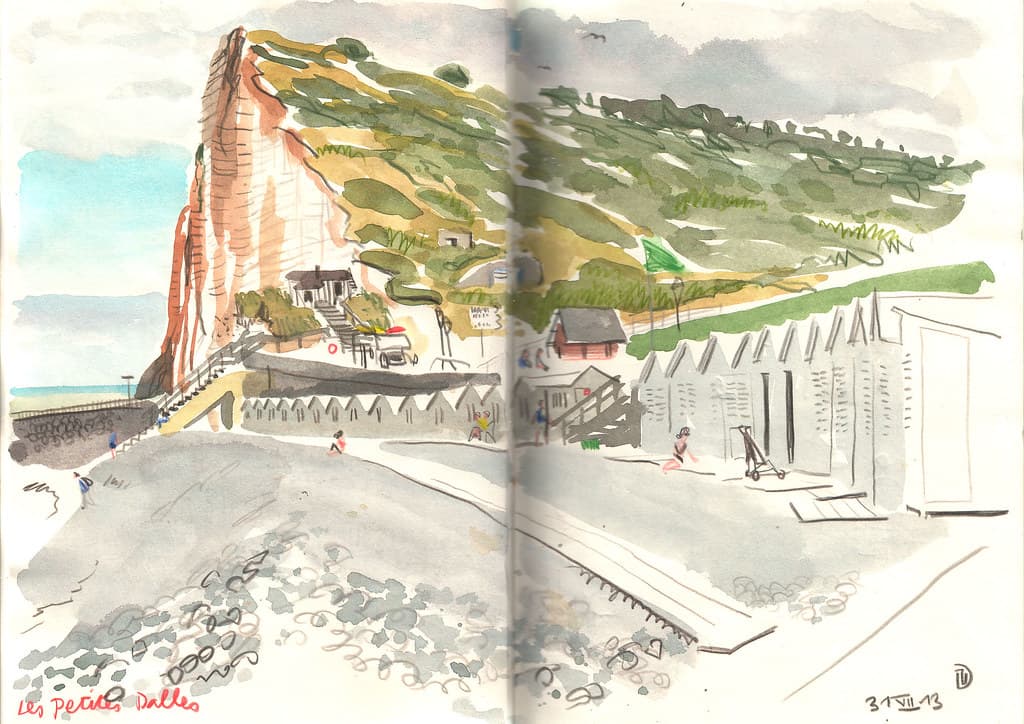
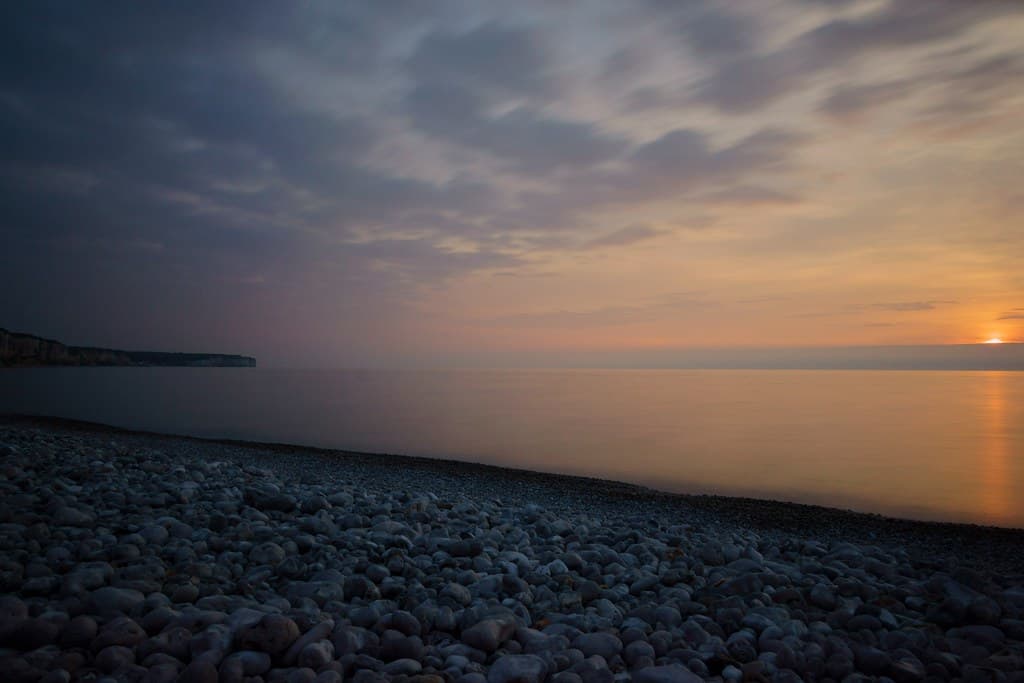
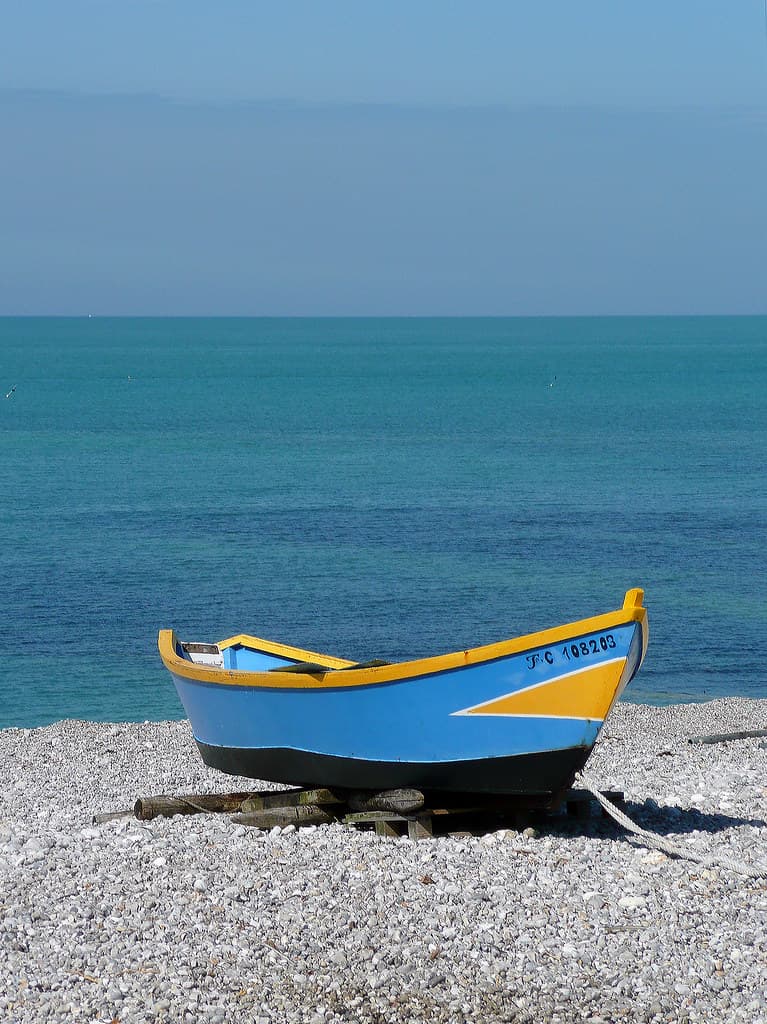
The road drops steeply through Saint-Pierre-en-Port, a fishing hamlet of forty weathered houses, then ends abruptly at a seawall. Below, the beach spreads no wider than a tennis court: grey and ochre pebbles raked smooth by the tide, a trio of blue-hulled boats chained above the high-water line, nets drying on wooden frames. The chalk cliffs rise sheer on either side, banded with flint seams that run like dark veins through the white stone. Gulls nest in the crevices. The air smells of brine and diesel and the wild fennel that grows in the cliff-face cracks. You walk the stones—they clatter and shift underfoot—and the chalk towers block the wind, creating a microclimate warmer than the exposed headlands a kilometer north. At low tide, rock ledges emerge, slick with bladderwrack and studded with limpets. Fishermen haul crab pots at dawn. By midafternoon, the beach may hold a dozen visitors, mostly French families from Rouen who spread blankets between the boats and let children hunt for fossils in the scree. Sunset is the transaction: the western cliff face catches the last horizontal light and throws it back in shades of peach and copper, the sea turning pewter, then violet. You stay until the color drains and the first stars prick through above the cliffs, then climb back to the village as the harbor lights blink on one by one.
Places, rentals, tours and events within walking and driving distance of Plage de Saint-Pierre-en-Port.
Photos
Swimming conditions at Plage de Saint-Pierre-en-Port require caution due to the beach's cliff-base location. The pebble beach experiences strong currents and tidal variations typical of the Normandy coast. Always check tide times before visiting, as high tide can significantly reduce beach space. The water is cold year-round, typical of the English Channel. There are no lifeguards on duty, so swim at your own risk and stay close to shore. Avoid swimming during rough sea conditions or when red flags are displayed.
The beach offers year-round appeal, with each season bringing different charms. Summer (June-August) provides the warmest weather for beach activities, though water remains cool. Spring and autumn offer fewer crowds and dramatic coastal scenery. The beach is particularly stunning at sunset, when light illuminates the chalk cliffs. Visit during low tide for maximum beach space and tide pool exploration. Winter visits reward you with wild, atmospheric seascapes. Check tide schedules regardless of season to time your visit optimally.
Saint-Pierre-en-Port is located between Fécamp and Étretat along the D79 coastal road in Seine-Maritime. The beach is accessible from the village center via a sloped path leading down to the shore. Free parking is available in the village near the beach access point, though spaces are limited during summer weekends. The nearest major town is Fécamp, approximately 10 kilometers away. Public transportation options are limited; driving is recommended for easiest access to this hidden coastal gem.
Saint-Pierre-en-Port is a small fishing village with limited but authentic amenities. You'll find a few local restaurants serving fresh seafood and traditional Norman cuisine near the beach. The village has a handful of vacation rentals and chambres d'hôtes (bed and breakfasts) for overnight stays. For more extensive dining and lodging options, nearby Fécamp offers hotels, restaurants, and shops. It's advisable to bring snacks and water, especially during off-season when some establishments may have reduced hours or close temporarily.
The dramatic white cliffs at Saint-Pierre-en-Port are part of the famous Alabaster Coast (Côte d'Albâtre), a 130-kilometer stretch of chalk cliffs along Normandy's coastline. These spectacular formations were created over millions of years from compressed marine sediments and continue to erode naturally. The cliffs reach impressive heights and create the beach's distinctive enclosed setting. Similar geological formations can be seen at nearby Étretat. The cliff base offers opportunities for fossil hunting, though be mindful of rockfall risks and never stand directly beneath unstable sections.