Counting the waves…
Counting the waves…

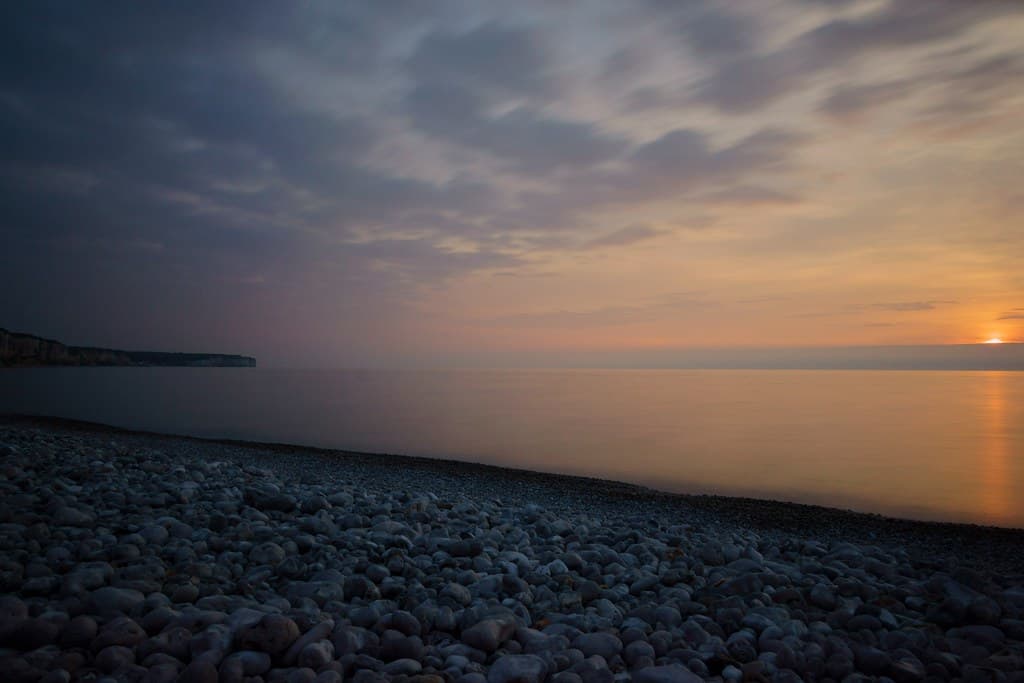
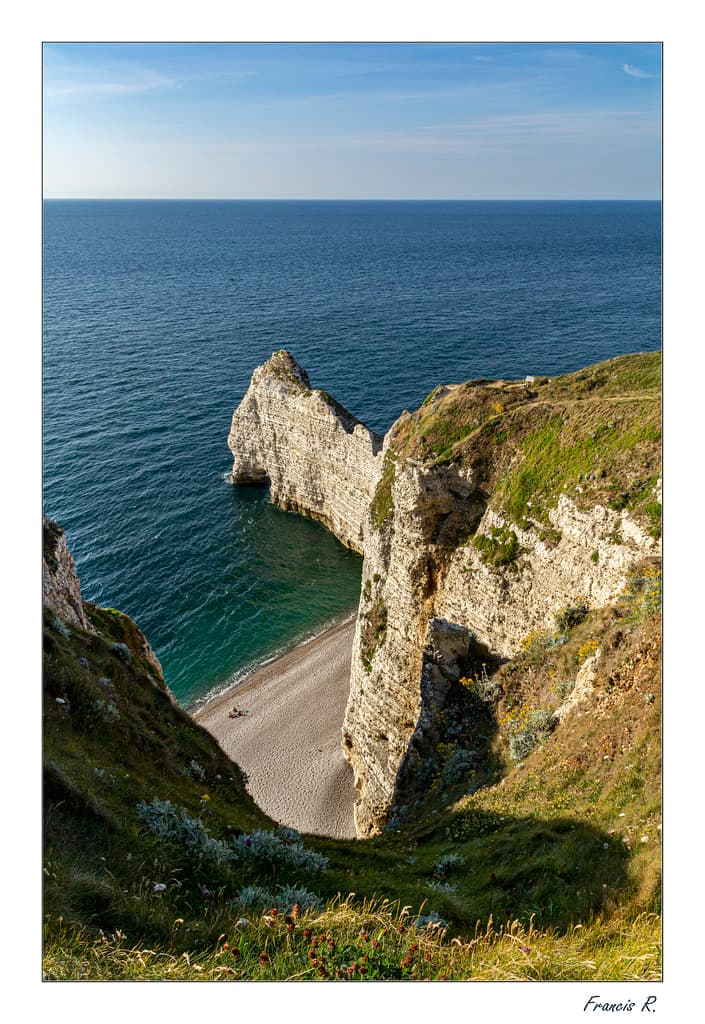
The beach at Yport announces itself with the rattle of wave-smoothed pebbles—not sand—that shift underfoot as you descend the sloped shoreline. Chalk cliffs tower on either flank, their creamy striations carved by millennia of tides, and a handful of traditional fishing boats sit tilted on the shingle, bright paint peeling in salty air. There are no beach clubs, no umbrellas for rent; just a tidy arc of stone that curves between headlands like a parenthesis in the Alabaster Coast's long sentence. Morning brings fishermen dragging crates of sole and mackerel across the galets, their boots leaving scuff marks in the seaweed. You can watch the tide retreat, exposing rock pools ribbed with kelp, or follow the clifftop path westward toward Fécamp, where the chalk face drops in sheer curtains to the surf below. The water is cold—this is the Channel, after all—but locals wade in without flinching, and the occasional brave swimmer strokes parallel to shore. By late afternoon, light slants low across the bay, painting the cliffs amber and rose. A handful of couples settle onto the stones, leaning against overturned dinghies as the sun sinks behind the western headland. The village behind you is a cluster of half-timbered houses and one good seafood brasserie, and the only sound louder than the surf is the cry of gulls circling the fishing fleet.
Places, rentals, tours and events within walking and driving distance of Plage d'Yport.
Photos
Plage d'Yport is a pebble beach with relatively calm waters compared to other Côte d'Albâtre beaches, but swimming conditions depend on tides and weather. The beach is sheltered by dramatic cliffs, offering some protection from winds. However, there are strong currents and undertows typical of the English Channel, especially during high tide. No lifeguards are permanently stationed here, so swim cautiously and check local conditions before entering the water. The beach is more suitable for paddling and enjoying the scenery than extended swimming sessions.
Plage d'Yport is stunning year-round, but late spring through early autumn (May to September) offers the most pleasant weather for beach activities. Summer months bring warmer temperatures, though the Normandy coast remains cooler than southern France. For dramatic scenery and fewer crowds, visit during shoulder seasons or even winter, when the cliffs and crashing waves create moody landscapes. Sunset visits are particularly rewarding, as the beach faces west and the golden hour illuminates the white chalk cliffs beautifully. Low tide reveals more beach area for exploring.
Yport is located between Étretat and Fécamp on Normandy's Alabaster Coast. By car from Paris, take the A13 motorway toward Rouen, then continue on the A150 and D940 (approximately 2.5 hours). The village is accessible via D211. Free and paid parking areas are available near the beach, including along the waterfront and in designated lots above the village. Parking can be limited during summer weekends. The nearest train stations are Fécamp (8 km) and Étretat, requiring a bus or taxi connection to reach Yport.
Yport is a charming fishing village with several restaurants and cafés serving fresh seafood and traditional Norman cuisine, many with sea views along the beachfront promenade. Options range from casual crêperies to bistros featuring local fish and fruits de mer. Accommodation includes small hotels, chambres d'hôtes (B&Bs), and vacation rentals within the village. For more extensive lodging options, nearby Fécamp and Étretat offer additional hotels and amenities. Basic beach facilities exist, but Yport maintains its authentic, low-key character without overdevelopment, contributing to its underrated charm.
Plage d'Yport is framed by the spectacular chalk cliffs of the Côte d'Albâtre (Alabaster Coast), rising dramatically on either side of the beach. While less famous than nearby Étretat's iconic arches, Yport's cliffs offer equally stunning white limestone formations without the crowds. The cliffs glow beautifully at sunset and create a sheltered cove atmosphere. Coastal hiking paths along the cliff tops provide breathtaking panoramic views of the English Channel and the village below. The geological formations are part of the same dramatic coastline that inspired many Impressionist painters.