Counting the waves…
Counting the waves…
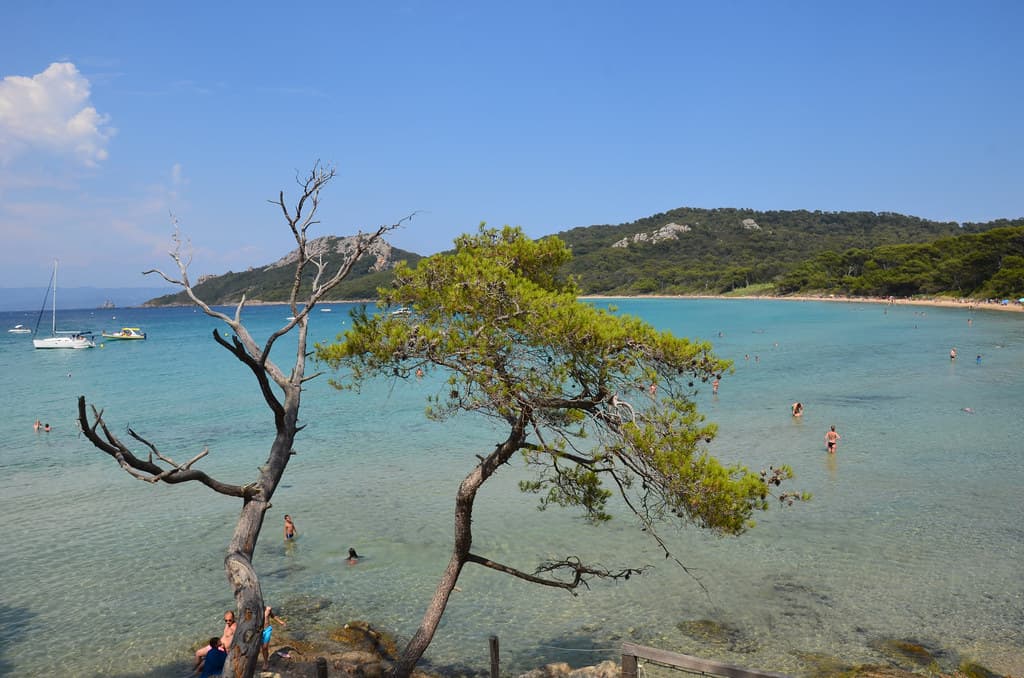
The bicycle path ends in a clearing of umbrella pines, their trunks leaning seaward as if drawn by the same offshore breeze cooling your neck. Plage du Langoustier unfurls in a gentle crescent, its sand the color of raw almonds, fine enough to squeak beneath your espadrilles. The water here reads turquoise in the shallows, deepening to cobalt where the seafloor drops away, and you notice how the island's western flank shelters the cove from the tourist flotillas anchored off Notre-Dame to the east. You wade in and the temperature startles—warmer than you expected, stratified in invisible layers that brush your thighs as you push deeper. Posidonia seagrass sways in dark patches farther out, nurturing the sea urchins and octopus the beach takes its name from, though you're more likely to spot damselfish darting through the Neptune grass. By late afternoon, the few families who've made the trek begin packing their coolers, leaving you long stretches of uninterrupted shoreline. As the sun drops toward the horizon, it ignites the cliffs of the Giens Peninsula across the strait, turning the limestone apricot and rose. The light does something singular here, refracting through the island's western exposure to paint the water in shades you won't find on Porquerolles' busier southern beaches—a gradient of amber and violet that lingers well past the moment the sun slips beneath Cap Bénat.

Places, rentals, tours and events within walking and driving distance of Plage du Langoustier.
Photos
Swimming at Plage du Langoustier is generally safe, though conditions differ from more sheltered Porquerolles beaches. The western-facing location can experience stronger winds and occasional currents, particularly during afternoon mistral winds. The beach typically lacks lifeguard supervision, so swimmers should be confident and cautious. The seabed is sandy but can deepen more quickly than at Plage d'Argent. Check weather conditions before your visit, as westerly winds can create choppier waters. The remote location means help is farther away, so never swim alone and stay within your comfort zone.
The best time to visit Plage du Langoustier is late afternoon for spectacular sunset views over the Mediterranean, as the beach faces west. For swimming and fewer crowds, visit during shoulder seasons (May-June or September) when the beach is quieter than summer peak. Early mornings offer solitude and calm waters before winds pick up. Weekdays are significantly less crowded than weekends. The remote location means it naturally attracts fewer visitors than beaches near the port. Sunset during summer months (June-August) is particularly magical, with golden light illuminating the turquoise water.
Plage du Langoustier requires more effort to reach than most Porquerolles beaches, located about 4 kilometers west of the ferry port. The most practical approach is renting a bicycle in the village and cycling approximately 20-30 minutes along marked trails through the island's interior. Walking takes 50-75 minutes along sometimes exposed paths. The route is mostly flat but longer than to other beaches. Follow signs toward 'Plage du Langoustier' or the western tip. The journey's length helps keep crowds lower, contributing to the beach's quieter, more remote atmosphere.
Plage du Langoustier has virtually no facilities, reflecting its remote, natural character. There are no restaurants, beach clubs, shops, or permanent restroom facilities at the beach itself. Visitors must bring all food, water, and supplies from Porquerolles village. Natural shade is limited, so bring sun protection including umbrellas or beach tents. The nearest facilities are back in the village, a 20-30 minute bike ride away. This lack of development preserves the beach's wild beauty and peaceful atmosphere. Pack out all trash to help maintain this pristine environment within the protected island ecosystem.
Plage du Langoustier is prized for its remote western location and stunning sunset views, unlike any other Porquerolles beach. Its distance from the port ensures fewer crowds and a more tranquil experience. The beach offers dramatic island scenery with rocky headlands framing the sandy cove and views extending across open Mediterranean waters. The sense of escape and solitude here contrasts sharply with busier eastern beaches. Photographers particularly value the westward orientation for golden-hour light. The extra effort required to reach it rewards visitors with a more authentic, undeveloped island beach experience.