Counting the waves…
Counting the waves…
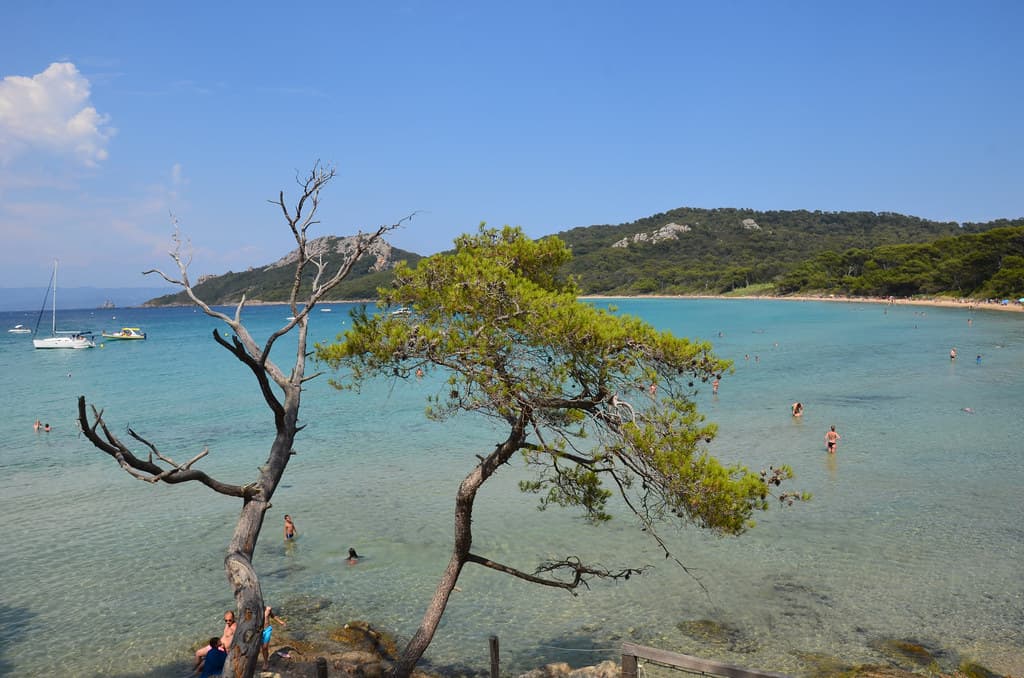
The ferry from Tour Fondue deposits you into the postcard version of Porquerolles—white sand, umbrella pines, rosé-sipping crowds. But pedal thirty minutes westward along the island's dusty vineyard paths, past the Domaine de la Courtade's neat rows of mourvedre vines, and the landscape shifts. Plage Noire reveals itself below the Langoustier peninsula, its sand flecked with basaltic minerals that absorb heat like a griddle by midday. You'll share the crescent with perhaps a dozen others, mostly French families who know to arrive before eleven, when the shade from the maritime pines shrinks to slivers. The water here is different—cooler, deeper, the rocky bottom visible through eight feet of water that refracts light into shifting cobalt mosaics. Schools of sea bream dart between the boulders at either end of the beach, indifferent to snorkelers drifting overhead. The beach has no vendors, no loungers, no shower beyond a trickle of brackish water from a rusted pipe. You carry everything in on your bike basket: the baguette from the village boulangerie, the peaches from the Wednesday market, the rosé that's gone dangerously warm in your pannier. By four o'clock the light slants golden across the Langoustier lighthouse, and the dark sand radiates stored warmth against your feet as you shake out your towel for the ride back.
Places, rentals, tours and events within walking and driving distance of Plage Noire du Langoustier.
Photos
Swimming is generally safe at Plage Noire du Langoustier during calm weather, with clear waters ideal for snorkeling. The beach is exposed to westerly winds and waves, so check conditions before swimming. The darker sand can heat up significantly in summer, so bring beach shoes. There are no lifeguards on duty, as this is a remote beach on Porquerolles island. Always swim within your abilities and be cautious of occasional boat traffic offshore, as this area is accessible by private vessels.
Late May through June and September offer the best conditions with warm weather, calm seas, and fewer crowds compared to July-August peak season. Early morning or late afternoon visits provide softer light for the scenic setting and cooler sand temperatures. Weekdays are quieter than weekends when day-trippers from the mainland arrive. Spring and early autumn also offer comfortable hiking temperatures for the walk to the beach. Avoid windy days when westerly conditions can create choppy waters and make the beach less enjoyable.
Reach Porquerolles island by ferry from Tour Fondue in Giens (approximately 20 minutes). From Porquerolles village, the beach is about 4 kilometers west, accessible via a scenic walking or cycling path through pine forest and vineyards (roughly 45-60 minutes on foot, 20 minutes by bike). Bikes can be rented in the village. The trail is well-marked and mostly flat. Cars are not permitted on Porquerolles except for island residents. Some visitors arrive by private boat and anchor offshore in suitable conditions.
There are no facilities directly at Plage Noire du Langoustier—it's a natural, undeveloped beach. Bring your own food, water, and shade as there are no restaurants, kiosks, or umbrella rentals. All accommodations and dining options are in Porquerolles village, about 4 kilometers away, including hotels, guesthouses, and restaurants. Pack a picnic and bring everything you need for the day, including sun protection and plenty of water. The nearest supplies are back in the village, so plan accordingly before hiking out.
Plage Noire gets its name from its distinctively darker sand, which contains volcanic minerals and darker sediments that give it a unique appearance compared to Porquerolles' typically pale sandy beaches. This geological characteristic creates visual contrast with the turquoise waters. The beach's western location near the Langoustier lighthouse makes it quieter and more secluded than the popular northern beaches. Its position offers different coastal scenery with rockier surroundings and sunset views. The darker sand retains heat, so it can be quite hot underfoot during summer afternoons.