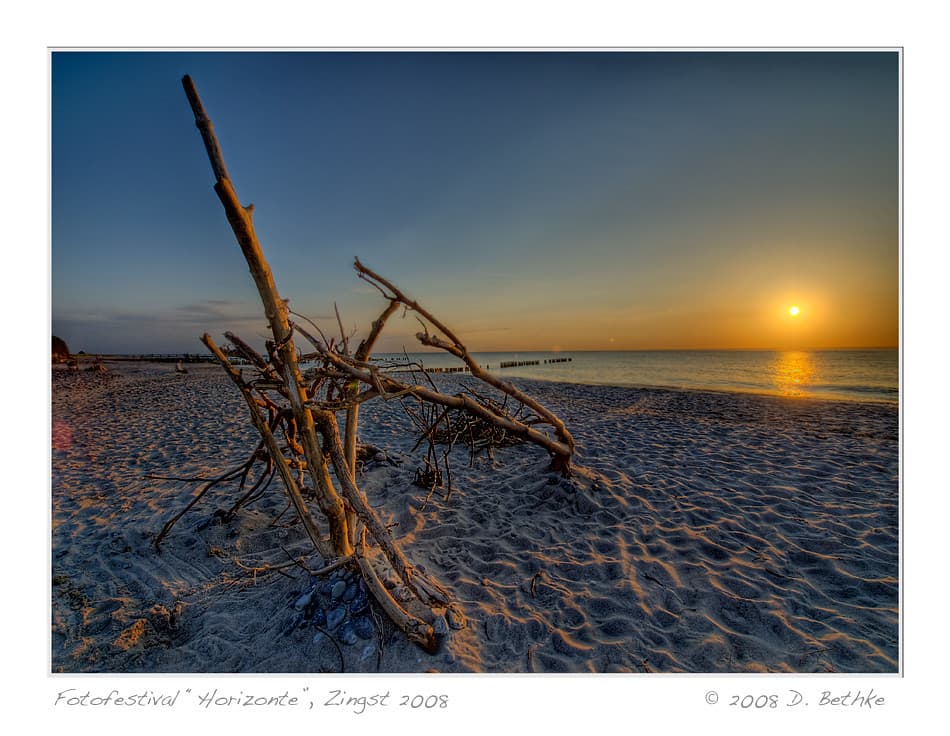
Counting the waves…
Counting the waves…
The beach changes character as you walk east from Zingst's center, the transition gradual but unmistakable. Müggenburg marks the zone where commercial beach gives way to something wilder: the sand shows more shells and seaweed, the dunes rise higher and less groomed, and the forest behind thickens into the darker green of protected land. Wooden groynes march into the water at regular intervals, their pilings grey with age and barnacled below the tide line. You'll share this stretch with visitors who've made the deliberate choice to walk beyond convenience—people who prefer birdsong to beach-bar playlists, who don't mind carrying their own chairs. The swimming here is straightforward Baltic: clean water over a sandy bottom, the temperature dependent entirely on recent weather, the waves modest except when storms blow in from the north. Sandbars appear and vanish with the seasons, creating temporary lagoons where water warms to surprising temperatures by late July. The light has room to work here, uninterrupted by buildings or elaborate beach infrastructure. Morning sun illuminates the water's green-blue clarity; afternoon rays slant across the dunes, throwing the marram grass into sharp relief. By evening, when most visitors have migrated back toward town, the beach takes on the quality of a preserve awaiting its next chapter—still accessible, still welcoming, but leaning toward the wilderness that defines the peninsula's eastern reaches.
Places, rentals, tours and events within walking and driving distance of Müggenburg Beach.
Photos
Swimming at Müggenburg Beach is generally safe during calm conditions, though this natural eastern section may have less lifeguard coverage than central Zingst beaches. The sandy Baltic shoreline slopes gradually, but always check local conditions and weather forecasts before entering the water. The beach's position near protected coastal areas means more natural, unmodified conditions. Strong winds can create currents and waves. Swimmers should assess their abilities and water conditions carefully. The quieter nature of this beach means fewer people around in emergencies, so exercise appropriate caution and never swim alone.
Müggenburg Beach naturally attracts fewer visitors than central Zingst locations throughout the season due to its eastern position and more natural character. Weekdays from May through September offer the best combination of pleasant weather and minimal crowds. Early mornings and late afternoons provide exceptional peace year-round. The beach is especially quiet during shoulder seasons—May, June, and September—when weather remains mild but German school holidays haven't peaked. Even during high summer, this hidden section sees significantly less traffic than main resort beaches, appealing to visitors seeking tranquil coastal experiences.
Müggenburg Beach is located east of Zingst town center, accessible primarily by walking or cycling along coastal paths and trails. From central Zingst, expect a 20-30 minute walk or 10-15 minute bicycle ride eastward. The route follows beachfront promenades transitioning to more natural paths. Bicycle rental is available throughout Zingst and recommended for exploring this slightly more distant section. Parking is available in Zingst town zones, then travel by foot or bike. The area emphasizes sustainable, car-free beach access with well-marked cycling and walking routes.
Müggenburg Beach itself has minimal or no facilities due to its natural character near protected coastal areas. Visitors should bring water, snacks, sun protection, and other necessities for their beach visit. Accommodation and dining options are concentrated in Zingst town center, approximately 2-3 kilometers west, offering hotels, guesthouses, restaurants, and shops. Plan this as a day trip from Zingst-based lodging. The lack of commercial development preserves the beach's scenic, undisturbed atmosphere but requires self-sufficiency. Return to Zingst proper for meals and amenities.
Müggenburg Beach represents the transition zone between developed resort beaches and protected natural coastal areas, offering a more pristine, scenic experience. Located on Zingst's eastern edge, it provides access to undisturbed dune systems and coastal landscapes while remaining reachable from town amenities. The natural setting attracts visitors seeking quieter sunbathing and nature appreciation rather than resort facilities. Its position near national park boundaries means richer wildlife viewing opportunities compared to central beaches. The beach rewards those willing to walk or cycle slightly further with beautiful, less-crowded Baltic coastline.