Counting the waves…
Counting the waves…

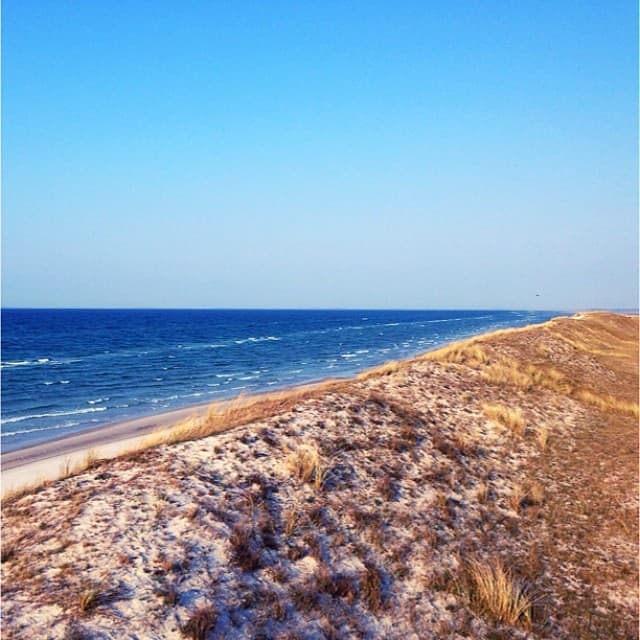
The Osterwald ends abruptly at this beach, its maritime forest yielding to a shore that feels more frontier than resort. You arrive by bicycle or on foot, leaving the promenade crowds three kilometers behind in Zingst proper. The trees lean eastward, sculpted by prevailing winds, and their shadows stripe the sand in late afternoon. The water here runs colder and choppier than the sheltered central beaches; you feel the open Baltic's muscle as waves fold onto the shore in irregular sets. Driftwood logs, bleached silver, mark the high-tide line. Gulls outnumber people. In summer the beach grass hisses in the breeze, and you can walk a kilometer without passing another towel. This is where Zingst islanders come when they want solitude. The national park boundary runs just inland, which means no beach bars, no loudspeakers, no rental umbrellas. You bring your own provisions, stake your claim in the sand, and watch fishing boats trace lines across the horizon. At dusk, deer sometimes emerge from the Osterwald treeline to drink at the freshwater seeps near the dunes.
Places, rentals, tours and events within walking and driving distance of Osterwald Beach.
Photos
Osterwald Beach is generally safe for swimming during calm weather, with gentle sandy shores typical of the Baltic Sea. However, this remote location lacks lifeguard supervision, so swimmers should exercise caution and monitor weather conditions. The Baltic can experience sudden temperature changes and currents. Always check local weather forecasts before entering the water, avoid swimming alone, and be mindful that emergency services may take longer to reach this secluded area due to its proximity to the national park edge.
The best time to visit Osterwald Beach is during late spring through early autumn (May to September) when temperatures are warmest. For fewer crowds, visit on weekdays or during shoulder seasons in May, June, or September. Early mornings offer peaceful atmospheres and excellent opportunities for wildlife spotting near the adjacent forest. Summer months provide the warmest water temperatures, though this remote beach rarely becomes crowded. Winter visits are possible for nature walks, but swimming is not recommended due to cold temperatures.
Osterwald Beach is located east of Zingst town center and requires some effort to reach, contributing to its secluded nature. Visitors can cycle or walk along coastal paths from Zingst, which takes approximately 30-45 minutes by bicycle. Limited parking may be available near the forest edge. The beach sits near the Vorpommersche Boddenlandschaft National Park boundary, so access paths wind through natural terrain. Bicycles are the most practical transport option, widely available for rent in Zingst. Public transport doesn't reach this remote area directly.
Osterwald Beach itself has no facilities, restaurants, or accommodations due to its remote, natural character. Visitors should bring their own food, drinks, and supplies. The nearest amenities are in Zingst town center, approximately 3-4 kilometers west, which offers various restaurants, cafes, hotels, guesthouses, and vacation rentals. Many visitors stay in Zingst and make Osterwald Beach a day trip destination. It's advisable to pack a picnic and plenty of water, as returning to town for refreshments requires significant time and effort.
Osterwald Beach's defining feature is its wild, undeveloped character at the edge of the Vorpommersche Boddenlandschaft National Park. Unlike Zingst's more accessible central beaches, this location offers near-total seclusion surrounded by forest and protected natural landscapes. The beach attracts nature enthusiasts seeking tranquility and wildlife observation opportunities. Its remote eastern position means exceptional peace and pristine conditions. The combination of sandy Baltic shoreline meeting ancient forest creates a distinctive atmosphere rarely found elsewhere on the peninsula, ideal for sunbathing in natural surroundings away from tourist infrastructure.