Counting the waves…
Counting the waves…
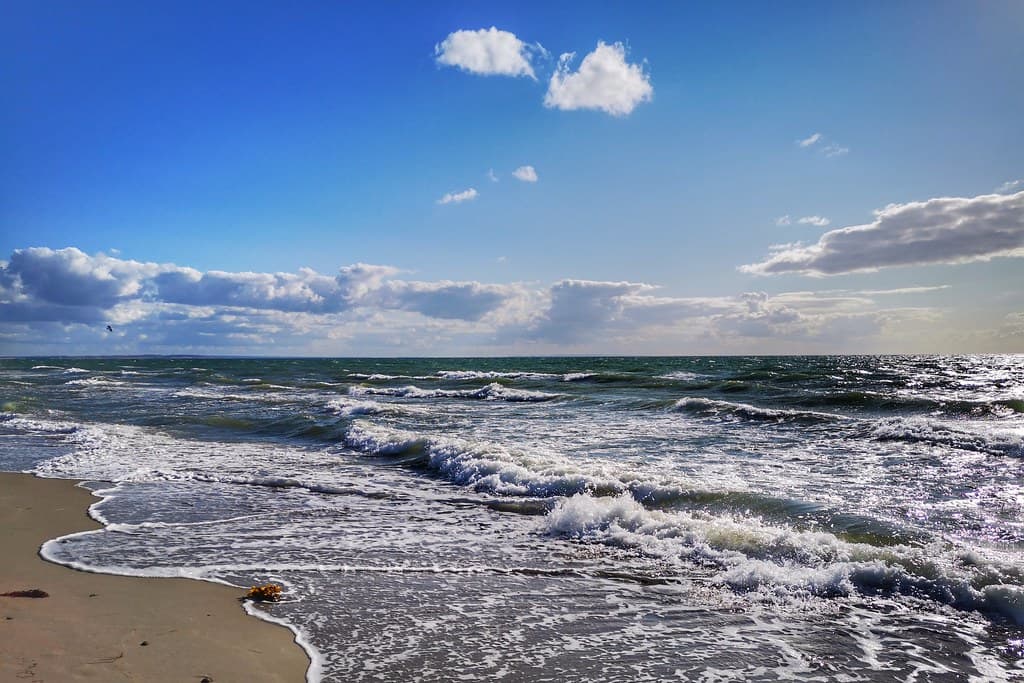
The walk from Flügge village takes you past low whitewashed cottages and fields of rapeseed that glow chartreuse in May. When the path opens onto the beach, the lighthouse appears first—a slender tower banded in red and white, its lamp visible for twenty nautical miles. The sand here is fine-grained and pale, stippled with razor-clam shells and the occasional amber fragment tumbled smooth by centuries of tide. West-facing and unprotected, this stretch catches the full drama of Baltic weather. On clear evenings the sun drops behind Langeland and the Danish archipelago, staining the low clouds apricot and rose. Mornings bring oystercatchers to the tideline, stabbing for lugworms in the wet sand. A narrow beach path connects to the NABU Wasservogelreservat, where observation blinds overlook salt meadows frequented by avocets and godwits. The shallows slope gently, warming to surprising temperatures by July. Locals swim here after work, leaving bicycles propped against the dune fence. A single Strandkorb rental operates from a wooden shack near the access path, but most visitors bring blankets and windbreaks, claiming a hollow in the dunes where the grass muffles the gusts and the view stretches unbroken to the horizon.
Places, rentals, tours and events within walking and driving distance of Flügger Strand.
Photos
Flügger Strand offers generally safe swimming conditions during calm weather, with a sandy bottom and gradual depth increase typical of Baltic beaches. However, this remote west-coast location lacks lifeguard supervision, requiring swimmers to assess conditions independently. Western exposure means wind and waves can build quickly, creating stronger currents during storms. The beach's isolation means fewer people around in emergencies. Families should supervise children closely. Water quality is typically good along Fehmarn's coast. Check weather forecasts before visiting, and avoid swimming during high winds or storm warnings.
Flügger Strand excels during less crowded periods from May through September, when weather is pleasant but visitor numbers remain low. The western orientation makes it exceptional for sunset viewing during summer months when the sun sets over the Baltic. Late afternoon visits in June through August provide the best sunset photography opportunities. The beach remains peaceful even during peak summer weeks due to its remote location. Spring and autumn attract nature enthusiasts exploring nearby protected landscapes. Avoid stormy periods when western exposure creates rough conditions and uncomfortable beach weather.
Flügger Strand is located on Fehmarn Island's western coast near the village of Flügge. After crossing the Fehmarnsund Bridge onto the island, follow roads westward toward Flügge; look for signs to the historic Flügge lighthouse, which sits near the beach. Parking is available near beach access points. The beach is remote, making personal transportation essential—public transport on Fehmarn is limited. Cycling is feasible for those staying elsewhere on the island, as distances are manageable. Navigation apps help, as signage is less prominent than at commercial beaches.
Flügge is a small village with minimal commercial infrastructure directly at the beach. Visitors should expect limited or no food services at Flügger Strand itself and plan accordingly by bringing provisions. The nearest substantial dining and shopping options are in Burg auf Fehmarn or other larger island villages, requiring a short drive. Accommodation across Fehmarn Island includes holiday apartments, guesthouses, and campgrounds rather than beachfront hotels. The area's remote character suits self-sufficient travelers. Booking ahead during summer peak season is advisable given overall island popularity.
Flügger Strand's proximity to the historic Flügge lighthouse adds cultural interest to the natural beach experience. The lighthouse, one of Fehmarn's landmarks, provides a distinctive backdrop for photography and coastal walks. The surrounding area includes nature reserves and protected landscapes, creating a scenic environment beyond just the beach itself. The west-coast location means dramatic sunsets over the Baltic Sea, with the lighthouse adding compositional interest. This combination of maritime heritage, natural protection areas, and remote coastal beauty distinguishes Flügger Strand from Fehmarn's more developed beach zones.