Counting the waves…
Counting the waves…
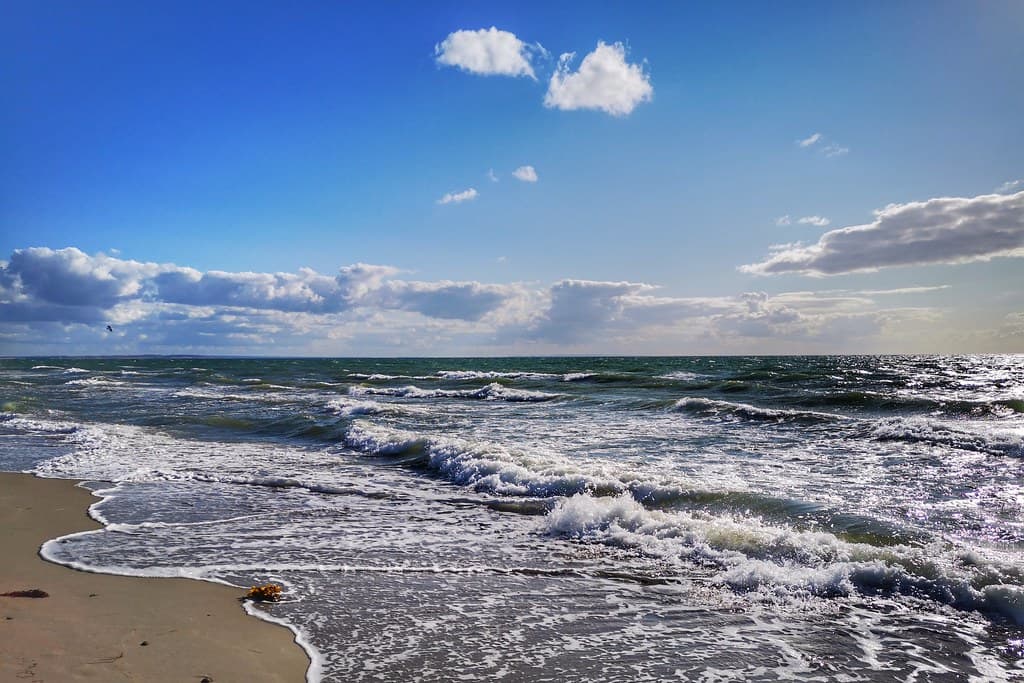
The beach runs narrow and pale beneath a low dune line threaded with beach grass. Behind that modest rise, the Wasservogelreservat Wallnau spreads across two hundred hectares of managed wetlands—shallow pools, reed islands, and mudflats engineered to specification for spoonbills, marsh harriers, and passage waders. On quiet mornings you'll hear bitterns booming from the phragmites, a sound that carries across the sand on the northwest breeze. This stretch lacks facilities deliberately. No snack shacks, no chair rentals, no lifeguard towers—just a sand track from the village, a small parking area, and the beach itself opening westward toward Langeland's distant coastline. The swimming is gentle, the slope gradual, the water warming to comfortable temperatures by midsummer. Families spread blankets in the dune shelter while children build dams in the tidal runnels, their shouts mingling with the piping of ringed plovers nesting just beyond the access path. Sunsets here unfold across an uninterrupted horizon, the sky layering itself in bands of coral and lavender that reflect in the wet sand. Photographers time their visits to catch the light gilding the reserve's observation tower, a wooden structure visible from the beach that marks the boundary between recreation and conservation. As dusk deepens, the first duck flights whistle overhead, hundreds of mallards and wigeons dropping into the lagoons for the night.
Places, rentals, tours and events within walking and driving distance of Wallnau Beach.
Photos
Wallnau Beach is generally safe for swimming during calm weather, with shallow sandy approaches typical of Fehmarn Island's Baltic coastline. However, currents can strengthen during windy conditions. There are no lifeguard services at this quiet beach, so swimmers should exercise caution and monitor local weather forecasts. The beach is uncrowded, meaning fewer eyes watching the water. Families with children should supervise closely. Water quality is typically good, though jellyfish may appear seasonally in Baltic waters.
Late spring through early autumn (May to September) offers the most pleasant weather for beach visits, though Wallnau Beach is specifically appealing during shoulder seasons when crowds are minimal. The adjacent Wallnau Nature Reserve attracts birdwatchers year-round, with spring and autumn migrations being particularly spectacular. Summer provides warmest water temperatures, but even then the Baltic remains refreshing. For sunset photography and peaceful walks, visit on weekday evenings during summer when day-trippers have departed.
Wallnau Beach is located on Fehmarn Island's western coast, accessible by car via the Fehmarnsund Bridge connecting the island to mainland Germany. From Burg auf Fehmarn, the island's main town, drive west following signs toward Wallnau village. Parking is available near the beach and the adjacent NABU Wallnau Nature Centre. The beach is not well-served by public transport, so having a car or bicycle is recommended. Fehmarn Island is compact, making it easy to explore multiple beaches by car.
Wallnau is a small village with limited dining options directly at the beach. The nearby NABU Nature Centre has a café serving light refreshments. For full meals, visitors typically drive to nearby villages or Burg auf Fehmarn, about 10 kilometres away, which offers supermarkets, restaurants, and varied dining. Accommodation options on Fehmarn Island include holiday apartments, guesthouses, and campgrounds scattered across the island. Booking ahead during summer peak season is advisable, as the island is a popular German holiday destination.
Wallnau Beach's proximity to the NABU Wallnau Waterbird Reserve distinguishes it from other Fehmarn beaches. This internationally recognized bird sanctuary attracts ornithologists and nature enthusiasts observing migrating waterfowl and waders. The beach itself remains uncommercialised and peaceful, lacking the facilities and crowds found at the island's main resort beaches. Its western orientation provides excellent sunset views across the Baltic. The combination of natural beach landscape and adjacent protected wetlands creates a unique environment for visitors seeking both coastal relaxation and wildlife observation.