Counting the waves…
Counting the waves…
A refined fusion of water purity, environmental stability, and communal vibrancy for Seestermühe Elbe Beach.
View MethodologyAnalyzed via live sensors and environmental data.
Wave height, wind, and atmospheric stability.
Live footfall and crowd balance metrics.
Community reviews and curated sentiment.
“You'll find this stretch where the river meets the mudflats, a place where container ships drift past grazing sheep. The sand is coarse, threaded with driftwood, and the horizon is all estuary—no promenade, no…”
Limited recent visitor reports — live OBI telemetry is your best guide for current conditions.
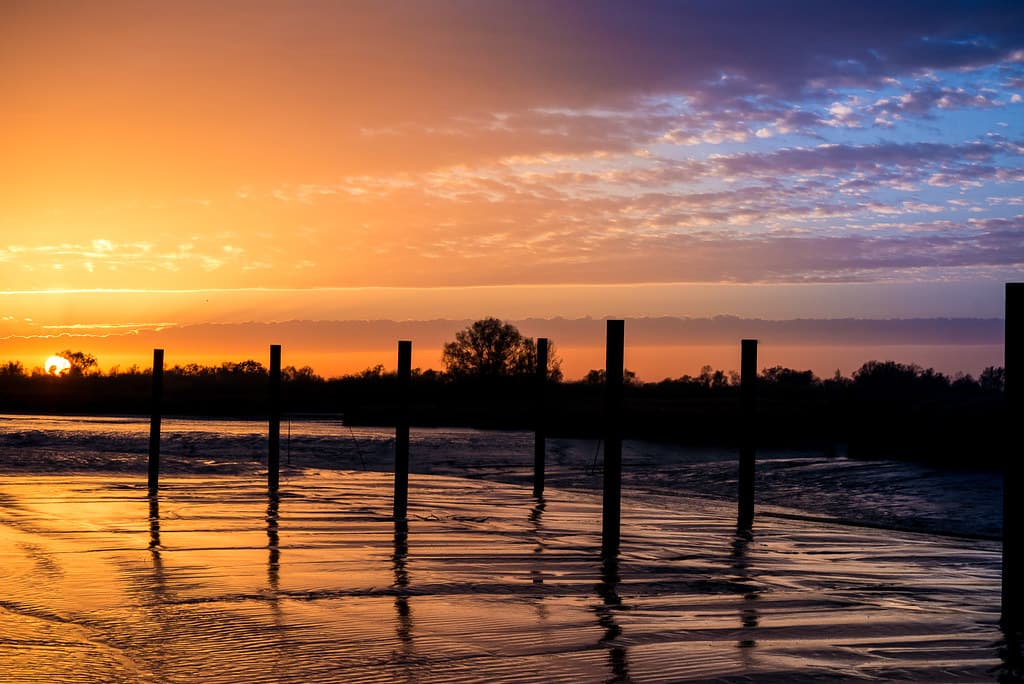
The beach at Seestermühe feels like it belongs to the river itself, not to tourism. You reach it through narrow lanes that cut between dike walls and pasture, where cattle graze against a backdrop of freighters moving upstream toward Hamburg. When you step onto the sand, the Elbe stretches wide and brown, its current muscular and purposeful.
The shore is littered with bleached logs, rope tangles, and the occasional rusted mooring buoy—detritus that tells the story of a working waterway. Behind you, the marshlands exhale a brackish perfume, especially at low tide when the mudflats expose themselves in glossy, ribbed patterns. Reeds whisper in the breeze. A heron lifts off, ungainly and silent.
 Credit: Unsplash
a house on stilts in the middle of a beach
 Credit: Unsplash
Beach chairs on sandy shore with pier and building
Follow paths above the marsh
Capture cargo vessels passing close
Watch light flood the estuary
Prime Visitation
Less Crowds
Where it is
Seestermühe Elbe Beach
Seestermühe, Schleswig-Holstein, Germany
53.707200°, 9.559500°
Weather
Loading…
Swell
—
Temp
Warm · Restorative
UV Index
Moderate
Wind
—
Tidal State
Last known
Max Sunlight
—
Ideal Shade
—
May - Sep (Peak)
Jan - Dec (Off-season)
Historical data suggests peak visibility and stable sea temperatures occur during the prime visitation window.
Select a category to load nearby places.
Unlock restaurants, luxury stays and curated maritime experiences within 2km
Swimming at Seestermühe requires caution due to its Elbe River location. The estuary has tidal currents, changing water depths, and commercial shipping traffic. There are no lifeguards, and this is primarily a local spot for relaxation rather than swimming. If you do enter the water, stay close to shore, be aware of tides, and never swim alone. The water quality can vary due to river conditions. Most visitors use the beach for walking, picnicking, and enjoying marshland views rather than active swimming. Children should be closely supervised near the water.
Visit during late spring through early autumn (May-September) for the most comfortable weather and longer daylight hours. As a low-key, crowd-free destination, Seestermühe is ideal for peaceful visits anytime during these months. Sunset is particularly spectacular, with wide estuary skies creating dramatic color displays. Early mornings offer serene marshland atmosphere with birdlife. Low tide reveals more beach area. Avoid winter months when weather can be harsh. Weekdays are quieter than weekends, though even weekends see minimal crowds compared to tourist beaches.
Seestermühe is located in southwestern Schleswig-Holstein, roughly 30 kilometers northwest of Hamburg. The beach is most easily accessed by car; take the A23 autobahn toward Heide, exit toward Seestermühe, then follow local roads to the Elbe shore. Parking is informal and limited near beach access points. Public transportation is sparse in this rural area, though regional buses may connect to Seestermühe village from larger towns like Pinneberg or Elmshorn. From the village, it's a short distance to the waterfront. GPS coordinates or mapping apps help navigate to beach access.
Seestermühe is a small, quiet village with very limited tourist infrastructure. You'll find few restaurants or accommodations directly at the beach. The village may have a local inn or café, but options are minimal. Bring your own food and beverages for a beach visit. For dining and overnight stays, look to nearby larger towns such as Uetersen, Pinneberg, or even Hamburg, all within reasonable driving distance. Farm stays or rural guesthouses in the surrounding Elbe marshland region offer authentic experiences. This beach suits day-trippers more than destination vacationers.
Seestermühe offers an authentic Lower Elbe marshland experience far removed from conventional beach tourism. The landscape combines sandy shore with tidal mudflats and grazing marshes, creating a distinctive ecosystem rich in birdlife. You'll experience the working Elbe River with passing ships against a backdrop of rural tranquility. The beach's very local character means genuine solitude and unchanged traditional atmosphere. It's ideal for nature observers, photographers seeking dramatic estuary skies, and visitors wanting to escape crowds. The marshland setting provides a uniquely Northern German coastal landscape.
Photos