Counting the waves…
Counting the waves…

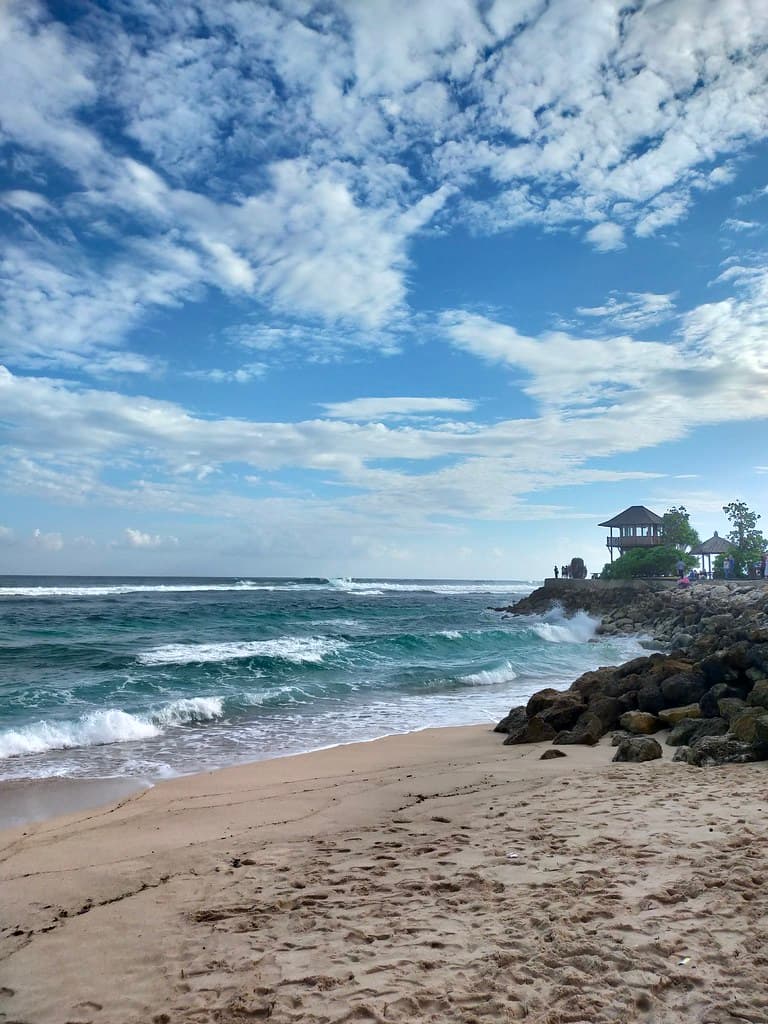
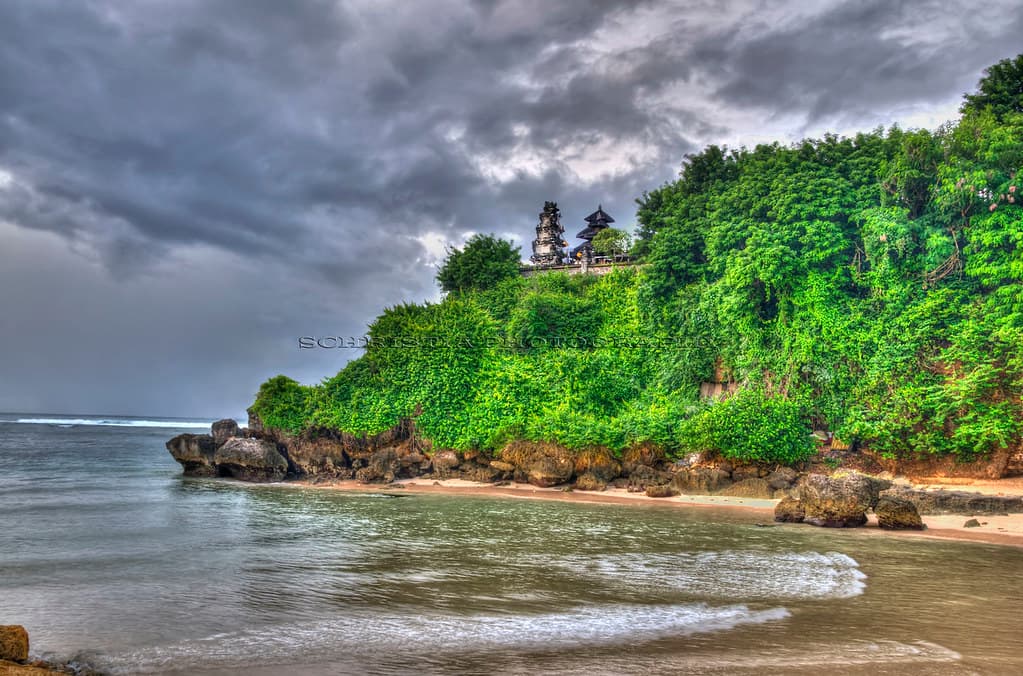
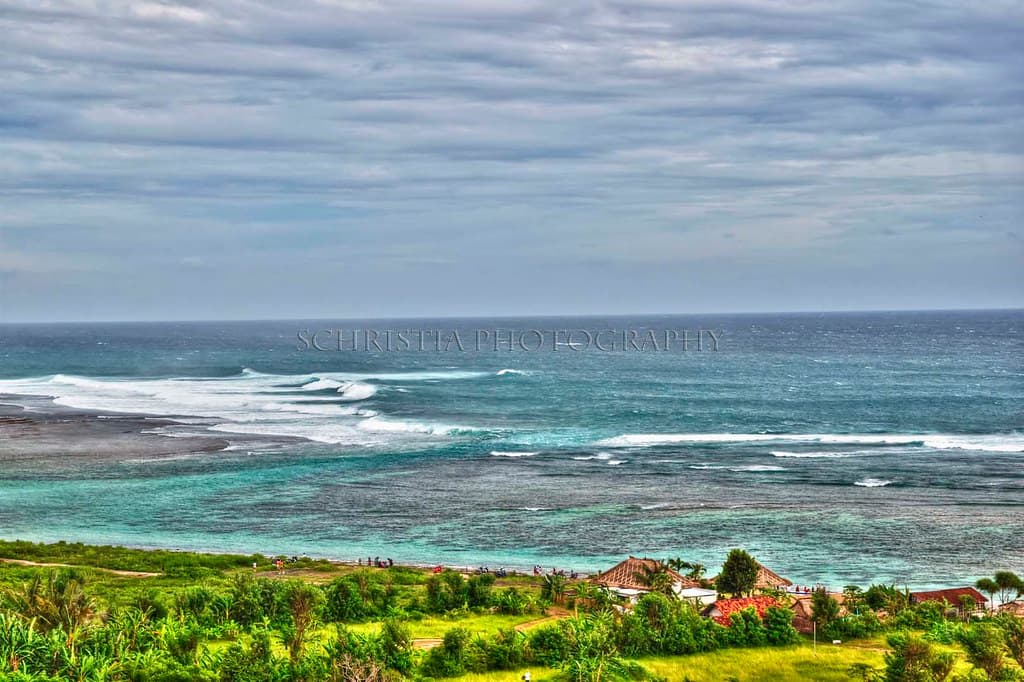
Pandawa Beach announces itself not with signage but with sculpture—five colossal figures of the Pandawa brothers hewn into alcoves along the cliff face as you wind down the access road. The effect is quietly theatrical: you arrive at this kilometer-long strand feeling like you've passed through a gateway reserved for those willing to venture beyond Kuta's main drag. The beach itself stretches in a gentle arc, hemmed by sheer limestone walls that blush copper in late afternoon light. Local fishermen drag traditional jukungs—wooden outriggers painted turquoise and saffron—onto the sand between sessions, while a handful of thatched warungs serve grilled fish and es kelapa muda in the shade. The water here is calmer than neighboring Uluwatu breaks, protected by offshore reefs that gentle the swell into manageable rollers. You'll find parasol rentals, kayak operators, and the occasional canoe tour threading through shallows the color of celadon. But Pandawa's real draw is its sense of enclosure—this isn't a beach you stumble upon; it's a beach you commit to, driving past rice terraces and limestone quarries until the road drops you into a pocket of coast that still feels like a discovery, even as the crowds slowly find it.
Places, rentals, tours and events within walking and driving distance of Pandawa Beach.
Photos
Pandawa Beach is generally safe for swimming, with calm, shallow waters protected by limestone cliffs. The waves are typically gentle, making it suitable for families and beginner swimmers. However, conditions can vary with tides and seasons. Lifeguards are often present during peak hours. The beach is also popular for water sports like kayaking and canoeing due to its calm conditions. Always check local conditions before entering the water and follow any posted warnings or flags on the beach.
Pandawa Beach can be visited year-round due to Bali's tropical climate. For the best weather, visit during the dry season from April to October, when you'll experience sunny skies and calmer seas. The beach is less crowded on weekday mornings. Sunset visits are particularly scenic. During the wet season (November-March), expect occasional afternoon showers, but the beach remains accessible. Arrive early morning or late afternoon to avoid midday heat and larger tour groups that typically visit between 10am and 2pm.
Pandawa Beach is located in South Kuta, approximately 18 kilometers from Ngurah Rai Airport and 30 minutes from central Seminyak. The beach is accessible via a scenic road carved through limestone cliffs. You can reach it by rented scooter, car, or taxi. Ample parking is available near the entrance for both cars and motorbikes, with a small parking fee. The beach entrance also requires a modest admission fee. Many visitors combine a trip here with nearby Uluwatu Temple or other southern Bali attractions.
Pandawa Beach offers good facilities including several beachfront warungs (local restaurants) serving fresh seafood, Indonesian dishes, and cold drinks at reasonable prices. You'll find sun loungers and umbrellas available for rent along the beach. Basic amenities include restrooms, changing facilities, and freshwater showers. While there are no hotels directly on the beach, nearby accommodations range from budget guesthouses to luxury resorts in the Nusa Dua and Uluwatu areas, typically within a 10-20 minute drive from Pandawa Beach.
The dramatic cliff face leading to Pandawa Beach features five large statues of the Pandawa brothers from the Hindu epic Mahabharata, which gives the beach its name. These striking limestone sculptures—representing Yudhistira, Bhima, Arjuna, Nakula, and Sahadeva—are carved into alcoves along the cliff walls. The statues create an impressive entrance and popular photo opportunity. This cultural element makes Pandawa Beach unique among Bali's beaches, combining natural beauty with spiritual significance. The beach was relatively hidden until recent development highlighted these cultural features.