Counting the waves…
Counting the waves…

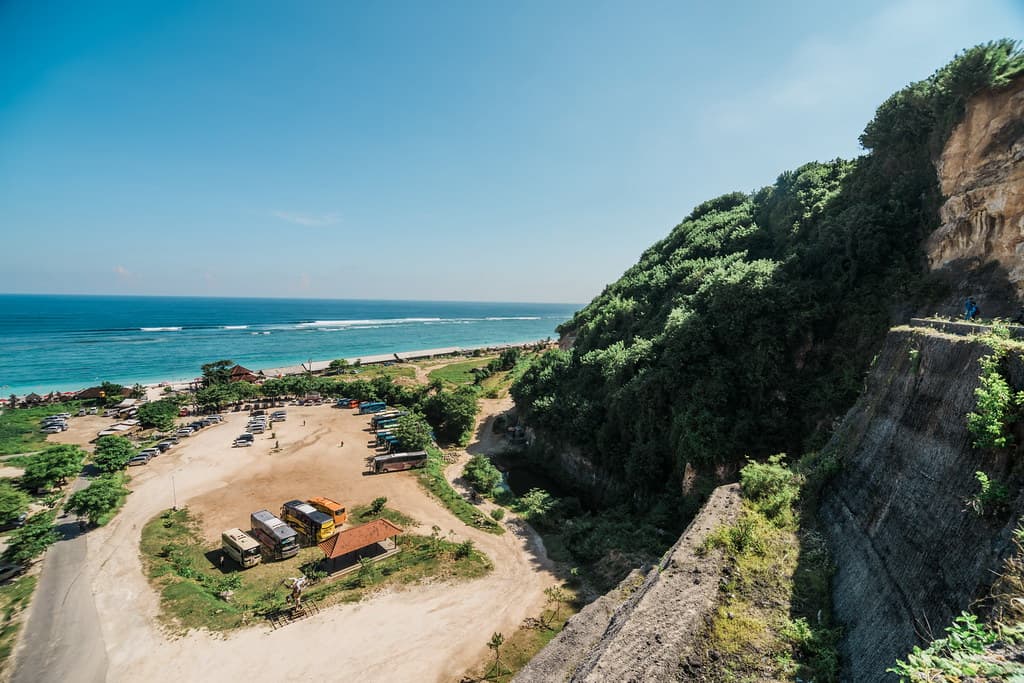
The descent to Melasti feels like entering a cathedral hewn by monsoons and time. Limestone walls rise vertically on both sides of the access road, their surfaces streaked orange and charcoal from centuries of runoff. Local families tie offerings to bamboo poles planted in the sand, and you'll navigate around them as you claim your patch of shore. The sand compresses beneath your feet with a faint squeak—the telltale sign of high silica content and minimal wave action. Mid-afternoon, the beach fills with Indonesian day-trippers who wade fully clothed and spread out sarongs beneath rented umbrellas. Vendors work the sand with coolers of Es Kelapa Muda, machetes flashing as they crack open young coconuts. The reef break stays visible even at high tide, a dark seam where the turquoise shallows meet deeper cobalt water. By five o'clock, the western cliff face glows like heated copper. The sun doesn't set directly over the water here—Melasti faces slightly south—but the indirect light paints the rock amphitheater in gradients of rust and plum. You'll hear gamelan music from the temple perched on the northern headland, the metallic chime carrying down on the offshore breeze that picks up as the day cools.
Places, rentals, tours and events within walking and driving distance of Melasti Beach.
Photos
Melasti Beach generally has moderate waves suitable for swimming, though conditions vary by season and tide. The water can be choppy during high tide or monsoon season, so check conditions before entering. The beach has a gradual slope, making it relatively safe for wading. However, there are no lifeguards on duty, so swim at your own risk and stay alert. Strong currents can develop, particularly during rough weather. Children should be supervised at all times. The beach is cleaner and calmer during morning hours.
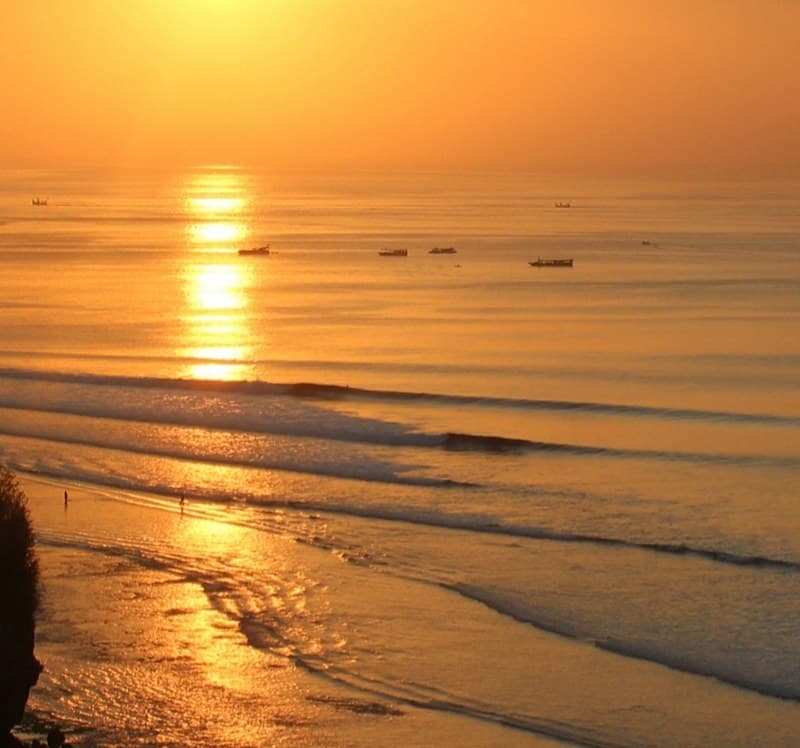
Melasti Beach can be visited year-round, but April to October offers the best weather with less rainfall and calmer seas. The dry season provides ideal conditions for swimming and sunbathing. Visit early morning (7-9 AM) to avoid crowds and intense heat, or late afternoon (4-6 PM) for stunning sunset views. The beach gets busiest on weekends and Indonesian holidays. During the wet season (November-March), expect occasional rain and rougher waves, though the beach remains accessible and can be enjoyed between showers.
Melasti Beach is located in Ungasan, about 20 minutes from Uluwatu Temple and 30 minutes from Ngurah Rai Airport. The beach is accessed via a scenic, winding cliff road with dramatic limestone formations. You can reach it by scooter, car, or taxi. There's a small entrance fee (typically around 10,000-15,000 IDR per person) and parking is available at the top of the cliff. From the parking area, you'll descend a paved road to reach the beach. Grab and Gojek drivers are familiar with the location.
Melasti Beach has several small warungs (local restaurants) and beach clubs offering Indonesian dishes, fresh seafood, and beverages. You'll find beanbags and sunbeds available for rent, along with umbrellas for shade. Basic facilities include restrooms and changing rooms near the parking area. There are no major resorts directly on the beach, but numerous hotels and villas are available in nearby Ungasan and Uluwatu, ranging from budget guesthouses to luxury accommodations. It's advisable to bring cash, as not all vendors accept cards.
The approach to Melasti Beach features a spectacular cliff road carved through towering white limestone cliffs, creating a dramatic canyon-like corridor. This unique entrance has become an Instagram-famous attraction in itself, with the stark white rock formations contrasting against the blue sky. The road winds down approximately 2 kilometers through these carved cliffs before reaching the beach. Many visitors stop along the descent to photograph the stunning geological formations. This distinctive access route sets Melasti apart from other Bali beaches and adds to the overall experience.