Counting the waves…
Counting the waves…

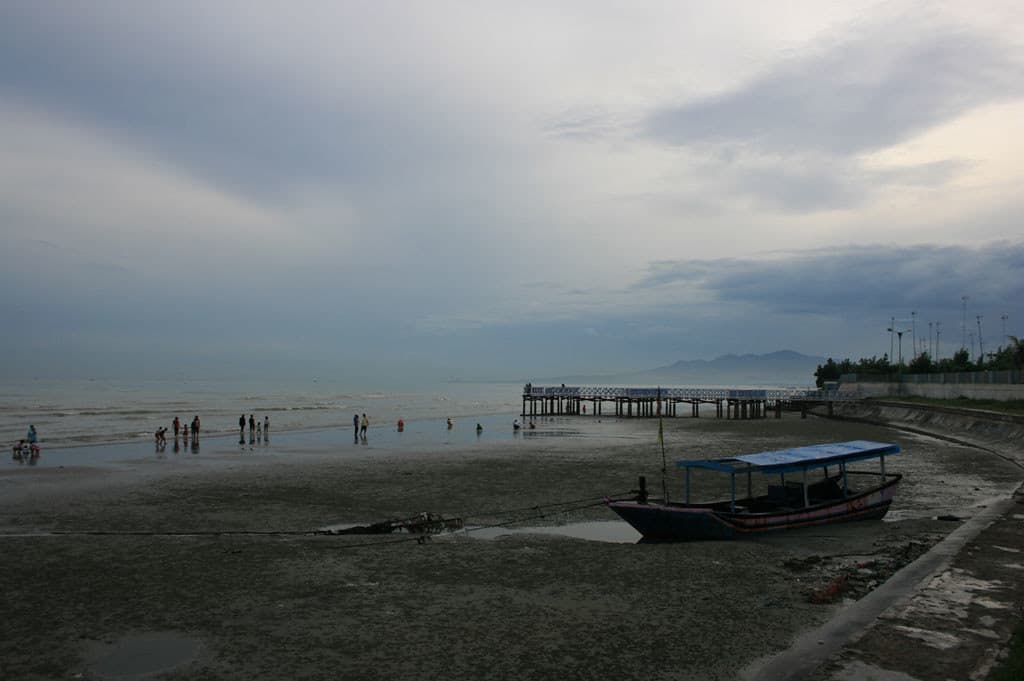
Marina Beach sprawls along Semarang's northern edge like a well-worn welcome mat, frayed and functional. You won't find postcard-perfect turquoise here—the Java Sea rolls in muddy and restless, shaped by the silty currents that define this working coastline. But what the water lacks in clarity, the atmosphere delivers in abundance. Families stake out picnic spots beneath casuarina trees, vendors push carts piled with grilled seafood and es kelapa muda, and couples lean against the concrete promenade as fishing boats chug past on the horizon. The real show begins late afternoon, when the sun drops behind the city skyline and the beach transforms into an open-air theater. Kite flyers claim the breeze, their nylon diamonds and box kites dancing above the crowd. The smell of ikan bakar mingles with diesel exhaust and salt spray—a distinctly urban perfume that somehow works. Children chase waves that barely crest, their shrieks punctuating the calls of seabirds circling the fish market at the eastern end. Marina Beach doesn't compete with Indonesia's island paradises; it doesn't try. Instead, it offers something more grounded—a place where Semarang shows you its everyday face, unfiltered and unapologetic. You come here not to escape the city but to see how it lives, breathes, and gathers at the edge of the sea.
Places, rentals, tours and events within walking and driving distance of Marina Beach.
Photos
Marina Beach is generally not recommended for swimming due to strong currents and water quality concerns typical of urban coastal areas. The beach is better suited for strolling, enjoying the sea breeze, and relaxing on the sand. Local authorities advise caution near the water's edge, especially during high tide. The beach's main appeal lies in its scenic sunset views and recreational facilities rather than water activities. If swimming is a priority, consider visiting other beaches in Central Java with better conditions and lifeguard services.
Marina Beach can be visited year-round, but late afternoon to early evening is ideal for catching stunning sunsets and cooler temperatures. Weekdays are less crowded than weekends when local families flock to the beach. The dry season from May to September typically offers clearer skies and less rainfall, though Semarang's tropical climate means brief showers can occur anytime. Early mornings provide a peaceful atmosphere for walks. Avoid major Indonesian holidays if you prefer quieter visits, as the beach becomes very busy with local tourists.
Marina Beach is located in northern Semarang, approximately 5-7 kilometers from the city center. You can reach it by taxi, ride-hailing apps like Gojek or Grab, or renting a motorbike. The journey takes about 15-20 minutes depending on traffic. Public transportation options include city buses and angkot (minivans) heading toward the northern coastal areas. Parking is available near the beach with designated lots for cars and motorcycles. Parking fees are typically modest. The beach area is well-signposted, making it easy to locate.
Marina Beach features numerous food vendors and warungs (small local eateries) selling Indonesian snacks, fresh coconuts, grilled corn, and seafood dishes. The area has basic amenities including public restrooms, prayer rooms, and small shops selling beach essentials. Several casual restaurants line the beachfront offering both local and Chinese-Indonesian cuisine typical of Semarang. For lodging, budget guesthouses and mid-range hotels are available within a short distance, though most visitors stay in central Semarang where accommodation options are more diverse. Food prices are generally affordable and tourist-friendly.
Marina Beach holds cultural significance as it's connected to Semarang's Chinese-Indonesian heritage and the nearby Sam Poo Kong temple, dedicated to Admiral Zheng He. The beach area is part of the historical coastal region where the famous Chinese explorer reportedly landed in the 15th century. Many visitors combine a trip to Marina Beach with a visit to Sam Poo Kong temple, located a few kilometers inland. This connection makes the beach more than just a recreational spot—it's part of Semarang's multicultural narrative and maritime history.