Counting the waves…
Counting the waves…

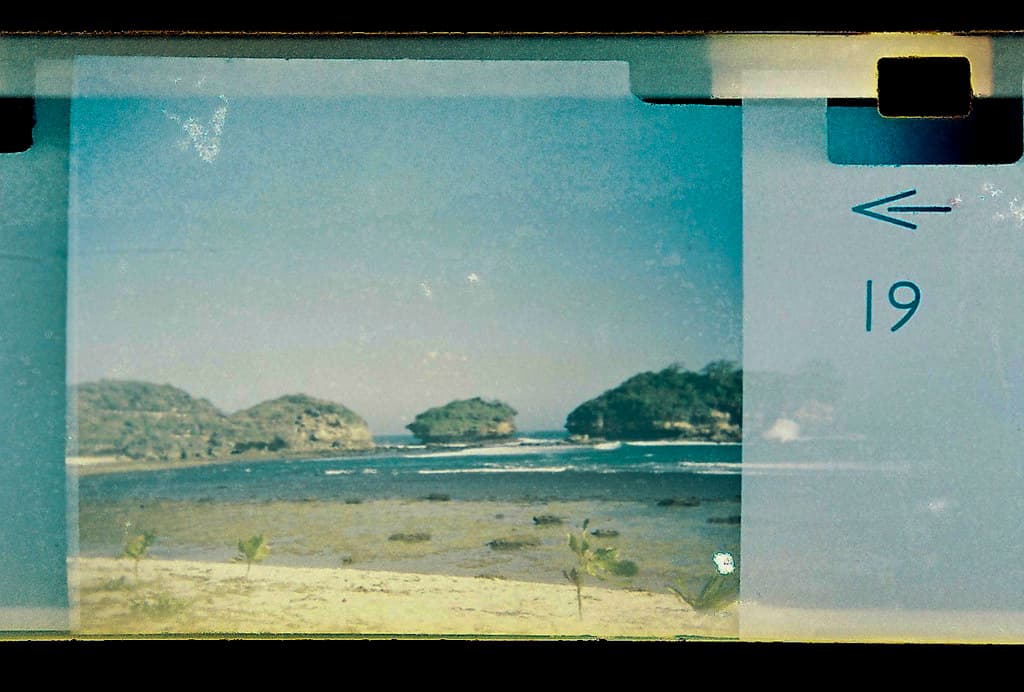
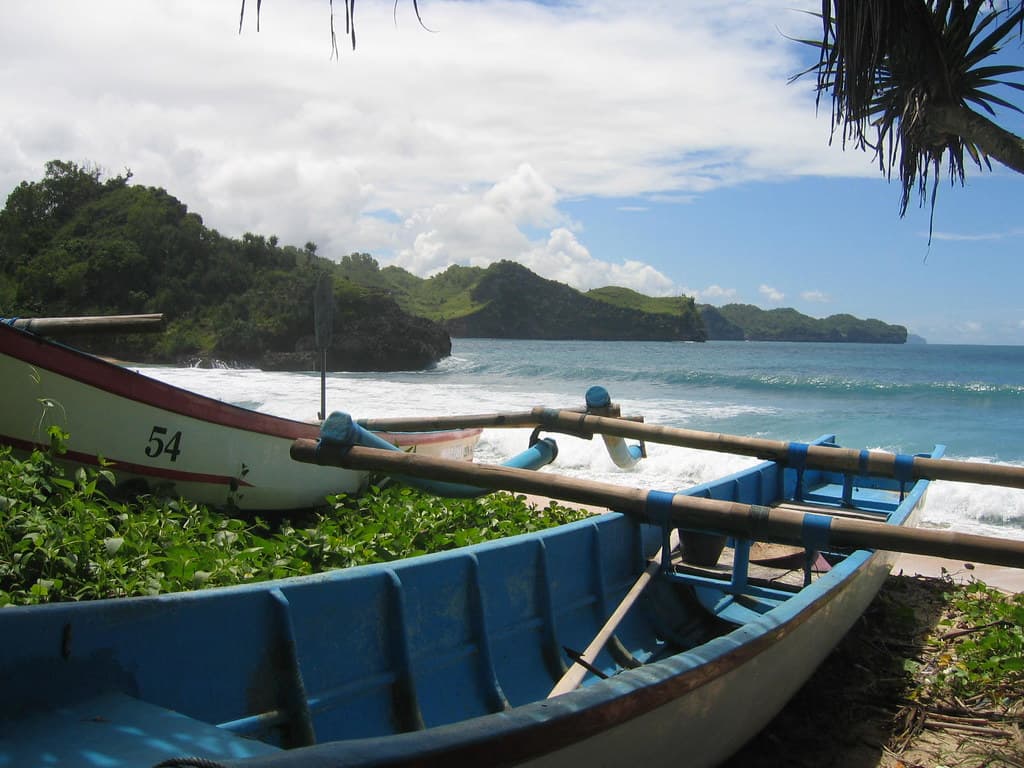
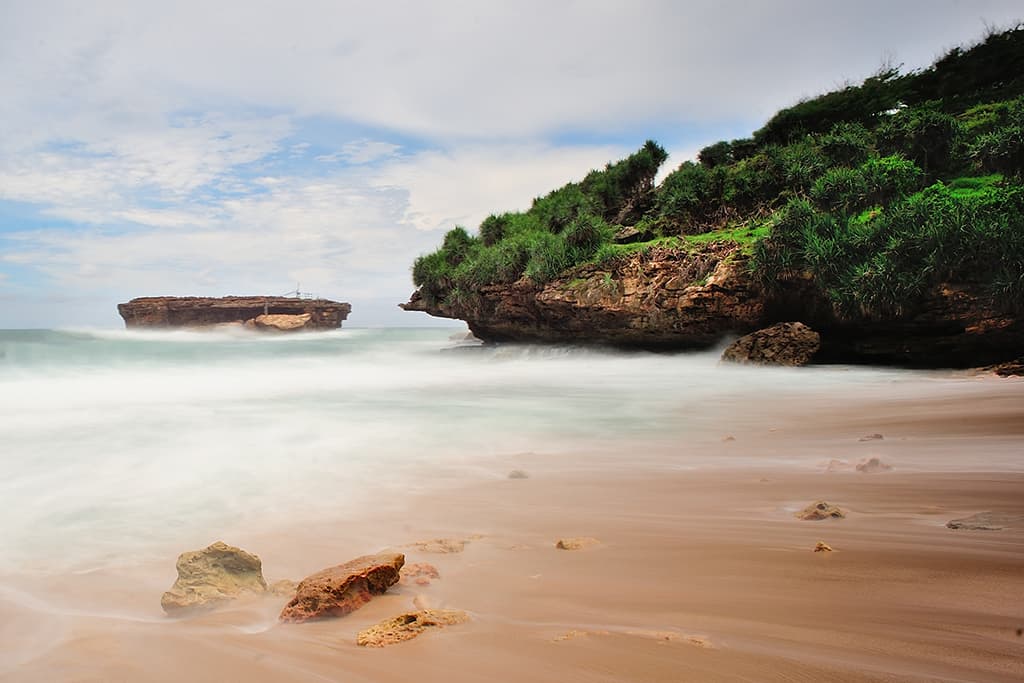
The drive down to Klayar takes you past teak plantations and terraced cassava fields until the asphalt surrenders to gravel, then to a rutted track that ends at a bluff overlooking the coast. From there you descend wooden stairs anchored into the cliff face, each switchback revealing more of the amphitheater below: charcoal sand hemmed by reef shelves, and three limestone stacks rising from the shallows like chess pieces abandoned mid-game. The largest, Sphinx Rock, tilts seaward with a profile that shifts depending on your angle—pharaoh, lion, hooded monk. What arrests most visitors isn't the geology itself but the acoustic show. At mid-to-high tide, swells funnel into a perforated stone tube near the reef's edge, forcing air through a narrow blowhole. The result is a sharp, sustained whistle—locals call it *seruling laut*, the sea flute—that carries across the bay and echoes off the cliffs. Timing a visit to the tidal window means you'll also catch the spray fountain that erupts alongside the sound, shooting six meters into the air and drenching anyone standing downwind. The sand here isn't your typical equatorial beige; volcanic minerals stain it gunmetal gray, almost black when wet. Tidal pools trapped between reef platforms at low tide become warm, shin-deep baths where anemones pulse and hermit crabs scuttle over brain coral. The surf is consistent but closes out hard on the shallow reef—this is a beach for watching waves, not riding them. By late afternoon, the light gilds the rock formations and fishing boats from nearby Sendang Biru motor past the headland, their engines a softer counterpoint to the ocean's relentless percussion.
Places, rentals, tours and events within walking and driving distance of Klayar Beach.
Photos
Swimming at Klayar Beach requires extreme caution due to strong waves and unpredictable currents. The beach is more renowned for its dramatic rock formations and scenic beauty rather than swimming. Many visitors stay on the shore to enjoy the famous sea fountain that erupts from the rocks and to photograph the unique limestone formations. If you do enter the water, stay in shallow areas and be aware that lifeguard availability may be limited. Always check local conditions and heed warning signs.
Klayar Beach can be visited year-round, but the dry season from April to October typically offers the best conditions with calmer seas and clearer skies for photography. The famous sea fountain formed by waves hitting the rocks is most spectacular during moderate wave conditions. Early morning visits provide softer light for capturing the iconic rock formations and fewer crowds. Avoid visiting during heavy rain as the access road can become challenging and visibility of the scenic formations may be reduced.
Klayar Beach is located approximately 35-40 kilometers west of Pacitan town center, requiring about 1.5 hours by car or motorbike. From Pacitan, follow signs toward Donorojo district, then continue to the beach. The final approach involves navigating some winding roads. Parking is available near the beach entrance for both cars and motorbikes, with a small parking fee typically charged. Public transportation is limited, so renting a vehicle or hiring a driver from Pacitan is recommended for most travelers.
Klayar Beach has basic facilities including small warungs (local food stalls) near the entrance selling snacks, drinks, and simple Indonesian meals like instant noodles and fried rice. For more dining options and accommodations, you'll need to stay in Pacitan town, which offers various hotels, guesthouses, and restaurants. Many visitors make Klayar Beach a day trip from Pacitan. Bring cash as card payment facilities are limited. Consider packing water and snacks for convenience during your visit.
Klayar Beach is famous for its distinctive sphinx-shaped rock formation, which resembles the Egyptian Sphinx when viewed from certain angles. The beach also features dramatic white limestone cliffs and a natural sea fountain called 'Seruling Laut' (Sea Flute) that shoots water high into the air when waves crash through a hole in the rocks, creating a whistling sound. These geological features, combined with white sand and turquoise waters, make Klayar one of East Java's most photographed beaches and a must-visit for nature enthusiasts.