Counting the waves…
Counting the waves…

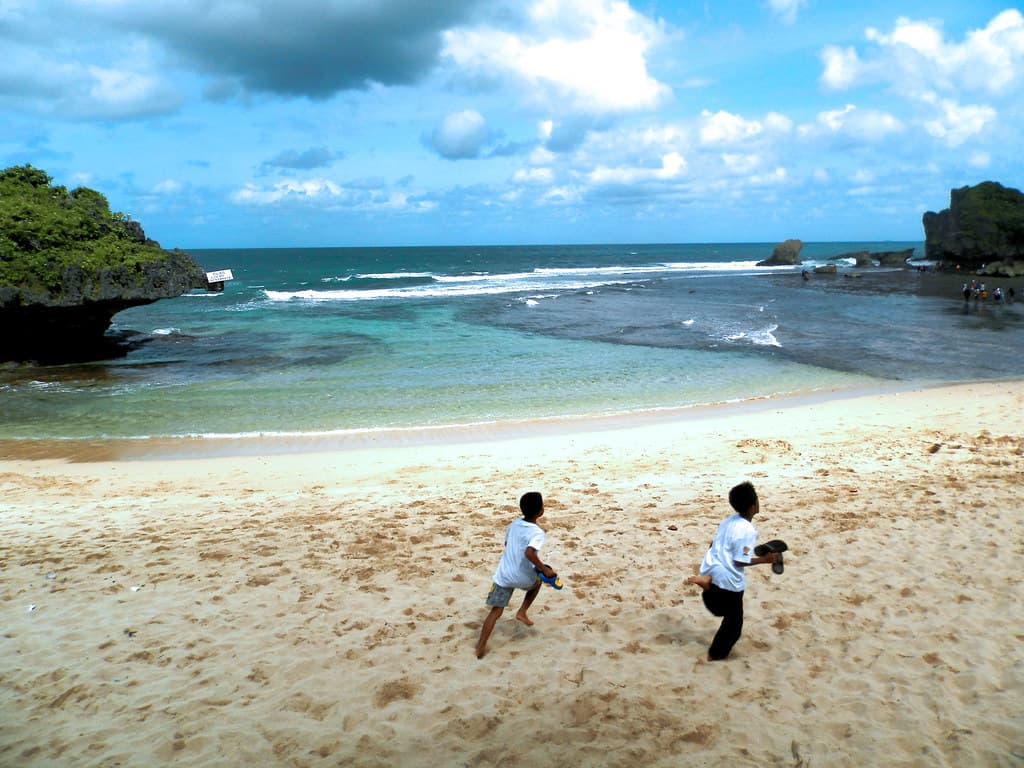
The gondola swings as you step in—a single wooden plank suspended by cables that creak with every gust. Two fishermen stand at either end, pulling hand-over-hand, their callused palms working the rope that separates you from the white-capped swells below. Halfway across, you'll feel the full force of the southern Java winds, the kind that carry the mineral tang of deep ocean and make your heart pound against your ribs. This isn't a tourist gimmick; it's the working lifeline to a rock outcrop where local crews harvest lobster from submerged traps, and you're borrowing their commute. Back on the mainland cliffs, the beach stretches in both directions—charcoal sand strewn with driftwood, limestone headlands carved into arches and tunnels by millennia of monsoon swells. You'll navigate steep wooden staircases bolted into the rock face, each viewing platform offering a new perspective on the gondola's improbable arc. The wind never stops here; it flattens the scrub grass and turns your hair into a tangle of salt and sand. Time your visit for late afternoon when the light turns the breaking waves amber and the fishermen return with their catch. You'll watch them swing back across the void with crates of spiny lobsters, their silhouettes black against the lowering sun, and understand why this stretch of coast has humbled sailors for centuries.
Places, rentals, tours and events within walking and driving distance of Timang Beach.
Photos
Swimming at Timang Beach is extremely dangerous and not recommended. The beach features massive waves, strong currents, and sharp rocks that make it unsuitable for swimming. The primary attraction here is the dramatic cliffside scenery and the traditional gondola crossing to a small limestone island offshore. Visitors should stay well back from the water's edge and follow all posted safety warnings. The beach is best enjoyed for its adventure activities and stunning coastal views rather than water activities.
Timang Beach can be visited year-round, though the dry season from April to October typically offers the best conditions with clearer skies and less rain. Mornings generally provide calmer seas for the gondola crossing and better lighting for photography. Weekdays are less crowded than weekends when domestic tourists visit. The beach is open during daylight hours, and arriving early helps you avoid crowds and experience cooler temperatures, particularly important given the exposed cliffside location with limited shade.
Timang Beach is located approximately 70 kilometers southeast of Yogyakarta city, about a 2.5-hour drive. The road to the beach is narrow and winding, particularly the final few kilometers. You can rent a motorbike or car in Yogyakarta, or hire a driver for the day. Public transportation doesn't reach the beach directly, so most visitors arrange private transport. There is a parking area at the beach entrance with a small fee. The access road can be challenging, so confident driving skills are recommended.
Timang Beach has basic facilities including simple warungs (local food stalls) serving Indonesian dishes, snacks, and drinks. Don't expect extensive menus or fancy restaurants—options are limited to local fare. There are basic toilet facilities available. No accommodations exist directly at the beach, so plan this as a day trip from Yogyakarta or nearby towns like Wonosari. Bring cash for entrance fees, parking, food, and the gondola ride, as card payment facilities are typically unavailable in this remote location.
The main attraction at Timang Beach is a traditional wooden gondola that transports visitors across crashing waves to a small offshore island. Originally built for local lobster fishermen, it's now a thrilling tourist activity. The manual cable system involves crossing approximately 100 meters over rough seas. While it's become popular for adventure seekers, it requires reasonable physical fitness and isn't suitable for those with heart conditions or height fears. The experience is weather-dependent and may be suspended during particularly rough conditions.