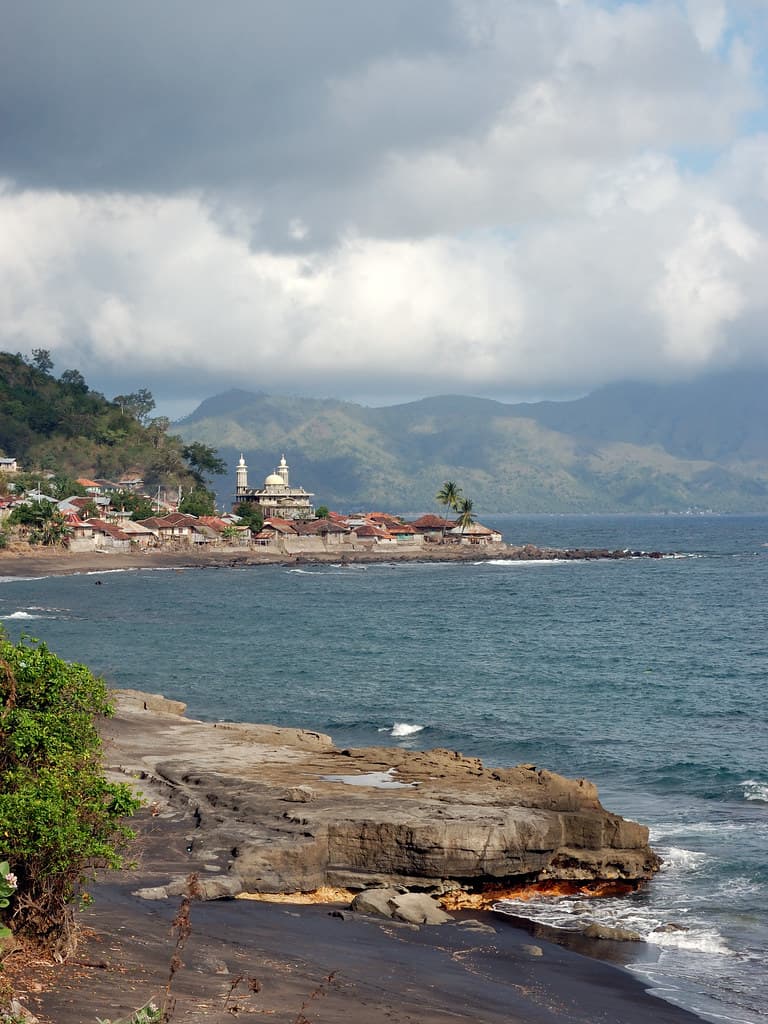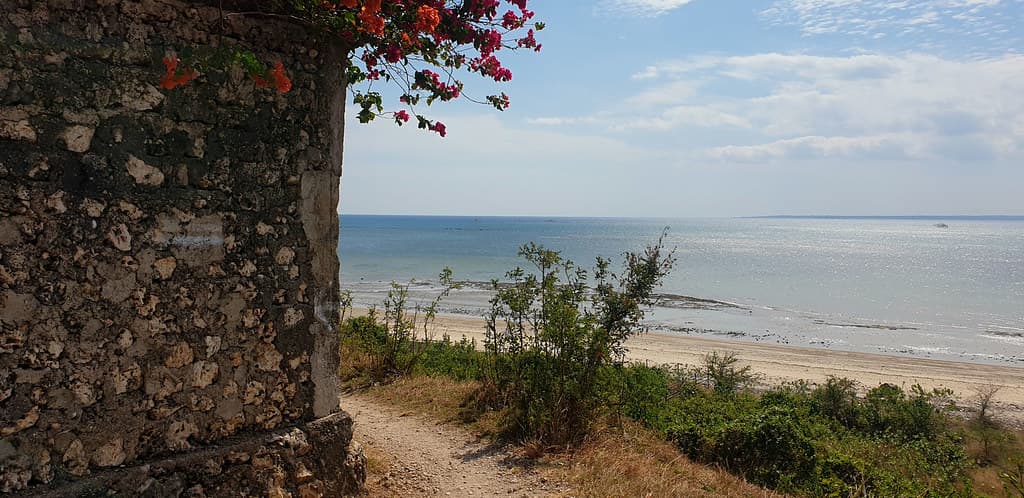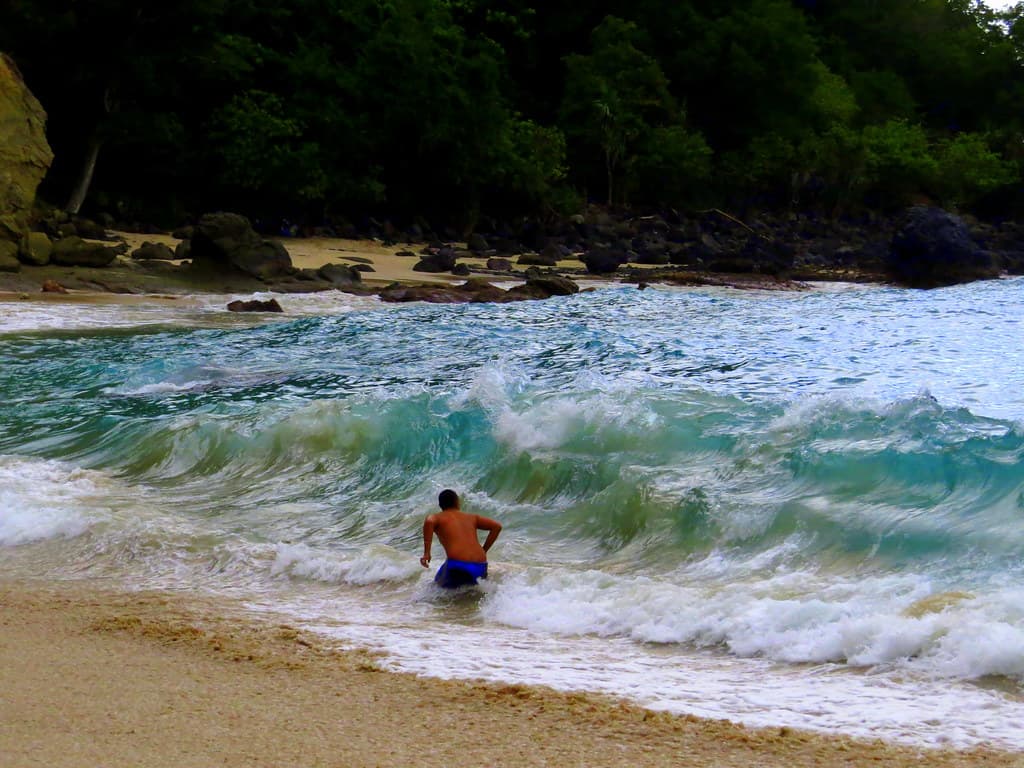
Counting the waves…
Counting the waves…

Koka Beach unfolds as a triple surprise: three crescents of powdery sand divided by volcanic rock, each with its own character and current. You'll park above the western cove and descend a steep footpath through scrub forest, the air thick with salt and frangipani. Local families from Maumere arrive on weekends with coolers and sarongs, claiming shade beneath the casuarina trees that lean toward the water. The sand here feels different underfoot—fine as cake flour, compacting with each wave that slides up the gentle slope. Submerged boulders dot the swimming zones, creating natural pools at low tide where damselfish dart between staghorn coral. The eastern cove requires a scramble over slick rocks but rewards you with near-solitude and deeper water for diving. Fishermen mend nets on the headland at dawn, their wooden boats anchored offshore. By midafternoon, the heat sends most visitors to the warungs near the parking area, where you'll find grilled fish and es kelapa muda served on plastic tables. The bay faces north, so sunsets happen behind you—but the light turns the water a dozen shades of blue as it fades. Stay until the last hour before dark, when the sand cools and the only sounds are waves and distant roosters from the village inland.
Places, rentals, tours and events within walking and driving distance of Koka Beach.
Photos
Koka Beach generally offers safe swimming conditions, particularly in the calmer dry season months. The beach features a protected bay with relatively gentle waves, making it suitable for most swimmers. However, conditions can vary, and there are no lifeguards on duty. Always assess the water before entering, as currents can strengthen during rougher weather. The seabed is sandy with some rocky areas near the edges, so water shoes may be helpful. Avoid swimming during storms or when waves appear unusually strong.
Koka Beach can be visited year-round, though April to October offers the most favorable conditions with drier weather and calmer seas. The dry season brings clearer skies, ideal for photography and enjoying the stunning turquoise waters. November to March sees occasional rainfall and rougher ocean conditions, but the beach remains accessible and less crowded. Early mornings typically provide the best light and fewer visitors regardless of season. Weekdays are quieter than weekends when locals from Maumere may visit.
Koka Beach is located approximately 40 kilometers west of Maumere town, about a 1-hour drive along the coastal road. Most visitors arrange transportation through their accommodation or hire a scooter or car in Maumere. The final stretch involves a short, somewhat rough access road leading down to the beach. Limited informal parking is available near the beach entrance. Public transportation doesn't serve the beach directly, so having your own transport or booking a driver is essential for visiting.
Koka Beach has very limited facilities directly on-site. Small warungs (local food stalls) occasionally operate near the beach, offering basic snacks and drinks, though availability isn't guaranteed. There are a few simple guesthouses and homestays within the general Koka area for those wanting to stay nearby. Most visitors base themselves in Maumere town, which has a better selection of hotels, restaurants, and amenities, and visit Koka Beach as a day trip. Bringing your own water and snacks is advisable.
Koka Beach stands out for its dramatic horseshoe-shaped bay framed by steep, green hills that create a secluded amphitheater effect. The beach features pristine white sand contrasting brilliantly with vibrant turquoise waters, often considered among Flores' most photogenic coastal scenery. Unlike more developed beaches, Koka maintains a raw, untouched quality with minimal development. The viewpoint above the beach offers spectacular panoramic vistas perfect for photography. Its relative remoteness means fewer crowds compared to other Indonesian beach destinations, preserving its tranquil atmosphere.