Counting the waves…
Counting the waves…
A refined fusion of water purity, environmental stability, and communal vibrancy for Hamadi Beach.
View MethodologyAnalyzed via live sensors and environmental data.
Wave height, wind, and atmospheric stability.
Live footfall and crowd balance metrics.
Community reviews and curated sentiment.
“You'll find Hamadi Beach where Jayapura's neighborhoods spill onto a crescent of sand facing Yos Sudarso Bay. Fishing boats bob in the shallows, smoke rises from beachside grills, and families spread woven mats beneath…”
Higher weekend density may affect water purity and crowd scores temporarily.
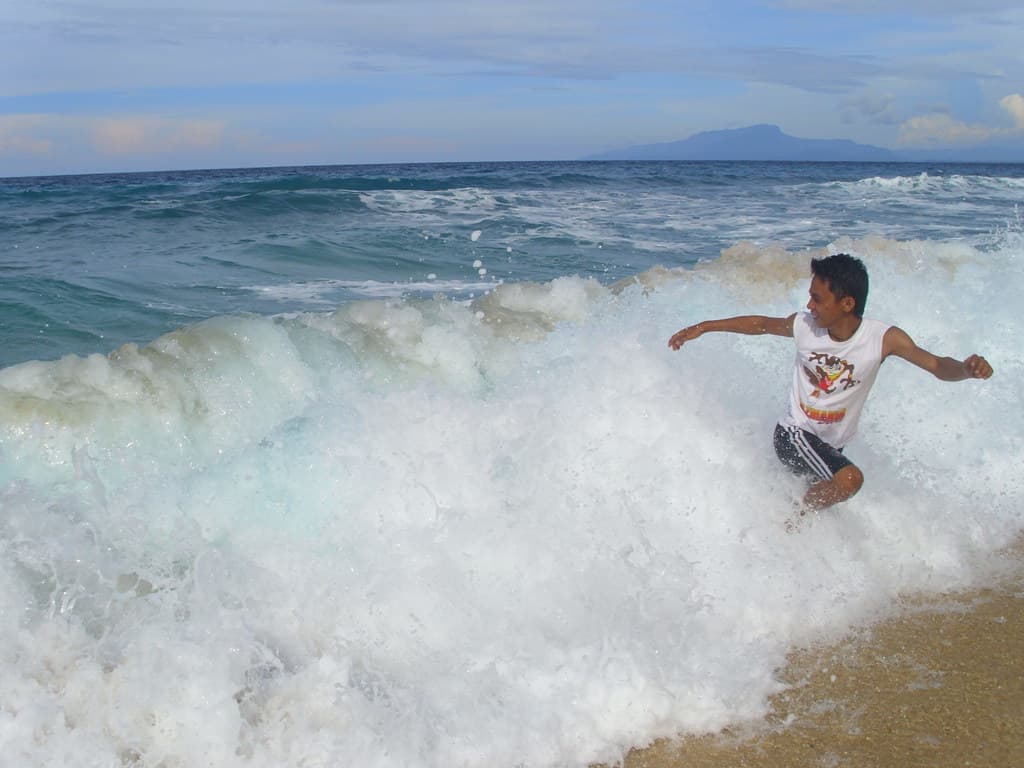
Hamadi Beach unfolds along Jayapura's northern edge, a public strand where the provincial capital meets the Pacific. You'll park along the access road and step onto sand dotted with vendor stalls selling grilled fish, chilled kelapa muda, and papeda—the sago porridge that anchors Papuan meals. Children wade in the calm bay while teenagers kick soccer balls near the tideline, and extended families claim patches of shade beneath casuarina trees that lean landward in the afternoon breeze.
The shoreline bends gently westward, backed by low concrete seawalls and the occasional warung serving iced tea in plastic bags with straws. You won't encounter curated resort amenities here—this is a working beach where locals swim after work, where fishermen mend nets in the early morning, and where the rhythm follows the city's pulse rather than a tourist calendar. The water stays bathwater-warm year-round, with wavelets that barely crest before dissolving into foam on the packed sand.
 Credit: Unsplash
an aerial view of a tropical beach with palm trees
 Credit: Unsplash
a large body of water surrounded by mountains
Calm shallows for family bathing
Fresh tuna cooked beachside
Fishing boats at golden hour
Where it is
Hamadi Beach
Jayapura, Papua, Indonesia
-2.559000°, 140.701000°
Weather
Loading…
Swell
—
Temp
Warm · Restorative
UV Index
Moderate
Wind
—
Tidal State
Last known
Max Sunlight
—
Ideal Shade
—
May - Sep (Peak)
Jan - Dec (Off-season)
Historical data suggests peak visibility and stable sea temperatures occur during the prime visitation window.
Select a category to load nearby places.
Unlock restaurants, luxury stays and curated maritime experiences within 2km
Hamadi Beach is generally calm and suitable for swimming, particularly for families with children. The waters are typically gentle with minimal waves, making it safer than many ocean beaches. However, always exercise caution as conditions can vary. There are usually locals around who can advise on current conditions. The beach is urban and well-frequented, which adds to its safety profile. Avoid swimming during rough weather or if you notice strong currents. Basic facilities are available, but there are no lifeguards on duty, so supervise children closely.
Hamadi Beach can be visited year-round due to Jayapura's tropical climate, with temperatures consistently around 27-30°C. The drier months from May to October generally offer more sunshine and calmer seas, ideal for swimming and beach activities. November to April brings more rainfall, though showers are often brief and intense rather than all-day affairs. Weekends see more local visitors, while weekdays are quieter. Early mornings and late afternoons provide the most comfortable temperatures and beautiful light for photography, while midday can be quite hot.
Hamadi Beach is located approximately 5-7 kilometers east of Jayapura city center, making it easily accessible by taxi, ojek (motorcycle taxi), or rental car. The journey takes around 15-20 minutes depending on traffic. The beach is well-signposted along the coastal road. Parking is available near the beach area, with informal parking spots along the roadside. Some visitors arrange transport through their hotels or use ride-hailing apps if available. The beach's urban location makes it one of the most accessible coastal spots in Jayapura.
Hamadi Beach has basic facilities including food stalls and warungs (small local restaurants) serving Indonesian dishes, fresh seafood, and snacks. You'll find simple changing areas and restrooms, though they're basic. Vendors often sell coconuts and refreshments along the beach. For more dining options and accommodations, Jayapura city center is nearby with hotels, guesthouses, and restaurants. It's advisable to bring cash as card payments may not be widely accepted at beach vendors. The beach has shaded areas, but bringing sun protection is recommended.
Hamadi Beach holds historical importance as it was a landing site during World War II's Pacific campaign. In April 1944, Allied forces landed near Hamadi as part of operations to liberate New Guinea from Japanese occupation. The beach area witnessed significant military activity during this period. While the beach is now a peaceful recreational spot for locals and visitors, its wartime history adds a layer of significance to the location. Some visitors interested in WWII Pacific history make a point of visiting, though visible historical markers are limited.
Photos