Counting the waves…
Counting the waves…

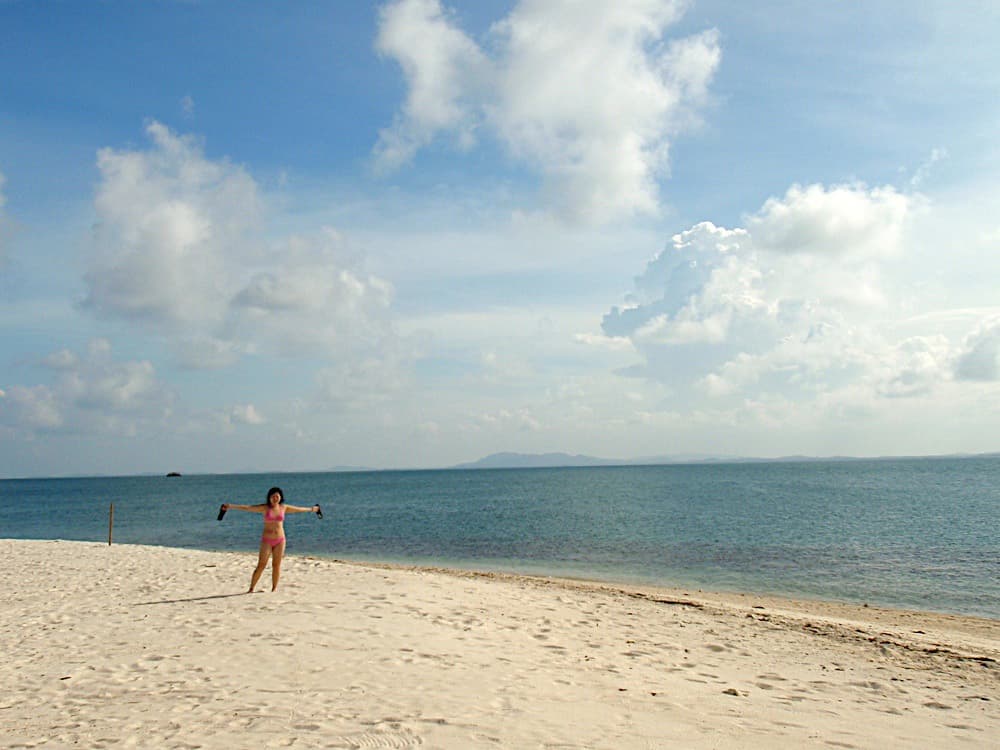
The sand at Lagoi Bay is the color of raw cashews, fine enough to sift through your toes without clinging, packed firm near the waterline where joggers leave temporary prints each morning. You'll share this beach with families from Singapore who arrive for long weekends, children splashing in water so shallow you can wade fifty meters out and still touch bottom. Behind you, a promenade of resorts—some owned by international chains, others by Indonesian hospitality groups—offers every amenity you might expect, from infinity pools to air-conditioned lobbies, yet the beach itself remains the main draw. Mid-morning brings kayakers gliding past the swimming buoys, their paddles dipping into water that shifts from jade near shore to deep teal where the bay opens toward the shipping lanes. You'll notice the absence of strong currents here; the bay's protected geography makes it ideal for floatie-bound toddlers and tentative swimmers. Food vendors set up canvas tents selling es kelapa muda—young coconut water served in the shell—and bags of krupuk crackers dusted with chili salt. By late afternoon, the heat softens. You might join the families gathering near the central pavilion, where a small stage sometimes hosts local dance performances on weekends. The sunsets here don't ignite the entire sky—clouds often temper the drama—but the light turns buttery and warm, coating the palms and the weathered fishing boats anchored in the shallows. It's a beach engineered for ease, where comfort takes precedence over adventure, and that's precisely the point.
Places, rentals, tours and events within walking and driving distance of Lagoi Bay Beach.
Photos
Lagoi Bay Beach generally offers calm, shallow waters suitable for swimming, especially for families with children. The bay's sheltered location helps protect it from strong currents and large waves. However, conditions can vary depending on weather and tides, so always check locally before entering the water. The beach is part of a developed resort area, which typically means better maintenance and some level of supervision during peak hours. As with any beach, remain cautious, supervise children closely, and avoid swimming during storms or rough weather conditions.
Lagoi Bay Beach can be visited year-round due to its tropical climate, with temperatures consistently warm. The driest months typically run from March to October, offering the most sunshine and calmest seas. November through February brings the monsoon season with occasional heavy rainfall, though sunny periods still occur. Weekdays are generally quieter than weekends when local visitors arrive. For the best experience, aim for the drier months during weekdays. Early mornings and late afternoons provide softer light and cooler temperatures, ideal for beach activities and photography.
Lagoi Bay Beach is located on Bintan Island's northern coast, approximately 50 kilometers from Bintan's Sri Bintan Pura Ferry Terminal and about 25 kilometers from Bandar Bentan Telani Ferry Terminal. Most visitors arrive via ferry from Singapore or mainland Indonesia, then take a taxi or resort shuttle to Lagoi. If you're staying at Lagoi Bay resorts, shuttle services are often provided. The beach area has parking facilities available, particularly at the resorts and public beach access points, though availability may be limited during peak periods.
Lagoi Bay is part of a purpose-built resort area featuring numerous international hotel chains and resorts directly on or near the beach, ranging from family-friendly to luxury properties. The area includes multiple restaurants serving Indonesian, Chinese, Western, and international cuisine within the resort complexes. Many resorts offer all-inclusive or meal plan options. Beyond resort dining, you'll find beachfront cafes and seafood restaurants. For budget accommodation, consider staying further inland or in nearby towns, though options directly at Lagoi Bay lean toward mid-range to upscale establishments.
Yes, Lagoi Bay Beach is accessible to non-resort guests, though certain sections may be reserved for hotel guests. Public beach access points exist, allowing day visitors to enjoy the white sand and waters. Some resort facilities like pools, beach loungers, and water sports equipment are typically restricted to guests only. However, you can still swim, relax on the sand, and enjoy the scenery. Consider visiting public beach areas or beachfront restaurants that welcome outside guests. Some resorts may offer day passes for their facilities at an additional cost.