Counting the waves…
Counting the waves…
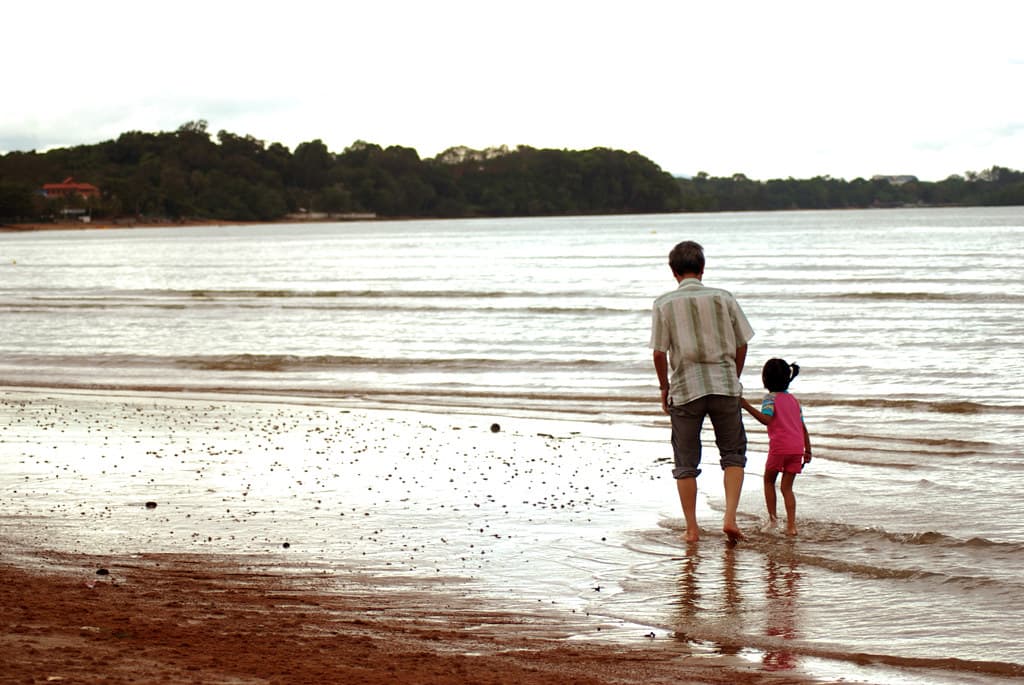
North Rupat Beach occupies the top edge of Rupat Island, a 45-minute ferry ride from Dumai that most travelers skip en route to the Riau archipelago's better-known islands. The beach unfurls in a long, generous arc—fine white sand that squeaks underfoot, lapped by the warm, tea-colored waters of the Malacca Strait. Fishing boats painted crimson and turquoise bob offshore, their nets draped to dry in the salt air. Behind the beach, coconut plantations give way to kampung houses where smoke curls from outdoor kitchens and the scent of grilled ikan bakar drifts toward the shore. You'll share this sand with local families who arrive on motorbikes in the late afternoon, spreading sarongs and wading into the shallows as the heat breaks. The water here is calm, shallow for dozens of meters, warm as bathwater. There are no beach clubs, no sun loungers, no thumping speakers—just the rhythmic slap of waves and the occasional call of a fisherman hauling in his catch. Sunset is the main event. The sky ignites in shades of tangerine and plum, silhouetting the palms and fishing boats in sharp relief. Warung stalls along the beach road fire up grills, serving fresh fish with sambal and rice for a handful of rupiah. Stay through dusk and you'll watch the stars emerge over the strait, the lights of passing cargo ships blinking in the distance like slow-moving constellations.
Places, rentals, tours and events within walking and driving distance of North Rupat Beach.
Photos
North Rupat Beach generally offers calm, shallow waters suitable for swimming, particularly during dry season months. The gentle waves and gradual shoreline make it relatively safe for families. However, always exercise caution as this is a remote beach with limited lifeguard presence or safety infrastructure. Check local conditions before entering the water, avoid swimming during high tide or rough weather, and stay close to shore. The beach's remote location means emergency services are not immediately accessible, so supervise children closely and swim within your abilities.
North Rupat Beach can be visited year-round due to Riau's equatorial climate, though the dry season from March to October typically offers the most pleasant conditions with less rainfall and clearer skies. The beach is particularly beautiful during sunset hours throughout the year. Weekdays tend to be quieter than weekends. The wet season (November-February) brings afternoon showers but rarely disrupts full-day visits. Since this is an off-the-beaten-path destination, it remains uncrowded even during Indonesian holiday periods, making it accessible whenever your schedule allows.
Reaching North Rupat Beach requires multiple steps. From Dumai city on mainland Riau, take a ferry to Rupat Island (approximately 45-60 minutes). Ferries run several times daily but schedules can vary, so verify departure times in advance. Once on Rupat, you'll need to arrange local transportation—motorcycle taxis or rental cars—to reach the northern beaches, roughly a 30-45 minute drive depending on your exact destination. Roads can be basic in places. There's no formal parking infrastructure, but you can park along the beach access roads. Consider arranging round-trip transport in advance.
North Rupat Beach is quite remote with limited tourism infrastructure. Accommodation options are basic, primarily consisting of small guesthouses and homestays in nearby villages rather than beachfront resorts. It's advisable to book in advance and confirm arrangements. Dining options are similarly simple—small local warungs (food stalls) serve Indonesian dishes, seafood, and basic meals, but don't expect extensive menus or Western food. Bring cash as card facilities are scarce. For more amenities, stay in Dumai and make North Rupat a day trip, packing your own food and water.
North Rupat Beach remains relatively undiscovered because Rupat Island sits off the main tourist circuits that focus on Bali, Lombok, and other popular Indonesian destinations. The extra effort required—ferry crossings and basic infrastructure—deters casual visitors. Riau province itself receives fewer international tourists, being better known for business travel to nearby Batam. This isolation has preserved the beach's natural beauty and quiet atmosphere, offering white sand and stunning sunsets without crowds. For adventurous travellers seeking authentic, unspoiled coastal experiences away from tourist development, this obscurity is actually the beach's greatest appeal.