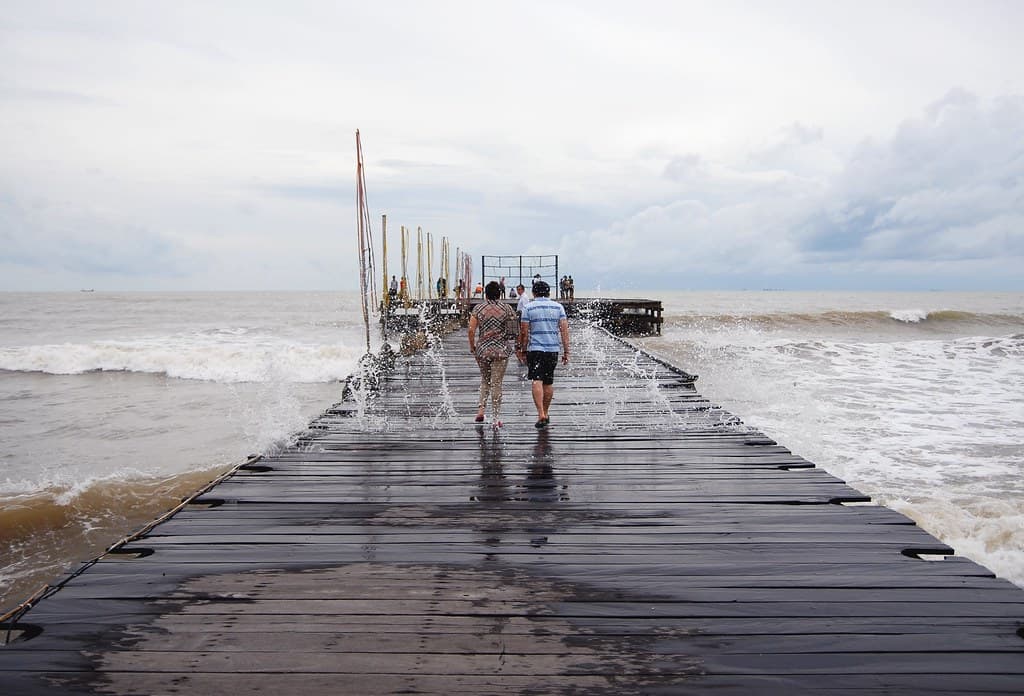
Counting the waves…
Counting the waves…
The drive south from Makassar unravels into empty roads flanked by coconut groves and limestone outcrops that jut from rice paddies like broken teeth. Punaga Beach appears without fanfare—no archway, no ticket booth, just a rutted turnoff where fishing boats rest on their sides and the Indian Ocean stretches to the horizon in bands of navy and turquoise. You'll wade past tide pools studded with sea urchins and clamber over wave-smoothed boulders to reach stretches of open sand. The water is warm and muscular, pushing and pulling with the kind of insistence that keeps you honest. At the cove's northern end, caves carved into the cliff face offer shade and frames for the kind of photographs that need no filter—just limestone, light, and the white churn of surf against stone. Fishermen mend nets in the afternoon heat, and women gather seaweed from rocks still wet from the receding tide. There's no resort here, no sun loungers arranged in symmetrical rows. Just a handful of warungs selling grilled fish wrapped in banana leaves and sweet tea in plastic cups, and a shoreline that belongs more to the people who work it than the ones who visit it.
Places, rentals, tours and events within walking and driving distance of Punaga Beach.
Photos
Punaga Beach generally offers calm waters suitable for swimming, though conditions vary with tides and weather. The beach features relatively gentle waves compared to more exposed coastlines. However, as with any beach in Indonesia, it's advisable to check local conditions before entering the water, avoid swimming during rough weather or high winds, and stay aware of currents. There are typically few lifeguards at this less-developed beach, so exercise caution and swim within your abilities. Early mornings usually provide the calmest conditions.
Punaga Beach can be visited year-round due to South Sulawesi's tropical climate, with temperatures consistently around 27-32°C. The driest months are typically June through September, offering the most reliable beach weather with clear skies and calmer seas. The wet season runs from December to March, bringing occasional afternoon showers but still allowing for beach visits. Weekdays are generally quieter than weekends when locals visit. For photography enthusiasts, sunrise and late afternoon provide the best lighting for this scenic coastline.
Punaga Beach is located approximately 50-60 kilometers south of Makassar, taking about 1.5 to 2 hours by car or motorbike. From Makassar, head south on the coastal road through Takalar Regency, following signs toward Punaga village. The most practical option is renting a car or motorbike, as public transportation options are limited. You can also hire a driver from Makassar for the day. Parking is available near the beach, typically informal areas where locals may request a small fee.
Punaga Beach has limited facilities, reflecting its status as a relatively undeveloped, hidden gem. You'll find small local warungs (food stalls) selling Indonesian snacks and simple meals, particularly on weekends. Accommodation options directly at the beach are scarce, so most visitors make this a day trip from Makassar or nearby Takalar town, where basic guesthouses are available. Bring cash, as card payments are rarely accepted. It's wise to pack drinking water and snacks for your visit.
Punaga Beach stands out for its scenic, unspoiled coastline with dramatic rock formations and relatively undiscovered atmosphere compared to busier Sulawesi beaches. The beach features a mix of sandy shores and interesting coastal geology, creating photogenic landscapes. Its hidden nature means fewer crowds, offering a more authentic, peaceful experience. The local fishing community adds cultural character, and you may see traditional boats along the shore. It's ideal for travelers seeking tranquility away from tourist hotspots while still being accessible from Makassar.