Counting the waves…
Counting the waves…

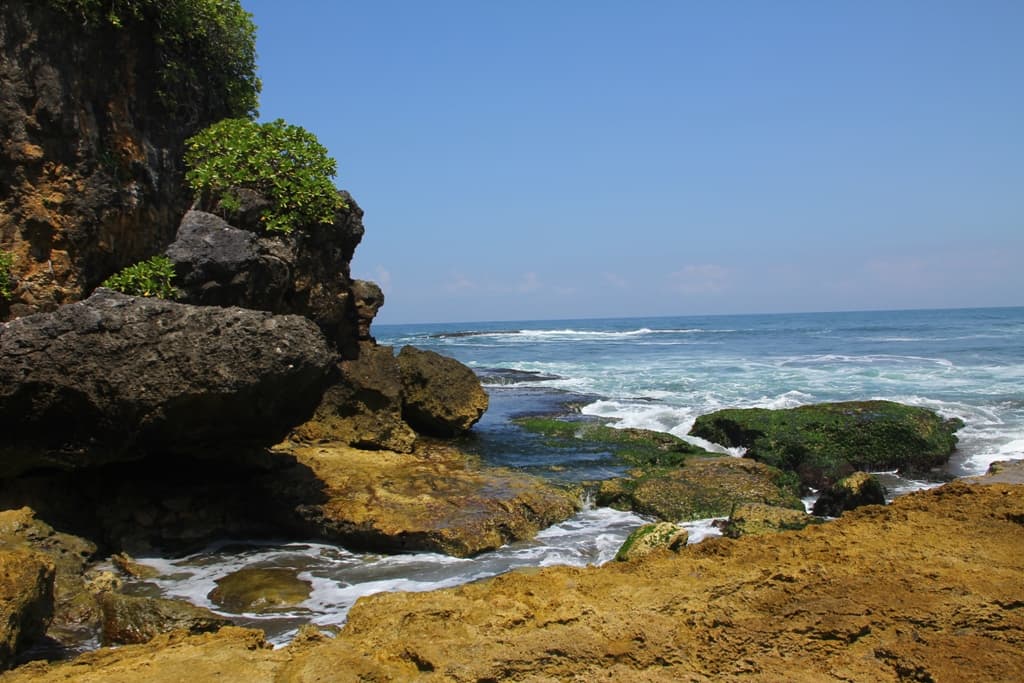
Pangandaran curves along both sides of a narrow peninsula that juts into the Indian Ocean, giving you two shores with distinctly different moods. The calmer western beach draws families who wade into gentle surf while vendors balance seafood platters on their shoulders, offering barbecued crab and butter-grilled fish still warm from the coals. The eastern flank faces open ocean, where consistent swells draw surfers and the undertow demands respect. The town itself presses close to the sand—guesthouses with salt-stained balconies, rental shops stocked with bodyboards and snorkel sets, motorbike taxis idling beneath palms. Mornings begin with fishermen hauling nets onto the shore, their boats painted in faded blues and reds, while hawkers set up carts selling es kelapa muda, young coconut water served with a straw and a chunk of soft flesh. By late afternoon, the western promenade fills with Indonesians on weekend holiday, children shrieking as warm waves lap their ankles. Pangandaran Nature Reserve anchors the peninsula's southern tip, where troops of silver leaf monkeys crash through canopy and cave temples hide in limestone folds. You can walk the perimeter trail in an hour, emerging to catch the sun dropping behind fishing platforms silhouetted against bands of orange and magenta—a ritual that draws applause from the assembled crowd each clear evening.
Places, rentals, tours and events within walking and driving distance of Pangandaran Beach.
Photos
Pangandaran Beach has varying swimming conditions depending on the section. The eastern bay is generally calmer and safer for swimming, while the western side faces the Indian Ocean with stronger currents and waves. Red flags indicate dangerous conditions, so always check local warnings. The beach can experience rip currents, particularly during monsoon season. Lifeguards are present in popular areas, but it's best to swim in designated zones and avoid going too deep. Ask locals or your accommodation about current conditions before entering the water.
Pangandaran Beach is a year-round destination with tropical weather. The dry season (April to October) offers the most reliable sunshine and calmer seas, making it ideal for swimming and beach activities. The wet season (November to March) brings afternoon rain showers but fewer crowds and lower prices. June to August are peak months with the best weather but more visitors. For spectacular sunsets and pleasant temperatures, visit between May and September. Weekends and Indonesian holidays see significant crowds, so weekdays offer a more relaxed experience.
Pangandaran is accessible by bus from major cities like Bandung (6-7 hours) and Jakarta (8-9 hours). Direct buses run from Kampung Rambutan terminal in Jakarta. From Yogyakarta, it's about 6 hours by bus. The nearest airport is in Nusawiru, about 30km away, with limited flights. Most visitors arrive via Banjar or Tasikmalaya, then take local transport. Parking is available throughout the beach area with both free and paid options near the main beach zones. Hotels typically offer parking for guests.
Pangandaran offers diverse accommodation from budget guesthouses to mid-range hotels and beachfront resorts, concentrated along the main beach road. Food options are plentiful, with beachside warungs serving fresh seafood, grilled fish, and Indonesian dishes at reasonable prices. The town center has restaurants offering both local and international cuisine. Night markets and street food stalls operate in the evenings. Amenities include convenience stores, ATMs, and rental shops for beach equipment. Most hotels and guesthouses can arrange tours to nearby attractions like Green Canyon and Pangandaran National Park.
Yes, Pangandaran Beach sits on a narrow peninsula, making it one of few beaches where you can watch both sunrise and sunset from the same location. The eastern beach faces the calm bay, perfect for sunrise viewing, while the western beach overlooks the Indian Ocean for dramatic sunsets. This unique geography is part of what makes Pangandaran special. Many visitors start their day watching the sunrise over fishing boats, then end with the famous sunset on the opposite shore—a memorable experience without changing locations.