
The beach announces itself in two acts. As you crest the coastal road from Kuta, the eastern bay unfurls first—a generous crescent where rolling swells meet shore in rhythmic, white-capped sets. Walk the narrow land bridge to the western bay and the tempo shifts entirely: calmer water, traditional outriggers tied to weathered posts, children splashing in shallows that stay knee-deep for thirty meters out.
“The spherical quartz sand creates a texture underfoot found on fewer than a dozen beaches worldwide.”
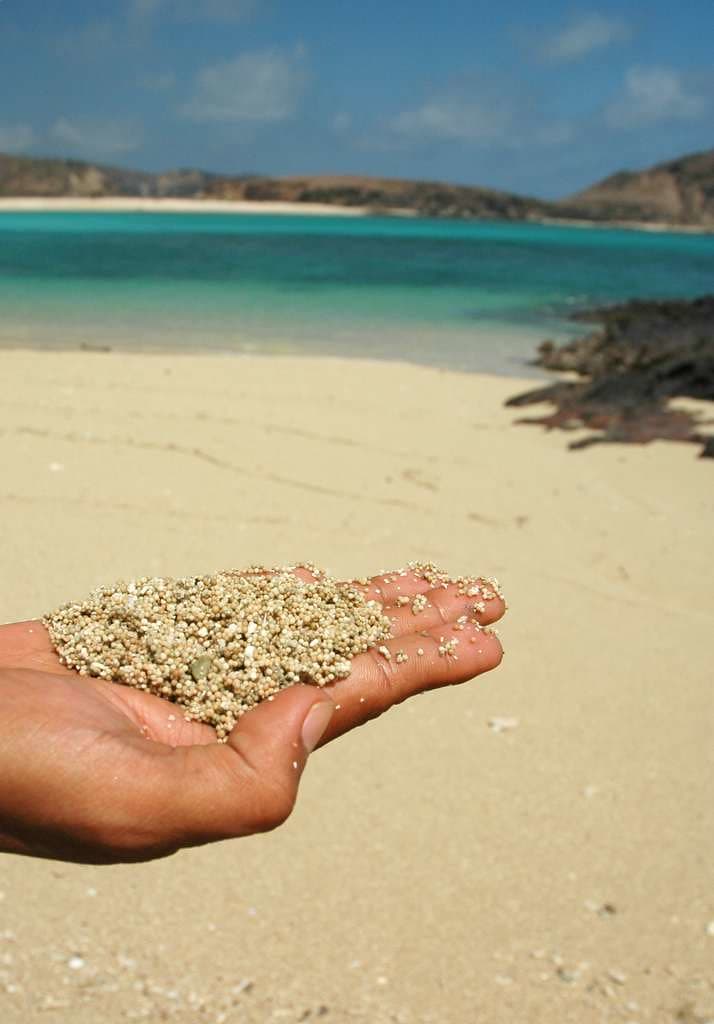 Credit: Flickr
Sand or Peppercorns?
What sets Tanjung Aan apart is the sand itself. Crouch down and you'll notice the grains are spherical, not jagged—a geological quirk that makes the beach squeak underfoot when dry and pack firm when wet. The texture has drawn comparisons to sugar and salt, but run it through your fingers and you'll find it closer to fine-milled semolina. Under midday sun, the whiteness is almost blinding; by late afternoon, it takes on amber warmth.
Beyond the twin bays, grassy headlands rise on either flank, their slopes dotted with grazing water buffalo and the occasional sarong-clad farmer. A single warung cluster anchors the eastern end, serving grilled fish and es kelapa muda under palm-thatch roofs. The scene feels unhurried, even as tour vans arrive from Senggigi. You'll share the sand, but there's enough of it—and the views are generous enough—that solitude comes in pockets.


